
Gardening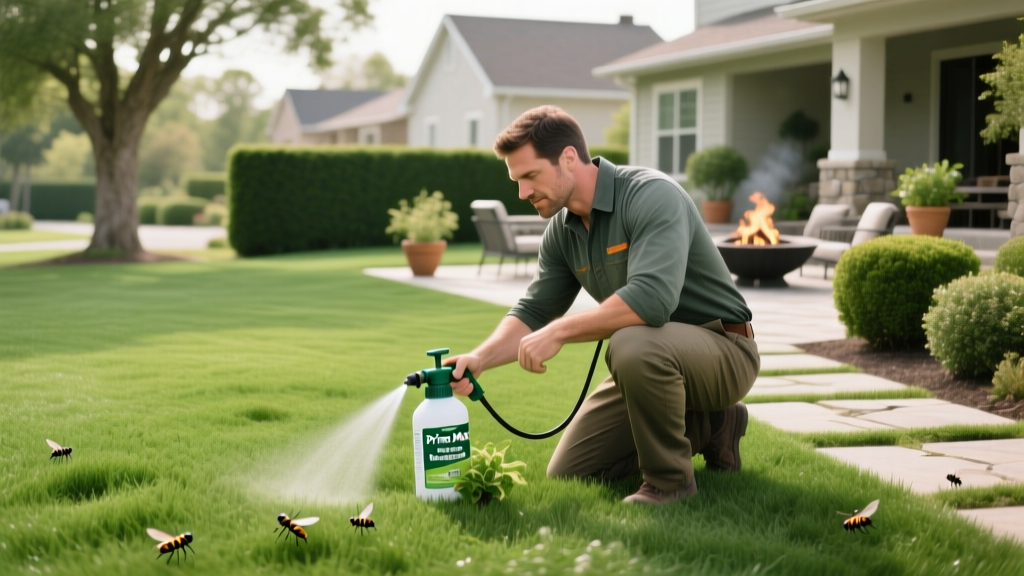
Primo Maxx Plant Growth Regulator: Post-Establishment Lawn Guide
The Physiology of Trinexapac-Ethyl During Establishment
Primo Maxx, manufactured by Syngenta, relies on the active ingredient trinexapac-ethyl (11.3%). It functions as a Class A gibberellin biosynthesis inhibitor. By blocking the conversion of GA20 to GA1 (gibberellic acid), it halts vertical cell elongation in turfgrass while simultaneously stimulating lateral tillering, rhizome development, and root mass density. For mature lawns, this translates to reduced mowing frequency, deeper green coloration, and enhanced drought tolerance.
However, introducing this chemistry during the initial planting and germination phase is a critical agronomic error. Seedlings and freshly laid sod require active gibberellic acid to push cotyledons through the soil crust, extend initial taproots, and establish stolon networks. Applying a PGR too early suppresses this vital cellular expansion, resulting in stunted root systems, delayed canopy closure, and increased vulnerability to environmental stressors like heat and drought.
⚠️ CRITICAL ESTABLISHMENT WARNING: Never apply Primo Maxx to newly seeded, sprigged, or plugged turf. The chemical will arrest the vertical growth necessary for seedlings to emerge and establish a primary root zone. Wait until the turf has been mowed at least three to four times before introducing any gibberellin inhibitors.
Seeding vs. Sodding: The Primo Maxx Introduction Timeline
The timeline for your first PGR application depends entirely on your planting method and grass species. Sodded lawns possess an existing root structure that merely needs to "knit" into the underlying soil profile, allowing for earlier PGR introduction compared to seed-grown lawns, which must build root mass from scratch.
| Planting Method | Grass Type | Minimum Wait Time | Visual Cue for First Application |
|---|---|---|---|
| Seeded | Cool-Season (Fescue, Bluegrass) | 4 to 6 Weeks | After the 3rd or 4th mowing; canopy fully closed. |
| Seeded | Warm-Season (Bermuda, Zoysia) | 6 to 8 Weeks | Stolons have rooted at multiple nodes; 4th mow completed. |
| Sodded | Cool-Season | 2 to 3 Weeks | Sod cannot be pulled up by hand; roots knit to soil. |
| Sodded | Warm-Season | 3 to 4 Weeks | Seams have disappeared; root resistance confirmed. |
According to turfgrass researchers at Penn State Extension, waiting for these specific physiological milestones ensures the plant has sufficient carbohydrate reserves to handle the metabolic shift induced by the PGR without suffering establishment setbacks.
Calibration, Rates, and 2026 Cost Analysis
Applying the correct dose is non-negotiable. Over-application on newly established turf can cause severe phytotoxicity, while under-application yields no measurable benefit. Rates vary by species and desired suppression level.
Standard Application Rates (Per 1,000 Sq Ft)
- Tall Fescue: 0.10 to 0.15 fl oz
- Kentucky Bluegrass: 0.05 to 0.10 fl oz
- Bermudagrass (Common/Hybrid): 0.10 to 0.20 fl oz
- Zoysiagrass: 0.05 to 0.15 fl oz
The Economics of Primo Maxx in 2026
As of 2026, a 2.5-gallon jug of Syngenta Primo Maxx retails between $145 and $165. While the upfront cost seems high, the per-application cost is remarkably low due to the low active ingredient requirement. A 2.5-gallon jug contains 320 fluid ounces. If you are treating a 5,000 square foot lawn of Tall Fescue at a rate of 0.15 fl oz per 1,000 sq ft, you need 0.75 fl oz per application. That single jug will yield 426 applications for that specific lawn, making the chemical cost roughly $0.38 per application. For commercial operators treating at scale, the cost drops to fractions of a cent per square foot.
Step-by-Step First Application Protocol
Trinexapac-ethyl is absorbed strictly through the foliage, not the roots. This dictates a specific application methodology that differs from granular fertilizers or soil-applied herbicides.
- Calculate Carrier Volume: Use 1.0 to 2.0 gallons of water per 1,000 square feet. Higher water volumes ensure complete foliar coverage without excessive runoff.
- Mix the Solution: Fill your sprayer tank halfway with water, add the precise fluid ounces of Primo Maxx, agitate, and then fill the remainder of the tank. Add a turf-safe blue dye to track your spray pattern and prevent overlapping, which causes localized stunting.
- Time the Application: Apply during the cooler parts of the day (early morning or late afternoon). Avoid applications when temperatures exceed 85°F, as heat stress combined with PGR-induced metabolic shifts can cause leaf tip burn on young turf.
- Spray and Dry: Apply evenly using a flat-fan nozzle. Do not irrigate immediately. The foliage requires approximately 4 to 6 hours to fully absorb the chemical. Watering it in prematurely will wash the active ingredient into the soil where it is inactive, wasting the product.
Tank-Mixing to Prevent the "Rebound" Chlorosis
Between days 3 and 7 post-application, turf treated with trinexapac-ethyl often exhibits a slight yellowing or bronzing known as the "rebound effect" before the canopy darkens and thickens. On newly established lawns, this visual stress can alarm homeowners. To mitigate this, tank-mix Primo Maxx with a chelated liquid iron product (such as Fe-EDDHA) at a rate of 2 to 4 oz per 1,000 sq ft. The iron masks the temporary chlorosis and accelerates the transition to the deep, dark green color associated with PGR use.
Troubleshooting Common Establishment Mistakes
Even with careful timing, missteps can occur during the first season of PGR use on new lawns. Use this diagnostic framework to identify and correct issues.
- Symptom: Seedlings emerge but stop growing entirely, forming a tight, yellow mat.
Cause: PGR applied before the 3rd mowing; gibberellic acid suppression halted vertical emergence.
Fix: Cease all PGR applications. Apply a light dose of liquid gibberellic acid (GA3) if available, or rely on a high-nitrogen liquid feed (e.g., 20-0-0) to force vegetative growth and dilute the chemical concentration in the plant tissue over time. - Symptom: Severe leaf tip burn and white streaking 48 hours after application.
Cause: Sprayer overlap (double-dosing) or application during mid-day heat exceeding 85°F.
Fix: Ensure immediate, deep irrigation to relieve plant stress. Future applications must utilize spray dye and strictly avoid mid-day heat windows. - Symptom: No noticeable reduction in mowing frequency after 3 weeks.
Cause: Product washed off by rain or irrigation before the 4-hour foliar absorption window closed.
Fix: Reapply at 50% of the original rate, checking weather forecasts to guarantee a 6-hour dry window post-spray.
Integrating Primo Maxx into a new lawn's care regimen requires patience. By respecting the biological imperatives of seedling and sod establishment, and strictly adhering to foliar application mechanics, you transition the turf from a vulnerable new planting into a dense, drought-resilient, and low-maintenance ecosystem.

