
Gardening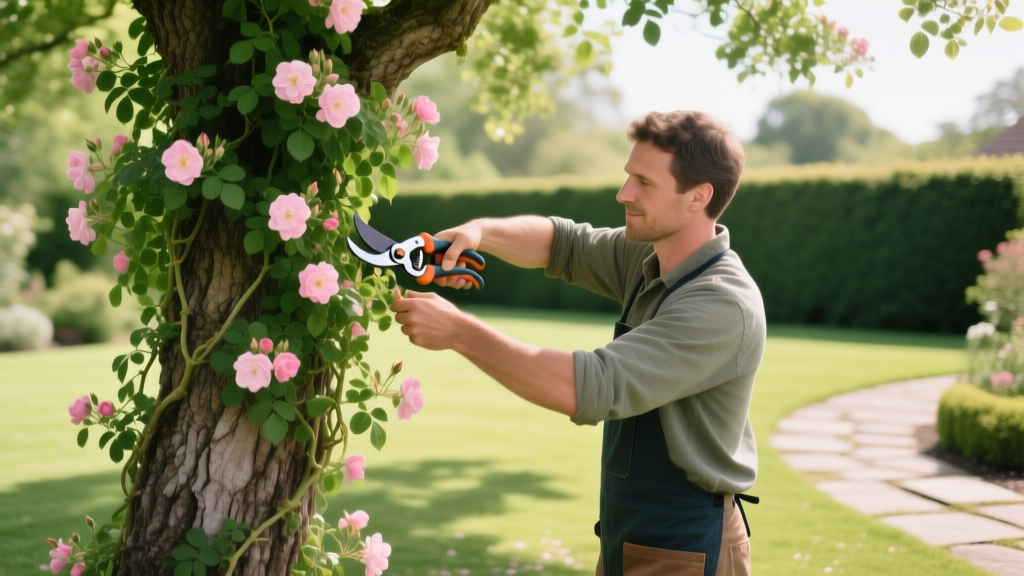
Pruning Climbing Vines With Flowers to Save Host Trees
The Conflict Between Vertical Blooms and Tree Health
Flowering climbing vines create stunning vertical displays, but when they use mature trees as structural support, the aesthetic appeal often masks severe physiological damage. Homeowners frequently plant aggressive species like Wisteria, Trumpet Vine, or Climbing Roses near established oaks and maples, assuming the tree's massive trunk can handle the extra load. In reality, the vascular cambium of a host tree is highly vulnerable to the constriction, shading, and moisture-trapping habits of these vigorous growers. According to the University of Minnesota Extension, unchecked vine growth is a leading secondary cause of mature tree decline in residential landscapes. This guide provides exact pruning protocols, removal strategies, and trellis-transition frameworks to manage climbing vines with flowers without sacrificing your host tree's structural integrity.
Physiological Threats: How Flowering Vines Compromise Trees
Before making a single cut, you must understand the specific failure modes vines introduce to a host tree. The damage is rarely superficial; it directly impacts the tree's ability to transport water and synthesize energy.
- Vascular Girdling: Twining vines (like Wisteria and Honeysuckle) wrap tightly around the trunk. As both the tree and the vine increase in girth, the vine acts like a tourniquet, crushing the phloem and xylem tissues. This restricts nutrient flow, leading to canopy dieback above the constriction point.
- Canopy Smothering: Fast-growing vines rapidly reach the upper scaffold branches, unfolding dense foliage that blocks sunlight from the tree's own leaves. This severely reduces the tree's photosynthetic capacity, starving the root system of carbohydrates.
- Bark Rot and Pest Harborage: Vines that attach via aerial roots (like Climbing Hydrangea) or those that simply drape heavily against the bark trap moisture against the trunk. This creates a microclimate ideal for fungal pathogens and provides concealed entry points for boring insects.
- Structural Overloading: During ice storms or heavy spring rains, the added surface area of vine foliage catches immense wind and weight, dramatically increasing the risk of branch failure or total uprooting.
⚠️ CRITICAL ARBORIST WARNING: Never attempt to rip live, established vines directly off a tree trunk. The vine's stems or aerial roots will tear away large strips of the tree's bark and living cambium, creating massive open wounds that invite decay fungi like Armillaria. Always use the 'cut-and-leave' desiccation method detailed below.
Vine Identification and Threat Matrix
Not all climbing vines with flowers pose the same level of threat. Your pruning strategy must be dictated by the vine's attachment method and growth velocity. Use this decision matrix to determine your approach.
| Vine Species | Attachment Method | Threat Level | Management Strategy |
|---|---|---|---|
| Chinese Wisteria | Twining (aggressive) | Extreme (Girdling) | Sever at base; annual drop-crotch pruning if keeping. |
| Trumpet Vine | Twining / Aerial roots | High (Smothering) | Sever at base; redirect to heavy-duty steel trellis. |
| Clematis (Spp.) | Leaf petiole wrapping | Low to Moderate | Light thinning; safe to keep on tree if monitored. |
| Climbing Rose | Scrambling / Thorns | Moderate (Bark scarring) | Tie to dedicated trellis; prune away from trunk. |
| Climbing Hydrangea | Aerial roots (adhesive) | High (Bark tearing) | Do not plant on trees; requires immediate redirection. |
Step-by-Step Pruning Protocol for Tree-Bound Vines
If you choose to keep the vine for its floral display, you must implement a strict, biannual pruning regimen to protect the host tree. The Penn State Extension emphasizes that precision cuts are required to maintain the tree's natural defense boundaries (CODIT). You will need a high-quality bypass pruner (e.g., Felco F-2 for stems under 0.5 inches) and a folding pruning saw (e.g., Silky Gomboy 210) for thicker, woody vine trunks.
Phase 1: Establishing the Root Flare Exclusion Zone
Vines must never be allowed to grow directly against the tree's root flare (the base where the trunk meets the soil). Soil and moisture trapped against the root flare by vine density will cause fatal basal rot.
- Measure a 36-inch radius outward from the center of the tree trunk.
- Using your pruning saw, sever all vine stems crossing into this exclusion zone at ground level.
- Extract the severed vine material from the soil surface to expose the root flare and allow air circulation.
Phase 2: Canopy Release and Weight Reduction
To prevent the vine from smothering the tree's upper canopy, you must prune the vine back before it reaches the primary scaffold branches.
- Identify the main vertical leaders of the vine growing up the trunk.
- Locate lateral branches of the vine that are extending into the tree's leafy canopy.
- Make 'drop-crotch' cuts on the vine: prune the vine's lateral branches back to a side branch that is at least one-third the diameter of the stem being removed. This prevents the vine from sending out a flush of aggressive, weak water-sprouts.
- Maintain a minimum 4-foot vertical clearance between the top of the vine's foliage and the lowest tree branches.
Safe Removal: The 'Cut-and-Starve' Desiccation Method
When a vine has become too aggressive, or the host tree is showing signs of decline (e.g., undersized leaves, premature autumn coloring, or deadwood in the canopy), total removal is required. As noted by the Arbor Day Foundation, protecting the bark during removal is paramount.
The Procedure:
- Step 1: Locate the main woody trunks of the vine at the base of the tree.
- Step 2: Using loppers or a pruning saw, cut the vine stems cleanly, leaving a 12-inch to 18-inch stump above the soil line. Do not cut flush with the ground, as you need a handle to extract the root crown later.
- Step 3: Leave the upper portion of the vine attached to the tree. Do not pull, yank, or peel it off.
- Step 4: Allow 6 to 12 months for the severed vine to desiccate (dry out) and die. Once the vine is completely brown and brittle, its grip on the bark will weaken significantly.
- Step 5: Gently pull the dead vine material away from the tree. If aerial roots resist, use a dull putty knife to carefully pry them off without scraping the tree's bark.
- Step 6: Return to the 12-inch stumps. Use a mattock or digging bar to lever out the vine's root crown to prevent resprouting. Alternatively, apply a targeted 20% glyphosate solution directly to the freshly cut stump within 5 minutes of severing.
'The most common mistake homeowners make with invasive flowering vines is impatience. Pulling a live Wisteria or Trumpet Vine off a mature oak will strip the bark down to the sapwood, effectively girdling the tree with human hands. Let time and desiccation do the heavy lifting.'
— Certified Arborist Field Notes
Transitioning Vines to Dedicated Freestanding Trellises
You do not have to sacrifice the flowers to save the tree. By building a heavy-duty, freestanding support structure just outside the tree's drip line, you can train the vine away from the trunk. Standard wooden lattice will collapse under the weight of a mature Wisteria or Trumpet Vine within three years. Instead, construct an agricultural-grade support.
Materials and Cost Breakdown
- Support Posts: Two 10-foot galvanized steel T-posts ($25 each). Drive them 3 feet into the ground using a manual post driver, leaving 7 feet above grade.
- Trellis Matrix: One 16-foot x 52-inch heavy-duty welded cattle panel ($35). Secure the panel to the T-posts using heavy-gauge galvanized T-post clips ($8 for a pack of 10).
- Total Material Cost: Approximately $93 - $110, resulting in a structure capable of supporting 500+ lbs of wet vine weight.
Training the Vine
After severing the vine from the tree base, identify the longest, most flexible lateral stems. Gently untangle them from the lower trunk and use biodegradable jute twine to tie them horizontally along the bottom wire of the cattle panel. The vine will naturally send up vertical shoots through the panel grid, creating a massive flowering wall that is completely decoupled from your tree's biology.
Frequently Asked Questions
Will herbicide applied to the vine base harm the host tree?
If the vine and the tree share closely intertwined root systems in the top 12 inches of soil, systemic herbicides (like triclopyr or glyphosate) applied to the soil can be absorbed by the tree's fine feeder roots. Always use the 'cut-stump' application method—painting the herbicide directly onto the severed vine stem—rather than spraying the surrounding soil to protect the host tree.
How fast can a Wisteria vine girdle a mature tree?
Under optimal moisture and sunlight conditions, a mature Chinese Wisteria can increase its stem diameter by 0.5 to 1 inch per year. On a young tree with thin bark, visible girdling and canopy dieback can occur in as little as 2 to 3 growing seasons. On mature trees with thick, furrowed bark, the process may take 5 to 7 years, but the internal vascular damage is equally fatal.
Can I use climbing roses on a tree if I prune them annually?
Climbing roses are scramblers rather than true twiners, meaning they do not constrict the trunk like Wisteria. However, their thorns will scar the bark during wind movement, creating entry points for disease. If you must keep them, wrap the tree trunk in a protective layer of burlap or hardware cloth up to a height of 6 feet before training the rose canes.

