
Gardening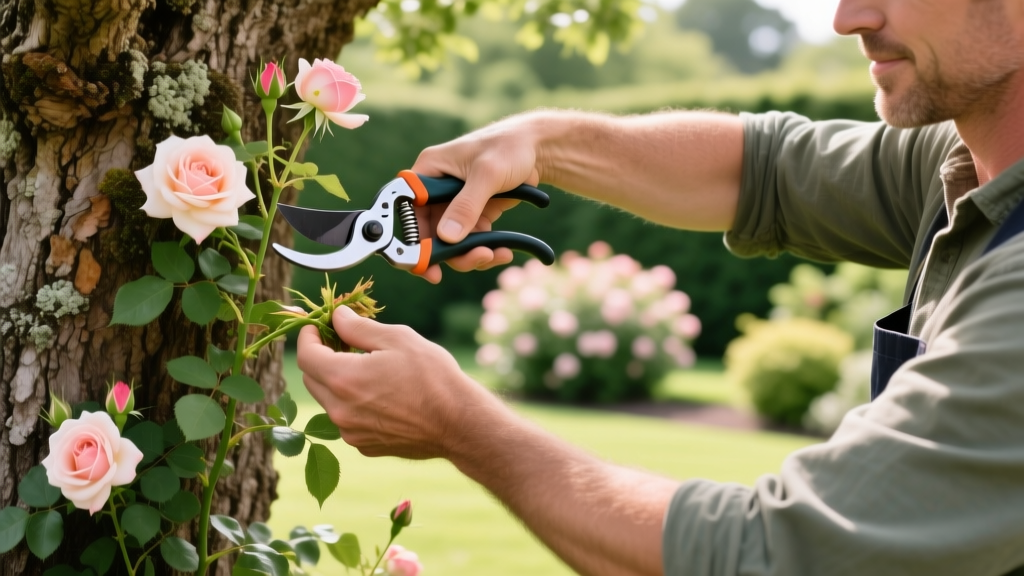
Pruning Climbing Flowers Off Trees: A Safe Removal Guide
The Hidden Dangers of Climbing Flowers on Trees
While climbing flowers like Wisteria sinensis, Campsis radicans (Trumpet Vine), and Clematis spp. add vertical interest to garden trellises, they become severe structural liabilities when allowed to colonize mature trees. According to the University of Maryland Extension, aggressive vines compromise tree health through three primary mechanisms: light deprivation, moisture trapping, and mechanical girdling.
When climbing flowers reach the tree's canopy, they create a "wind-sail" effect. The dense foliage of the vine catches wind, increasing the tree's wind resistance by up to 40%. During severe storms, this added leverage frequently leads to uprooting or catastrophic branch failure. Furthermore, twining vines physically constrict the trunk as both the tree and the vine expand in girth. This girdling crushes the tree's vascular cambium, severing the flow of water and nutrients. Finally, the dense mat of vine foliage traps moisture against the bark, creating an ideal microclimate for fungal pathogens and bark-rotting bacteria.
Essential Arborist Tools for Vine Severing
Removing established climbing flowers requires more than standard garden shears. The woody bases of mature vines can exceed three inches in diameter, demanding specialized cutting tools that provide mechanical leverage and clean cuts to prevent crushing the vine's vascular tissue.
- Bypass Pruners (e.g., Felco F-2): Essential for severing aerial rootlets and secondary vines under 1/2 inch in diameter. The bypass blade design ensures a clean cut that heals rapidly, preventing the vine from pushing out emergency lateral shoots.
- Geared Loppers (e.g., Fiskars 32" PowerGear): Required for primary vine stems between 1/2 inch and 2 inches thick. The compound action gearing multiplies cutting force, allowing you to sever tough, fibrous trumpet vines without crushing the stem.
- Pull-Stroke Pruning Saw (e.g., Silky Gomboy 210): Necessary for woody, established wisteria or climbing hydrangea trunks exceeding 2 inches. The Japanese pull-saw design cuts on the pull stroke, preventing the blade from binding in the fibrous vine wood.
- Personal Protective Equipment (PPE): Kevlar forearm sleeves and ANSI Z87.1 safety glasses are mandatory. Severing tension-loaded vines can cause the upper canopy to snap back violently, and many climbing flowers exude irritating sap when cut.
The "Window Cut" Protocol: Step-by-Step Removal
The most common mistake homeowners make is cutting a vine at the soil line and immediately attempting to rip the remaining foliage out of the tree canopy. This destroys the tree's bark. Instead, professional arborists utilize the "Window Cut" and "Leave-to-Die" methodology.
Step 1: Sever the Base (The Window Cut)
Locate the primary climbing flower stem at the base of the tree. Using your loppers or pruning saw, make two parallel cuts approximately 3 to 4 inches apart. Remove this 4-inch "window" of the vine entirely. This gap is critical; if you make a single cut, the vine's internal capillary action and proximity to the soil will often cause the severed ends to re-graft or push out adventitious roots that bridge the gap.
Step 2: Sever the Upper Crown
Move up the trunk to a height of about 5 to 6 feet. Make another set of parallel cuts to remove a second 4-inch window of the vine. This isolates the upper canopy of the climbing flower from its root system, effectively starving the top growth.
Step 3: The Waiting Period
Do not pull the upper vines off the tree. Leave the severed canopy in place for 3 to 6 weeks. As the isolated vine tissue dies, its grip on the tree bark will naturally loosen. The dead foliage will eventually turn brown, become brittle, and fall away during wind and rain events without tearing the tree's delicate phloem layer.
Critical Arborist Warning: Never pull live or freshly cut vines off a tree trunk. The physical force required will strip the tree's outer bark and damage the underlying cambium layer. This creates massive open wounds that invite wood-decay fungi like Armillaria mellea (honey fungus). Always sever the base and let the canopy die back naturally.
Species-Specific Management Matrix
Different climbing flowers exhibit unique growth habits that dictate how aggressively they must be managed. The Royal Horticultural Society (RHS) notes that while some climbers are relatively docile, others possess relentless regenerative capabilities.
| Species | Growth Habit | Primary Threat to Trees | Removal Difficulty | Herbicide Required? |
|---|---|---|---|---|
| Wisteria sinensis | Aggressive twining | Severe mechanical girdling; structural crushing | High | Yes (Cut-stump method) |
| Campsis radicans (Trumpet Vine) | Aerial rootlets & twining | Bark penetration; wind-sail weight | Medium-High | Yes (Highly resilient roots) |
| Clematis spp. | Leaf-stem twining | Light deprivation in lower canopy | Low | No (Manual removal usually sufficient) |
| Hydrangea petiolaris (Climbing Hydrangea) | Aerial rootlets | Moisture trapping; bark rot | Medium | No (Slow regrowth) |
Chemical Treatment for Aggressive Root Systems
For highly aggressive climbing flowers like Wisteria and Trumpet Vine, mechanical severing alone is rarely sufficient. These species store massive amounts of carbohydrates in their root systems and will rapidly push out new basal shoots within weeks of being cut. To achieve complete eradication, a targeted cut-stump herbicide application is required.
Use a brush killer containing Triclopyr (e.g., Garlon 4 or Ortho Brush-B-Gon). Mix the herbicide to a 20% concentration with water, adding a non-ionic surfactant to help the solution penetrate the vine's waxy cuticle, and a blue tracking dye so you can visually confirm where the chemical has been applied.
Within 15 minutes of making the base "Window Cut," use a small foam paintbrush to apply the 20% Triclopyr solution only to the outer 1-inch ring of the cut stump. This outer ring contains the vascular cambium, which will actively transport the herbicide down into the root system. Do not spray the surrounding soil or paint the entire face of the stump, as the dead inner heartwood will not transport the chemical and you risk soil contamination.
Monitoring and Secondary Shoot Control
Even with chemical treatment, aggressive climbing flowers may attempt to push out secondary shoots from the root crown during the following spring. Inspect the base of the tree monthly. If you see new shoots emerging from the soil, do not cut them; instead, crush them with gloved hands or apply a targeted foliar spray of 2% Glyphosate to the new, unfurled leaves. Repeated defoliation of these emergency shoots will eventually exhaust the root system's carbohydrate reserves, leading to total root death within one to two growing seasons.
Protecting the Tree Bark Post-Removal
Once the climbing flowers have died and naturally shed from the canopy, inspect the tree's trunk for residual damage. If the vine's twining habit has created deep constrictions in the bark, do not attempt to carve out the damaged tissue. The tree will naturally compartmentalize the wound and grow callus tissue over the constriction over the next few years. Apply a 2-inch layer of organic wood chip mulch around the tree's drip line (keeping it 3 inches away from the trunk itself) to retain soil moisture and encourage the tree's recovery. By utilizing the Window Cut protocol and targeted chemical applications, you can safely reclaim your mature trees from climbing flowers without compromising their structural integrity or vascular health.

