
Gardening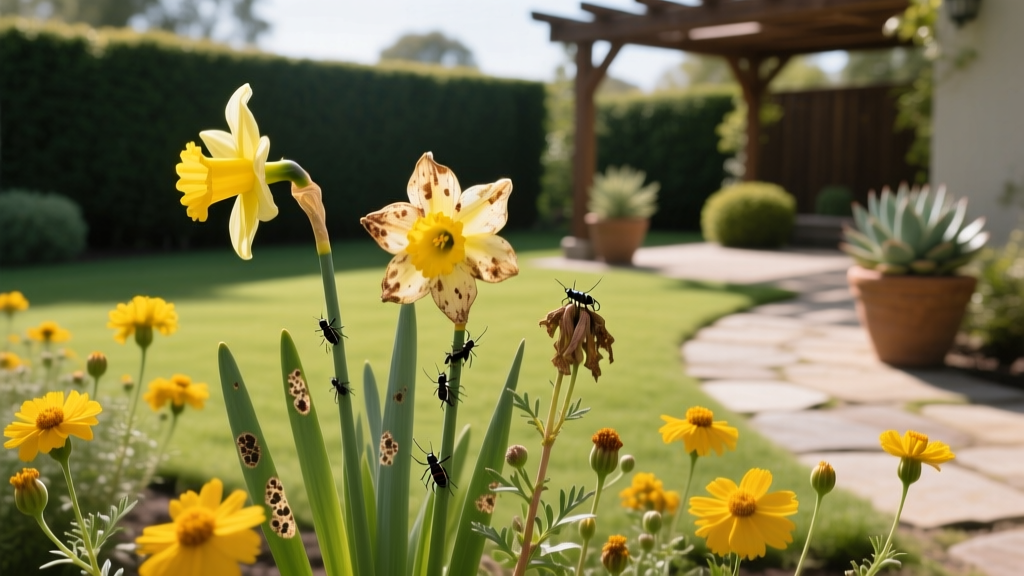
Why Are My Yellow Flower Varieties Fading? Symptom & Rescue Guide
The Diagnostic Matrix: Symptom to Root Cause
When vibrant yellow blooms turn pale, develop brown margins, or fail to open entirely, the underlying cause is rarely a simple lack of water. Yellow flower varieties—such as Rudbeckia hirta (Black-Eyed Susan), Coreopsis verticillata (Threadleaf), Hemerocallis (Daylily), and Tagetes (Marigold)—have distinct physiological thresholds. Misdiagnosing petal fading as a watering issue often leads to root rot, while treating a soil pH lockout with standard NPK fertilizers only exacerbates the problem.
Use the diagnostic matrix below to identify the exact failure mode affecting your yellow perennials and annuals before applying any amendments.
| Visible Symptom | Primary Culprit | Most Affected Varieties | Immediate Rescue Action |
|---|---|---|---|
| Petals turning white/pale yellow with crispy brown edges | UV degradation & Phosphorus deficiency | Stella de Oro Daylilies, French Marigolds | Apply liquid kelp extract; switch to 5-10-5 NPK |
| Veins remain green, but leaf tissue turns yellow (Chlorosis) | Iron/Manganese lockout (High Soil pH) | Coreopsis, Azaleas (yellow blooming) | Drench with chelated iron (Sprint 330); apply elemental sulfur |
| Flowers turn green, become deformed, or remain as tight buds | Aster Yellows Phytoplasma | Purple Coneflower (yellow cultivars), Black-Eyed Susan | Rogue and destroy infected plants immediately; do not compost |
| Lower leaves yellowing and dropping; blooms aborting early | Magnesium deficiency or root-bound stress | Threadleaf Coreopsis, Pansies | Foliar spray with Epsom salts (1 tbsp/gallon); root-prune if potted |
Nutrient Deficiencies: Differentiating Petal Fading from Foliar Chlorosis
The most common mistake gardeners make with yellow flower varieties is conflating petal senescence with foliar chlorosis. These are two entirely different physiological processes requiring opposite interventions.
Petal Fading and the Phosphorus Connection
If the leaves are dark green and healthy, but the yellow petals are washing out to a pale cream or developing necrotic (brown) margins, the plant is likely suffering from a phosphorus deficiency or excessive UV degradation. Phosphorus is critical for chromoplast development—the organelles responsible for yellow and orange pigmentation.
For heavy rebloomers like the Hemerocallis 'Stella de Oro', applying a high-nitrogen fertilizer (like a 20-10-10 lawn feed) will force the plant to produce lush green fans at the expense of flower scapes. To rescue fading blooms and trigger a second flush, apply a granular 5-10-5 or 10-30-20 bloom-booster fertilizer at a rate of 2 cups per 100 square feet, lightly scratching it into the top inch of the soil.
Foliar Chlorosis and the Iron Lockout
If the yellowing is happening on the leaves—specifically where the leaf tissue turns pale yellow but the veins remain distinctly green—you are dealing with interveinal chlorosis. According to University of Minnesota Extension, this is almost always an iron or manganese deficiency caused by alkaline soil (pH above 7.0), not a lack of iron in the soil itself.
Expert Rescue Protocol: Do not use standard iron sulfate on alkaline soils; it will instantly bind with calcium and become unavailable to the plant. Instead, use a synthetic chelated iron like Sprint 330 (Fe-EDDHA). Mix 1 tablespoon per gallon of water and apply as a soil drench directly to the root zone of your Coreopsis or Rudbeckia. You will see greening in the new growth within 10 to 14 days.
Environmental Stressors: Correcting Soil pH Lockout
Chelated iron is a temporary rescue fix. To permanently resolve nutrient lockout for acid-preferring yellow bloomers, you must lower the soil pH. Most yellow perennials, including Black-Eyed Susans and Threadleaf Coreopsis, thrive in a slightly acidic pH range of 5.8 to 6.5.
As detailed in the NC State Extension Plant Toolbox, Rudbeckia hirta is highly susceptible to powdery mildew and nutrient deficiencies when stressed by improper soil chemistry. To lower your soil pH by 1.0 point in a standard loamy soil, apply 30% elemental sulfur (such as Espoma Organic Soil Acidifier) at a rate of 1.2 pounds per 100 square feet.
- Timing: Apply sulfur in early spring or late fall. Soil bacteria (Thiobacillus) require warm soil temperatures (above 55°F) and moisture to convert elemental sulfur into sulfuric acid.
- Expectation: pH adjustment is not instant. It takes 3 to 6 months for elemental sulfur to fully react in the soil profile. Retest your soil pH after 4 months before reapplying.
Pest & Pathogen Triage: The Aster Yellows Threat
Not all symptoms can be fixed with fertilizer. If your yellow Echinacea cultivars (like 'Mac 'n' Cheese') or Rudbeckia produce flowers that look like deformed, green, leafy rosettes instead of actual petals, your plants are infected with Aster Yellows.
CRITICAL WARNING: No Cure Exists
Aster Yellows is caused by a phytoplasma vectored by the aster leafhopper (Macrosteles quadrilineatus). Once a plant is infected, the pathogen is systemic. Insecticides will not save the plant because the leafhopper transmits the phytoplasma during its first few bites, long before the chemical kills the insect. You must dig up the entire plant, including the root crown, and dispose of it in the municipal trash. Do not compost infected tissue.
Aster Yellows is caused by a phytoplasma vectored by the aster leafhopper (Macrosteles quadrilineatus). Once a plant is infected, the pathogen is systemic. Insecticides will not save the plant because the leafhopper transmits the phytoplasma during its first few bites, long before the chemical kills the insect. You must dig up the entire plant, including the root crown, and dispose of it in the municipal trash. Do not compost infected tissue.
For secondary pests like aphids and thrips that cause petal scarring and stunted yellow buds, avoid broad-spectrum neonicotinoids which harm the very pollinators your yellow flowers rely on. Instead, use a Spinosad-based spray (like Captain Jack's Deadbug Brew) applied strictly in the late evening when bees are no longer foraging. Apply at a rate of 2 oz per gallon of water, ensuring complete coverage of the undersides of the leaves.
Step-by-Step Rescue Protocol for Fading Blooms
If your yellow flower varieties are underperforming mid-season, execute this 48-hour triage protocol to salvage the bloom cycle:
- Hour 1: Test and Prune. Use a calibrated digital soil pH meter to test the root zone. Using sterilized bypass pruners, deadhead all faded, pale, or brown-edged blooms back to the first set of healthy lateral leaves. This stops the plant from wasting energy on seed production.
- Hour 2: The Chelated Drench. If pH is above 7.0, mix a chelated iron (Fe-EDDHA) drench and apply 1 quart per mature plant. If pH is below 6.5, skip the iron and proceed to step 3.
- Hour 12: Phosphorus & Kelp Boost. Apply a liquid seaweed extract (such as Kelp46) mixed with a high-phosphorus liquid bloom booster (10-30-20). Foliar spray the leaves in the early morning to bypass soil lockout and deliver cytokinins directly to the plant tissue.
- Hour 48: Moisture Calibration. Yellow perennials like Coreopsis are drought-tolerant once established but will abort buds if subjected to extreme dry/wet cycles. Install a soil moisture probe and ensure the top 2 inches of soil dry out completely between deep waterings to prevent Phytophthora root rot.
Frequently Asked Questions
Why are my marigold flowers turning brown before they even open?
This is typically caused by Botrytis cinerea (gray mold) or thrip damage, exacerbated by overhead watering. Switch to drip irrigation and apply a copper fungicide spray (like Bonide Copper Fungicide) at the first sign of bud rot.
Can I use coffee grounds to lower soil pH for my yellow azaleas?
No. Used coffee grounds have a near-neutral pH (around 6.5 to 6.8) and will not effectively lower alkaline soil. Rely on elemental sulfur or aluminum sulfate for measurable pH reduction.

