
Gardening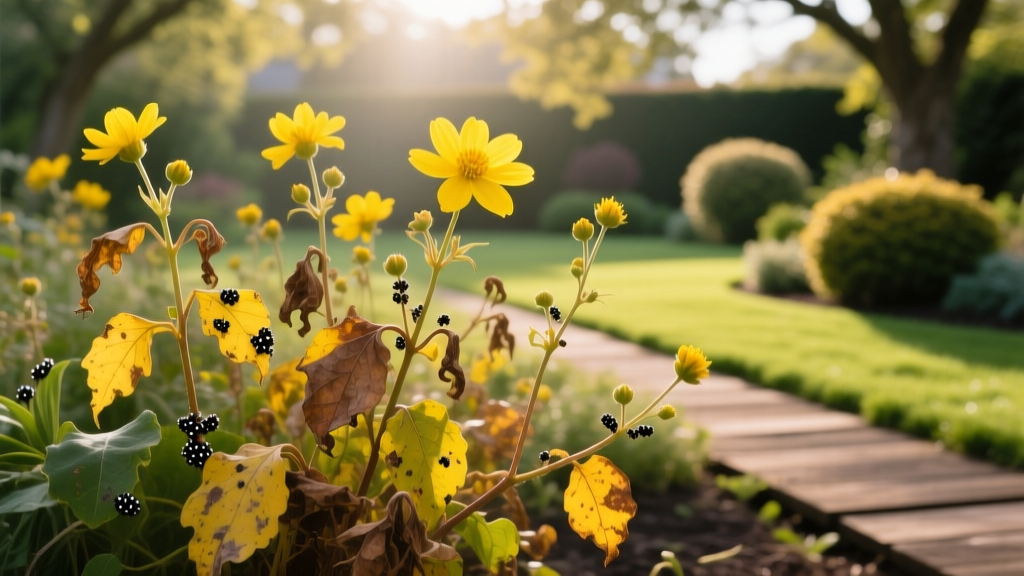
Diagnosing and Rescuing Failing Yellow Flowering Plants in the Garden
The Diagnostic Triage: Why Yellow-Blooming Plants Fail
Yellow flowering plants—ranging from the early spring explosion of Forsythia x intermedia to the mid-summer stamina of Rudbeckia hirta (Black-eyed Susan) and Hemerocallis (Daylilies)—are foundational to pollinator gardens and landscape design. However, when these specific cultivars begin to fail, the symptoms often mimic general plant stress, leading gardeners to apply the wrong remedies. A wilting Coreopsis verticillata is rarely suffering from simple underwatering; it is usually drowning in heavy clay. Similarly, a Stella de Oro daylily with pale foliage is likely experiencing micronutrient lockout, not a nitrogen deficiency. Effective rescue requires precise symptom identification and targeted intervention.
Symptom 1: Interveinal Chlorosis vs. Nitrogen Deficiency
When the leaves of your yellow flowering plants turn pale, the first diagnostic step is examining the vein structure. If the entire leaf is uniformly yellowing, starting from the older, lower leaves, you are looking at a nitrogen deficiency. However, if the leaf tissue turns yellow while the veins remain distinctly green—a condition known as interveinal chlorosis—you are dealing with iron lockout. This is exceptionally common in yellow-blooming perennials grown in alkaline soils (pH above 7.0).
According to soil science data from the University of Minnesota Extension, high soil pH chemically binds iron, rendering it insoluble and unavailable to plant roots. The standard retail remedy, Fe-EDTA (chelated iron), becomes completely ineffective in soils with a pH above 7.0. To rescue chlorotic daylilies and coreopsis, you must source Fe-EDDHA (iron ethylenediamine-N,N'-bis(2-hydroxyphenylacetic acid)). This specific chelate remains stable and bioavailable in soils with a pH up to 9.0. Apply Fe-EDDHA as a soil drench at a rate of 1 to 2 ounces per 100 square feet, mixed with water, during the early morning to prevent rapid UV degradation.
Symptom 2: Bud Blast and Empty Stems
Shrubs like Forsythia and Witch Hazel (Hamamelis), prized for their brilliant yellow spring displays, frequently suffer from 'bud blast'—a failure to produce flowers despite vigorous green leaf growth. This is almost exclusively a mechanical error caused by improper pruning timelines. These species bloom on old wood, meaning the flower buds for the following spring are set in late summer and early fall of the previous year.
CRITICAL PRUNING WARNING: Never prune spring-blooming yellow shrubs in the fall or late summer. You will physically remove the pre-set flower buds. The absolute deadline for pruning Forsythia is within three weeks of the flowers fading in spring. If you miss this window, put the shears away and accept a reduced bloom the following year.
If your pruning timing was correct but blooms are still sparse, the issue is likely a phosphorus lockout. Apply a targeted 4-12-0 bone meal fertilizer in early spring as soon as the ground thaws, scratching it lightly into the top two inches of the drip line to encourage robust bud formation.
The 48-Hour Rescue Matrix
When a prized yellow bloomer shows acute distress, use this diagnostic matrix to initiate immediate triage before the plant suffers irreversible tissue necrosis.
| Visible Symptom | Probable Cause | Immediate Rescue Fix |
|---|---|---|
| Lower leaves yellowing uniformly; stunted growth | Nitrogen depletion or heavy leaching from excessive rain | Apply liquid fish emulsion (2-4-0) as a foliar spray for rapid uptake within 24 hours. |
| Green veins with yellow tissue; necrotic brown edges | Iron/Manganese chlorosis due to high soil pH | Drench root zone with Fe-EDDHA chelated iron; avoid liming the area. |
| Basal stems turning mushy and brown; sudden wilting | Phytophthora crown rot (waterlogged clay soils) | Pull back mulch from the crown; apply phosphorous acid fungicide; improve drainage. |
| Flower petals turning green; stunted, deformed shoots | Aster Yellows phytoplasma (vector: leafhoppers) | No cure. Cull and destroy the plant immediately to protect surrounding flora. |
Pathogen and Pest Vectors Specific to Yellow Bloomers
Plants in the Asteraceae family, particularly Rudbeckia hirta (Black-eyed Susan) and Echinacea, are highly susceptible to Aster Yellows, a devastating phytoplasma disease. The primary symptom is phyllody—a mutation where the bright yellow ray florets develop into green, leaf-like structures, and the central cone becomes distorted. This is transmitted by the aster leafhopper (Macrosteles quadrilineatus).
Unlike fungal infections, Aster Yellows has no chemical cure. The Cornell University IPM program emphasizes that infected plants act as permanent reservoirs for the phytoplasma. If you spot green petals on your yellow coneflowers or black-eyed Susans, you must rogue (dig up) the entire plant, including the root system, and dispose of it in the municipal trash. Do not compost it. To protect the remaining yellow bloomers in your garden, apply a 1% insecticidal soap spray or a Spinosad-based organic insecticide every 7 to 10 days during peak leafhopper migration periods (late May through June) to reduce vector populations.
Managing Spider Mites on Coreopsis and Marigolds
During hot, dry spells in mid-summer, Coreopsis verticillata and Tagetes (Marigolds) frequently fall victim to two-spotted spider mites (Tetranychus urticae). The initial symptom is a stippling of tiny yellow dots on the upper leaf surface, which eventually coalesces into a bronzed, dry appearance. Fine silk webbing will be visible at the leaf axils.
Do not use broad-spectrum synthetic pyrethroids (like bifenthrin) for spider mites; these chemicals eliminate the predatory mites (Phytoseiulus persimilis) that naturally control the pests, leading to a massive secondary outbreak. Instead, use a horticultural oil or a 1.5% Neem oil emulsion, applying it strictly at dusk to avoid phytotoxicity (leaf burn) caused by the interaction of oil and direct UV sunlight.
Soil Amendment Protocol for Heavy Clay Gardens
Yellow flowering perennials like Coreopsis 'Moonbeam' and Achillea 'Moonshine' demand sharp drainage. In heavy clay soils, they routinely succumb to winter crown rot. The common gardening advice to 'add peat moss to improve drainage' is fundamentally flawed for these species; peat moss retains up to 20 times its weight in water, exacerbating the drowning effect during winter thaws.
'To rescue yellow bloomers in clay, you must alter the soil's macro-porosity, not just its organic content. Inorganic amendments like expanded shale create permanent air pockets that prevent the anaerobic conditions where Phytophthora thrives.' — Missouri Botanical Garden Plant Care Guidelines
The 4-Step Clay Rescue Procedure
- The Percolation Test: Dig a 12-inch deep by 12-inch wide hole near the failing plant. Fill it with water and let it drain completely. Fill it a second time and measure the drop. If the water level drops less than 1 inch per hour, your drainage is critically poor and requires immediate mechanical intervention.
- Crown Elevation: Carefully dig up the failing Coreopsis or Daylily. Gently wash the roots to inspect for rot, snipping away any black, mushy tissue with sterilized pruners.
- Inorganic Amendment: Mix the native clay backfill with 30% expanded shale or 1/4-inch crushed granite by volume. Do not use perlite, as it crushes and compacts in heavy clay over time.
- Replanting High: Replant the specimen so that the crown sits exactly 1.5 to 2 inches above the surrounding soil grade. Mound the amended soil around the roots to create a gentle berm that sheds surface water away from the crown during heavy rain events.
Quick Reference: The Yellow Bloom Nutrient Profile
Yellow flowering plants generally prioritize phosphorus for bloom production and potassium for disease resistance over excessive nitrogen, which promotes weak, leggy foliage at the expense of flowers.
- Spring Baseline: 5-10-5 slow-release granular fertilizer (applied at 2 lbs per 100 sq ft).
- Mid-Summer Boost: Liquid kelp extract (0-0-1) applied as a foliar spray every 14 days to maintain bloom color intensity and heat tolerance.
- Autumn Prep: Zero nitrogen. Apply a top-dressing of potash (0-0-60) at a rate of 1 lb per 100 sq ft to harden off cell walls before winter dormancy.
By shifting from reactive, generalized watering to proactive, symptom-specific diagnostics, you can extend the lifespan and vibrancy of your yellow flowering plants. Whether you are correcting a micronutrient lockout with Fe-EDDHA, culling a phytoplasma infection, or restructuring clay soil with expanded shale, precise intervention is the key to maintaining a brilliant, resilient landscape.

