
Gardening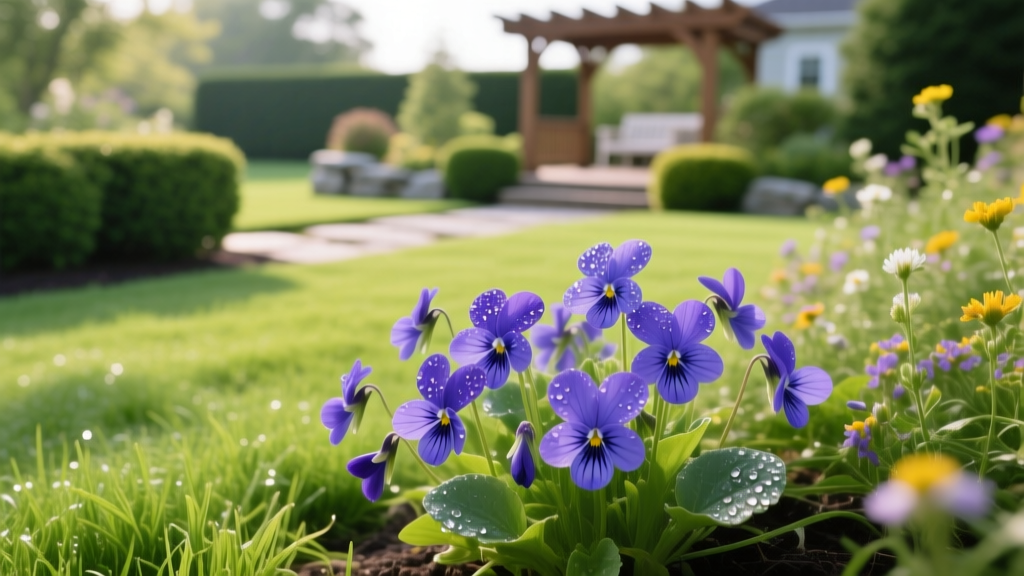
What Is Rhode Island's State Flower? Growing the Common Blue Violet
The Official State Flower of Rhode Island: A Botanical Overview
When asking what is Rhode Island's state flower, the answer points to a humble yet ecologically vital native perennial: the Violet. Specifically, the legislation designates the Common Blue Violet (Viola sororia) as the official state flower. While often dismissed as a mere lawn weed by turf enthusiasts, this native wildflower is a cornerstone of early-spring pollinator support and a resilient, shade-tolerant groundcover for woodland and native garden landscapes.
Unlike highly bred ornamental garden pansies (Viola × wittrockiana), the Common Blue Violet is a hardy, low-growing herbaceous perennial native to eastern North America. It thrives in USDA Hardiness Zones 3 through 9, forming dense colonies via underground rhizomes and prolific self-seeding. For gardeners looking to integrate native flora into their landscapes, understanding the botanical nuances and cultivation requirements of Viola sororia is essential for success.
The 1897 Schoolhouse Vote: A Unique Legislative History
The history of Rhode Island's state flower is marked by a fascinating bureaucratic delay. In 1897, the Rhode Island General Assembly allowed school children to vote on a state flower. The violet won overwhelmingly, capturing the hearts of the youth. However, the legislature inexplicably failed to formalize the children's choice into law for over seven decades.
Historical Timeline of the Rhode Island Violet:
- 1897: School children vote and select the Violet as their preferred state flower.
- 1968: The Rhode Island General Assembly finally passes legislation officially adopting the Violet as the state flower, 71 years after the initial vote.
You can verify this unique legislative history through the NetState directory of Rhode Island state symbols, which documents the 71-year gap between the popular vote and legal codification.
Botanical Profile: Identifying Viola sororia
Accurate identification is critical, especially when foraging or managing garden beds. The Native Plant Trust's Go Botany database highlights several key morphological traits that distinguish the Common Blue Violet from other woodland species.
| Characteristic | Botanical Specifics |
|---|---|
| Scientific Name | Viola sororia (syn. Viola papilionacea) |
| Family | Violaceae |
| Leaf Morphology | Basal, heart-shaped (cordate), finely toothed margins, glabrous (smooth) surfaces. |
| Flower Structure | 5 petals: 2 upper, 2 lateral (bearded), 1 lower (veined nectar guide). Color ranges from deep blue-violet to white. |
| Bloom Period | Mid to late spring (April–June in New England). |
| Preferred Soil pH | 6.0 to 7.5 (Slightly acidic to neutral). |
The Secret of Cleistogamy
One of the most remarkable traits of Viola sororia is its dual reproductive strategy. In spring, the plant produces the familiar showy, open flowers designed to attract cross-pollinating insects. However, as summer approaches and temperatures rise, the violet produces cleistogamous flowers. These are small, closed, bud-like structures that develop near the soil surface. They never open; instead, they self-pollinate internally and forcefully eject seeds to colonize new areas. This mechanism ensures the plant's survival even if spring pollinator populations crash or weather conditions prevent insect activity.
How to Cultivate the Common Blue Violet in Your Garden
While violets will readily colonize a damp lawn on their own, intentionally cultivating them in a shade garden or pollinator border requires specific soil preparation and maintenance protocols.
Step 1: Site Selection and Soil Amendment
Violets thrive in dappled shade or part-sun environments. Full sun in mid-summer will scorch the foliage and induce early dormancy. Before planting, test your soil pH. If the pH is below 5.5, apply garden lime at a rate of 5 lbs per 100 square feet to raise it to the optimal 6.0–7.5 range. Incorporate 2 to 3 inches of aged leaf mold or compost to mimic woodland floor conditions. Avoid heavy peat moss, which can excessively lower soil pH and retain too much winter moisture, leading to crown rot.
Step 2: Planting Depth and Spacing
When transplanting nursery-grown plugs or divisions, do not bury the crown. The point where the rhizome meets the leaf petioles must sit exactly at the soil line. Planting too deeply invites fungal pathogens like Fusarium to rot the crown. Space plugs 8 to 12 inches apart; their rhizomatous growth habit will fill in gaps within a single growing season.
Step 3: Moisture Management
Viola sororia requires consistent moisture during its active spring growth phase. Apply a 1-inch layer of shredded hardwood mulch to retain soil moisture and keep the shallow rhizomes cool. Avoid thick layers of pine bark, which can create a hydrophobic barrier and acidify the soil over time.
Violet vs. Lookalikes: Avoiding Misidentification
Early in the spring, before flowers fully emerge, the basal leaves of the Common Blue Violet are frequently confused with other common ground-dwelling plants. Use this comparison matrix to ensure accurate identification, particularly if you are managing a lawn or foraging for edible greens.
| Feature | Common Blue Violet (V. sororia) | Wild Geranium (G. maculatum) | Creeping Charlie (G. hederacea) |
|---|---|---|---|
| Leaf Shape | Unlobed, heart-shaped (cordate) | Deeply lobed, palmate (5-7 segments) | Scalloped edges, rounded, kidney-shaped |
| Growth Habit | Basal rosette from thick rhizome | Upright, branching stems (1-2 ft tall) | Prostrate, rooting at nodes (stolons) |
| Scent | Mild, earthy, floral | Slightly astringent, herbaceous | Strong, pungent minty odor when crushed |
Ecological Benefits: Why Violets Matter for Pollinators
Integrating Rhode Island's state flower into your landscape provides critical early-season resources for native wildlife. Violets are not just ornamental; they are ecological workhorses.
Pollinator & Host Plant Data
- Fritillary Butterflies: Viola sororia is the primary larval host plant for several Fritillary species, including the Great Spangled Fritillary (Speyeria cybele) and the Meadow Fritillary (Boloria bellona). Without violets, these butterfly populations cannot reproduce.
- Native Mining Bees: Early-emerging Andrenid bees (Andrena spp.) rely heavily on violet nectar and pollen when few other floral resources are available in April and May.
- Ant Dispersal (Myrmecochory): Violet seeds feature an elaiosome—a fleshy, nutrient-rich appendage. Ants carry the seeds to their underground nests, eat the elaiosome, and leave the seed safely planted in aerated, nutrient-rich soil.
Frequently Asked Questions
Are Rhode Island's state violets edible?
Yes, the young leaves and flowers of Viola sororia are edible and highly nutritious, containing high levels of Vitamin C and rutin. They can be used raw in salads or candied for baking. However, you must positively identify the plant before consumption, ensuring it has not been treated with synthetic lawn herbicides or confused with toxic lookalikes.
Why are my violets producing small green buds instead of flowers in summer?
These are not diseased flowers; they are the cleistogamous (self-pollinating) seed pods mentioned earlier. This is a natural, genetically hardwired survival mechanism of the species to ensure seed production during the heat of summer when insect pollinators may be less focused on violet blooms.
How do I control violet spread in a formal turf lawn?
If you prefer a uniform turfgrass lawn over a native groundcover, managing Viola sororia requires cultural and mechanical intervention. Violets thrive in compacted, moist soils where turfgrass struggles. To suppress them, core-aerate your lawn annually to reduce compaction, and apply corn gluten meal in early spring (when forsythia blooms) to act as a natural pre-emergent against violet seeds. For established clumps, hand-pulling using a dandelion weeder to extract the entire rhizome is the most effective non-chemical removal method.

