
Gardening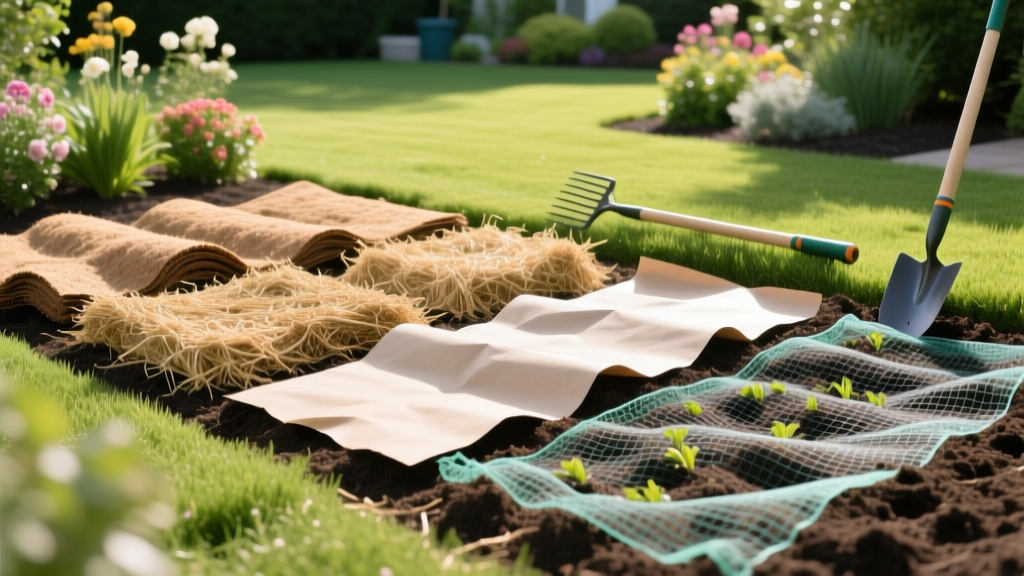
Seed Covering Materials: Best Options for Optimal Seed Germination
The Mechanics of Seed Imbibition and Covering
Seed covering is not merely an aesthetic finishing step; it is a critical microclimate management technique that dictates germination success. When a seed is sown, it must undergo imbibition—the rapid absorption of water, typically taking in 2 to 3 times its dry weight. Uncovered seeds exposed to midday sun and wind can lose this moisture in under two hours, halting the germination process and causing embryo death. A proper seed covering extends the moisture retention window to 12 hours or more, buffers soil temperature fluctuations by up to 10°F, and protects against seed predation by birds and foraging insects.
According to Penn State Extension, establishing a consistent seed-to-soil contact layer while maintaining a breathable top dressing is the primary driver for uniform emergence. However, choosing the wrong covering material—or applying it at the wrong depth—can lead to crusting, smothering, or fungal damping-off. This guide breaks down the exact materials, costs, and application metrics required for successful lawn and garden establishment in 2026.
Material Comparison Matrix: Cost, Retention, and Risk
The table below compares the five most common seed covering materials used in residential and commercial landscaping, evaluated on moisture retention, crusting risk, and current market pricing.
| Material | Moisture Retention | Crusting Risk | Weed Seed Risk | Est. Cost (per 1,000 sq ft) |
|---|---|---|---|---|
| Screened Compost (1/4") | Excellent | Low | Low (if hot-processed) | $15 - $25 |
| Wheat Straw | Good | None | Low | $8 - $12 |
| Recycled Paper Mulch | Very Good | Low | None | $18 - $22 |
| Sphagnum Peat Moss | Excellent | High (if un-amended) | None | $12 - $16 |
| Fine Topsoil | Poor | Very High | High | $5 - $10 |
Deep Dive: Selecting the Right Cover for Your Scenario
1. Screened Compost (The Gold Standard)
For both lawn overseeding and vegetable garden direct-sowing, screened compost is the premier seed covering. The critical specification here is the screen size: the compost must be screened to a maximum of 3/8-inch, with 1/4-inch being ideal. This ensures the particles are fine enough to nestle around small seeds (like Kentucky Bluegrass or carrots) without creating physical barriers to the emerging coleoptile.
Compost provides a slow-release nutrient charge and introduces beneficial mycorrhizal fungi that protect seedlings from soil-borne pathogens. In 2026, bulk screened compost averages $35 to $50 per cubic yard. One cubic yard, applied at a 1/4-inch depth, will cover approximately 1,000 square feet. Avoid composts with high wood-ash or unfinished bark content, as these can alter soil pH drastically and tie up nitrogen during decomposition.
2. Straw Mulch (The Budget Option with Caveats)
Straw is the traditional go-to for large-scale lawn establishment, but the distinction between straw and hay is a common failure point. Hay contains the seed heads of forage grasses and legumes, guaranteeing a massive weed infestation. You must source clean wheat straw, which has largely been threshed free of viable seeds. Oat straw is a secondary option but carries a higher risk of sprouting.
One standard 50-pound bale of wheat straw covers roughly 1,000 square feet when applied correctly. The goal is not to blanket the soil entirely; you should still see 20% to 30% of the soil and seed through the straw matrix. This allows sunlight penetration for photoblastic seeds while breaking up the kinetic energy of raindrops to prevent soil crusting.
3. Recycled Paper Mulch (e.g., Penn Mulch)
Products like Penn Mulch or Greenview Seed Accelerator are engineered from recycled newsprint and cardboard, often dyed green or brown for aesthetic integration. These materials are highly effective because they act like a sponge, holding up to 60% of their weight in water. As they break down over 4 to 6 weeks, they add organic matter to the soil without requiring a cleanup step.
Paper mulch is applied using a standard rotary broadcast spreader (like a Lesco or Scotts model) with the baffle set to a wide opening. A 50-pound bag typically covers 1,500 square feet. The primary drawback is wind vulnerability during application; paper mulch should only be spread on days with wind speeds under 8 mph, and it must be lightly watered immediately to tack it to the soil surface.
Tool Selection for Uniform Application
Achieving a uniform seed covering depth is nearly impossible by hand for areas larger than 500 square feet. Investing in or renting the right equipment prevents the localized smothering that occurs when compost is dumped and raked manually.
- Tow-Behind Compost Spreaders: Models like the Earthway 2050P or SpreadRite feature an internal agitator that breaks up clumps, laying down a perfectly even 1/8-inch to 1/4-inch layer of compost.
- Peat Moss Rollers: These cylindrical mesh drums are filled with peat moss or fine compost. As you push them, the material sifts out evenly. They are ideal for tight spaces where tow-behind equipment cannot fit.
- Rotary Broadcast Spreaders: Essential for pelletized paper mulch. Ensure the hopper is completely dry before loading, as paper mulch will bridge and clog if exposed to even ambient humidity.
The 'Smothering Threshold': Exact Application Rates
The most frequent cause of germination failure is applying the seed covering too thickly. Seeds require specific environmental cues to trigger emergence, and burying them beyond their energy reserves results in rot. Follow these strict depth parameters based on seed type:
- Fine Fescues and Kentucky Bluegrass: Maximum 1/8-inch covering. These seeds are tiny and possess minimal endosperm energy reserves.
- Tall Fescue and Perennial Ryegrass: Maximum 1/4-inch covering. Their larger size allows them to push through slightly denser compost layers.
- Large Vegetable Seeds (Peas, Beans, Corn): Can handle 1/2-inch to 1-inch of covering, but rely more on trench depth than top-dressing.
- Photoblastic Seeds (Lettuce, Celery, some wildflowers): Require light to germinate. Do not cover with opaque compost; use a dusting of fine vermiculite or a single, sparse layer of straw instead.
Critical Warning: Never apply pre-emergent herbicides (like prodiamine or dithiopyr) to a lawn or garden bed where you intend to sow seed and apply a covering. Pre-emergents create a chemical barrier at the soil surface that inhibits cell division in germinating seeds, rendering your seed covering and sowing efforts entirely futile.
Slope and Erosion Considerations
Standard loose seed coverings fail on slopes greater than 15%. When rain hits a sloped, compost-covered seedbed, the covering and the seed wash into a concentrated slurry at the bottom of the incline. For slopes between 15% and 30%, substitute loose coverings with rolled erosion control blankets (such as Curlex or straw-backed geotextiles). These blankets are pinned to the soil with 6-inch biodegradable wood stakes, holding the seed and a thin layer of tackifier in place while allowing water and light to penetrate. For slopes exceeding 30%, hydroseeding with a bonded fiber matrix (BFM) is the only viable establishment method.
Troubleshooting Seed Covering Failures
Even with the right materials, environmental variables can disrupt establishment. Use this diagnostic framework to identify and correct covering-related failures.
- Symptom: Soil surface forms a hard, cracked crust; seedlings are bent or trapped beneath the surface.
- Cause: The 'Concrete Effect.' This occurs when fine, clay-heavy topsoil or un-amended peat moss is used as a covering and allowed to dry out completely between waterings. Fix: Lightly drag a leaf rake or a piece of chain-link fence over the crusted surface to break the tension. For future plantings, never use raw topsoil as a cover; always use compost or mix peat moss with 30% perlite to maintain structure.
- Symptom: Seeds germinate but collapse at the soil line, turning brown and mushy.
- Cause: Damping-off disease, exacerbated by a seed covering that is too thick and retains excessive moisture, cutting off airflow to the soil surface. Fix: Reduce the covering thickness by 50% on your next application and ensure you are watering deeply but less frequently, rather than keeping the top layer constantly saturated. Michigan State University Extension notes that allowing the very top millimeter of the covering to dry slightly between irrigation cycles drastically reduces fungal pressure.
- Symptom: Patchy germination with bare spots aligned with water runoff patterns.
- Cause: Seed and covering washout due to high water pressure or slope. Fix: Switch to a heavier covering material (like paper mulch which tacks to the soil) or install erosion blankets. Always use a sprinkler head that produces a fine mist or droplet size; heavy impact sprinklers will physically displace the seed covering.
Expert Insight: The ultimate test of a successful seed covering is the 'knuckle test.' After application and initial watering, press your knuckle into the soil. The covering should yield easily and feel spongy, not compacted or muddy. If it compresses into a dense puck, your material is too fine or applied too heavily, and you risk suffocating the emerging radicle.

