Gardening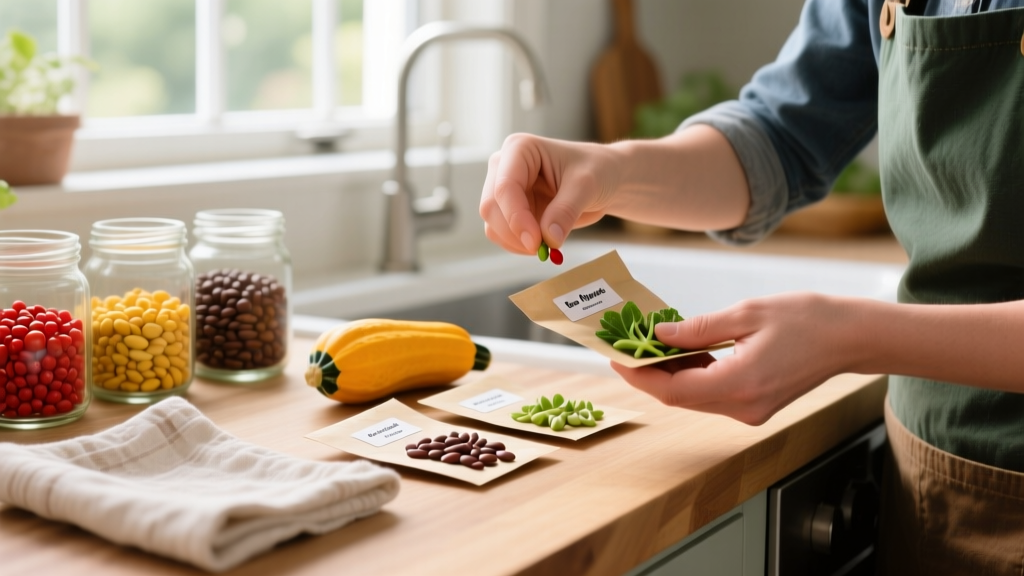
Seed Saving for Beginners: How to Store Vegetable Seeds
David ParkPublished
Why Save Your Own Seeds?
Saving seeds from your garden preserves heirloom varieties, ensures plants adapted to your local climate, and eliminates annual seed costs. A single packet of commercial tomato seeds costs $3 to $5; saving seeds from one healthy plant can provide enough for 5-10 years of plantings. The key is knowing which plants produce true-to-type seeds and how to process and store them properly.
Open-Pollinated vs Hybrid Seeds
Only save seeds from open-pollinated and heirloom varieties. Hybrid seeds (labeled F1) produce unpredictable offspring — the next generation may lack the desirable traits of the parent plant. Open-pollinated varieties breed true when isolated from other varieties of the same species.
Self-Pollinating (Easiest to Save)
Tomatoes, beans, peas, and lettuce self-pollinate within the flower, so cross-contamination is rare. Simply let the fruit fully ripen on the plant, extract seeds, dry, and store. These are the best starting point for beginners.
Cross-Pollinating (Require Isolation)
Squash, corn, cucumbers, and brassicas need insect or wind pollination between plants. If two varieties of the same species grow nearby, they will cross-pollinate. Save pure seed by spacing varieties at least 100-1,000 feet apart or using physical barriers like mesh bags over flowers.
Seed Processing Methods
Dry Processing (Beans, Peas, Lettuce, Flowers)
Let seed pods dry completely on the plant until they rattle. Harvest pods, thresh them to separate seeds, and winnow by pouring between bowls in a light breeze — chaff blows away while seeds fall through.
Wet Processing (Tomatoes, Cucumbers, Squash)
Scoop seeds with their surrounding gel into a jar, add water, and ferment for 2-3 days at room temperature. This fermentation kills seed-borne diseases and removes the germination-inhibiting gel coating. Rinse seeds thoroughly, spread on a paper towel, and dry for 1-2 weeks.
Proper Seed Storage
Seeds need cool, dry, and dark conditions. Ideal storage is 32-41°F with less than 8 percent seed moisture content. Store dried seeds in labeled paper envelopes inside airtight glass jars or plastic containers in the refrigerator. Add a desiccant packet to absorb residual moisture. Properly stored seeds remain viable for:
- Tomatoes, peppers, beans, peas: 4-6 years
- Lettuce, squash, cucumbers: 3-5 years
- Carrots, onions, spinach: 1-2 years
Viability Testing
Before planting season, test stored seeds by placing 10 seeds on a damp paper towel, rolling it up, and keeping it warm for 5-10 days. Count germinated seeds to calculate the germination rate. If fewer than 50 percent sprout, replace your seed stock.