
Gardening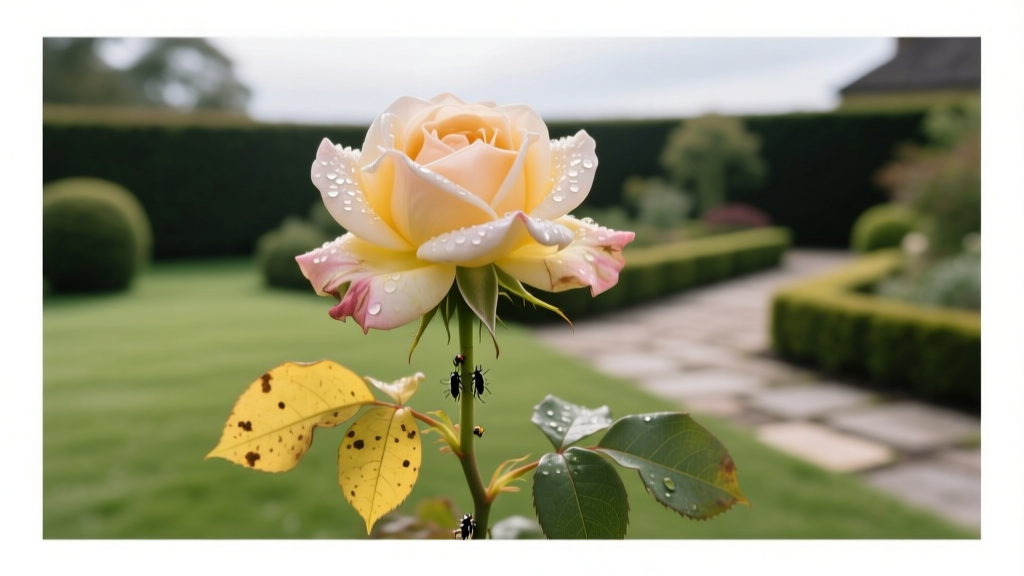
Troubleshooting Your Simple Rose: Diagnosis and Quick Fixes
The Diagnostic Matrix: Decoding Simple Rose Distress Signals
Single-petal and low-maintenance shrub varieties, commonly referred to as the simple rose, are prized for their hardy nature, prolific blooming, and open-faced floral structure. However, their simplified petal count (typically 5 to 12 petals) and exposed reproductive organs make them uniquely susceptible to specific environmental stressors, nutrient lockouts, and pest pressures that do not affect heavily petaled hybrid teas. When a simple rose fails to thrive, the symptoms often manifest rapidly. Below is a diagnostic matrix to identify the primary stressor affecting your specimen.
| Primary Symptom | Probable Cause | Secondary Suspect | Immediate First Response |
|---|---|---|---|
| Interveinal yellowing on new growth | Iron chlorosis (high soil pH) | Magnesium deficiency | Test soil pH; apply Fe-EDDHA chelate |
| Deformed, streaked, or dropped petals | Western flower thrips | Botrytis blight (high humidity) | Apply Spinosad spray at dusk |
| Lacy, skeletonized foliage | Japanese beetles or rose sawflies | Leafcutter bees (minor damage) | Hand-pick beetles; apply Neem oil |
| Abundant foliage, zero blooms | Excess nitrogen fertilization | Insufficient direct sunlight (<6 hrs) | Flush soil; switch to 4-3-2 NPK ratio |
| Black spots with fringed margins on leaves | Diplocarpon rosae (Black spot) | Cercospora leaf spot | Remove infected leaves; apply Myclobutanil |
Nutrient Lockout and Chlorosis in Simple Roses
The most frequent misdiagnosis in simple rose care involves chlorosis—where leaves turn yellow while the veins remain green. Gardeners often mistake this for a simple nitrogen deficiency and apply high-nitrogen synthetic fertilizers (like a 24-8-16 formulation), which only exacerbates the problem by forcing weak, pale vegetative growth. True chlorosis in simple roses is almost always an iron lockout caused by alkaline soil.
Diagnostic Rule of Thumb: If the yellowing appears on older, lower leaves first, suspect a mobile nutrient deficiency (Nitrogen or Magnesium). If the yellowing appears on new, upper growth first while lower leaves remain green, you are dealing with immobile iron chlorosis due to soil pH exceeding 7.0.
Simple roses require a soil pH between 6.0 and 6.5 to efficiently absorb micronutrients. If your municipal water is hard or your native soil is heavy clay with a pH above 7.2, standard iron supplements (Fe-EDTA) will fail because they bind to calcium in alkaline environments. According to the Texas A&M AgriLife Extension, you must use an Fe-EDDHA chelated iron product, such as Sprint 330. Apply Sprint 330 as a soil drench at a rate of 1 teaspoon per gallon of water per mature bush. A 5-pound bag costs approximately $35 and will last multiple seasons. For long-term pH correction, incorporate elemental sulfur at a rate of 1 pound per 100 square feet to drop the pH by 0.5 points over six months.
The Exposed Stamen Problem: Pest Diagnosis
Because a simple rose lacks the dense, protective petal layers of hybrid teas or floribundas, its pollen-rich stamens are fully exposed. This makes them highly attractive to pollen-feeding insects, specifically Japanese beetles (Popillia japonica) and Western flower thrips. The damage profiles for these two pests are distinct and require entirely different chemical interventions.
Identifying Thrips vs. Beetle Damage
- Thrips Damage: Thrips are microscopic rasping insects. On simple roses, they attack the expanding flower buds. You will notice brown, necrotic streaks on the outer edges of the 5-12 petals, and the bloom may fail to open completely, resulting in a deformed, twisted flower. Solution: Spray the buds directly with a Spinosad-based product (e.g., Captain Jack's Deadbug Brew, ~$15 per 32oz bottle). Apply only in the early evening to protect foraging pollinators, as Spinosad is highly toxic to bees when wet but safe once dried.
- Japanese Beetle Damage: Beetles chew the leaf tissue between the veins, leaving a lace-like skeleton. They also congregate on the open simple rose blooms, devouring the stamens and petals. Solution: Avoid broad-spectrum contact pesticides like Sevin (carbaryl), which devastate local bee populations. Instead, apply a 2% Neem oil solution as a deterrent, or use a targeted systemic like UC IPM's recommended Imidacloprid drench applied in early spring before bud break. Note that Imidacloprid is restricted in several states; in those regions, rely on physical traps placed 30 feet away from your rose beds and manual removal into soapy water.
Fungal Outbreaks: Black Spot vs. Powdery Mildew
Even disease-resistant simple rose cultivars, such as those in the Oso Easy or Knock Out lines, can succumb to fungal pathogens when subjected to prolonged leaf wetness (over 12 hours) and poor air circulation. Misidentifying the fungus leads to wasted fungicide applications.
Fungal Decision Tree:
1. Are the lesions black, circular, with fringed or feathery margins, primarily on the lower leaves? Diagnosis: Black Spot (Diplocarpon rosae).
2. Is there a white, powdery dusting on the new shoots, buds, and upper leaf surfaces, often accompanied by leaf curling? Diagnosis: Powdery Mildew (Podosphaera pannosa).
1. Are the lesions black, circular, with fringed or feathery margins, primarily on the lower leaves? Diagnosis: Black Spot (Diplocarpon rosae).
2. Is there a white, powdery dusting on the new shoots, buds, and upper leaf surfaces, often accompanied by leaf curling? Diagnosis: Powdery Mildew (Podosphaera pannosa).
For Black Spot, you must use a systemic fungicide that penetrates the leaf tissue. Myclobutanil (Spectracide Immunox) is highly effective. Apply every 14 days during wet spring weather. For Powdery Mildew, contact fungicides work best; horticultural oils or a potassium bicarbonate spray (such as GreenCure, mixed at 1 tablespoon per gallon) will suffocate the surface spores without harming the simple rose's delicate single petals. Always rotate fungicide chemical classes (FRAC codes) every three applications to prevent pathogen resistance.
Watering Architecture and Soil Hydrology
Simple roses are vigorous growers and require consistent soil moisture to support continuous flushes of blooms. However, overhead watering guarantees fungal outbreaks. The American Rose Society mandates drip irrigation for all landscape roses. Install 2 GPH (gallons per hour) pressure-compensating drip emitters. For a mature simple rose shrub, place three emitters in a triangle pattern 12 inches from the base, running them for 45 minutes twice a week to deliver roughly 1.5 inches of water directly to the root zone. Mulch the bed with 2.5 inches of shredded hardwood bark, but maintain a strict 3-inch bare-soil ring around the main cane to prevent crown rot and rodent nesting.
Expert Pruning Protocol for Single-Petal Reblooming
To force a simple rose to rebloom rapidly, deadheading must be precise. Do not simply snap off the spent flower head. Using bypass pruners sterilized with 70% isopropyl alcohol, cut the stem at a 45-degree angle exactly 1/4 inch above an outward-facing, five-leaflet leaf node. This specific node thickness signals the plant to produce a robust lateral cane rather than a weak, blind shoot. Seal cuts larger than 1/2 inch with Elmer's wood glue to prevent cane borers from entering the pith. By combining precise hydrology, targeted micronutrient management, and accurate pest identification, your simple rose will maintain structural integrity and continuous bloom cycles throughout the growing season.

