
Gardening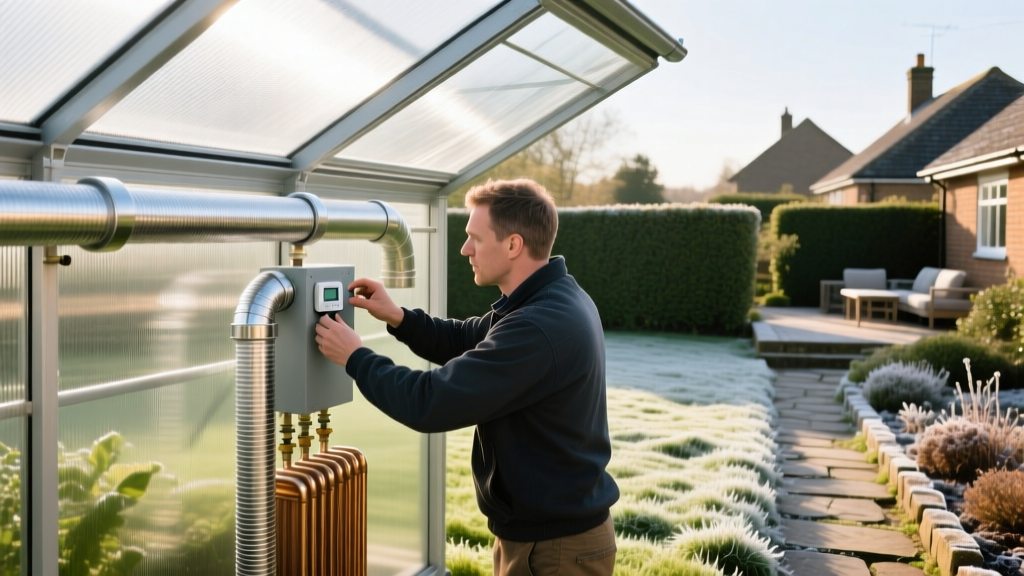
Sizing and Installing Greenhouse Heating Systems for Winter
The BTU Calculation Framework: Sizing Your Heat Load
Undersizing your heater is the most common failure point in winter cultivation. A unit that runs continuously but cannot close the temperature gap will burn out its blower motor and leave your plants vulnerable to frost. To select the right greenhouse heating systems for your structure, you must calculate the maximum hourly heat loss (BTU/hr) based on your specific glazing and local climate data.
The Master BTU Formula
Total BTU/hr = Exposed Surface Area (sq ft) × U-Value × Temperature Differential (°F)
- Surface Area: Calculate the total square footage of all walls and roof panels exposed to the outside air. Do not include the floor.
- U-Value: The rate of heat transfer through your specific glazing material (see table below).
- Temperature Differential: Your desired minimum nighttime indoor temperature minus the historical extreme low outdoor temperature for your ZIP code.
According to research from Cornell University Controlled Environment Agriculture, selecting the correct glazing U-value is critical for accurate sizing. Using the wrong multiplier can result in a system that is 30% to 50% undersized.
| Glazing Material | U-Value (BTU/hr·ft²·°F) | Heat Retention Profile |
|---|---|---|
| Single-Pane Glass | 1.13 | Poor; high radiant heat loss at night |
| 6-mil Single Poly Film | 1.15 | Poor; requires double-layering for winter |
| Double-Poly Film (Air-inflated) | 0.70 | Good; dead air space provides insulation |
| 8mm Twin-Wall Polycarbonate | 0.58 | Very Good; standard for hobbyist hoop houses |
| 16mm Triple-Wall Polycarbonate | 0.35 | Excellent; commercial-grade retention |
Comparing Core Greenhouse Heating Systems
Once you have your target BTU/hr, you must choose the fuel source and distribution method. The UMass Extension Greenhouse and Floriculture program notes that fuel availability and local utility rates should drive this decision as much as the upfront hardware cost.
| System Type | Upfront Cost Range | Operating Cost (per 1M BTU) | Ideal Application |
|---|---|---|---|
| 120V Electric Fan Heater | $100 - $250 | $30 - $45 | Small hobby greenhouses (<200 sq ft) |
| Vented Propane Unit Heater | $900 - $1,600 | $18 - $25 | Mid-to-large structures (200 - 1,200 sq ft) |
| Hydronic Radiant Floor/Bench | $2,500 - $6,000+ | $12 - $20 | Propagation benches and root-zone heating |
Electric Fan Heaters: The Small-Space Solution
For structures under 200 square feet, 120V electric ceramic or fan heaters are the most pragmatic choice. A highly reliable model in this category is the Bio Green PAL 2.0 (approx. $160). It outputs 6,800 BTU (2kW) and features a built-in splash-proof casing (IPX4 rated), which is mandatory in high-humidity environments. Standard household space heaters without IPX4 ratings will short-circuit within weeks due to condensation ingress on the internal limit switches.
Vented Propane Unit Heaters: The Workhorse for Large Volumes
When heating a 500+ square foot glasshouse or high tunnel, electricity becomes prohibitively expensive. The Modine Hot Dawg HD30A (30,000 BTU, approx. $1,150) is the industry standard for mid-sized greenhouses. It operates on liquid propane or natural gas and features a sealed combustion chamber. This is a critical safety feature: unvented propane heaters release massive amounts of water vapor and ethylene gas into the greenhouse air, which directly promotes Botrytis (gray mold) and stunts plant growth.
Hydronic Radiant Heating: Precision Root-Zone Control
Hydronic systems pump heated water through PEX tubing embedded in concrete floors or aluminum heat transfer plates under propagation benches. This method heats the plants and soil directly rather than wasting energy heating the ambient air near the roof peak. While the upfront cost requires a dedicated boiler (like a Rinnai wall-hung unit) and circulation pumps, the operational efficiency is 30% higher than forced air in poorly insulated structures.
Step-by-Step Installation & Thermostat Wiring
Proper installation dictates the lifespan of your equipment and the survival of your crop. Follow this sequence to ensure optimal airflow and accurate temperature regulation.
- Mounting the Heater: Install forced-air units near the peak of the roof, angled slightly downward (about 15 degrees). Heat rises; mounting the unit high allows the blower to push warm air down the walls and across the floor, creating a convective loop that eliminates cold pockets at the plant canopy level.
- Venting (For Gas Units): The Modine Hot Dawg requires Category III stainless steel venting. Do not use standard B-vent or galvanized dryer ducting, as the acidic condensation from propane combustion will corrode standard metals within a single season, creating a carbon monoxide hazard.
- Wiring the Thermostat: Avoid built-in mechanical thermostats; they are notoriously inaccurate in humid environments. Instead, wire your heater through a digital dual-relay controller like the Inkbird ITC-308 (approx. $35). This allows you to set a specific heating trigger (e.g., 55°F) and a safety shutoff parameter.
Expert Troubleshooting Tip: Never place your thermostat probe in direct sunlight or near the heater's output louver. If the sun hits an unprotected black probe, it will read 15°F to 20°F higher than the actual ambient air temperature. The thermostat will prematurely cut power to the heater, and your plants will freeze. Always house the probe inside an aspirated radiation shield (a slotted white PVC housing) suspended at the exact height of your plant canopy.
Winterizing and Maintenance Checklist
Greenhouse heating systems operate in harsh, corrosive environments. A mid-winter failure is catastrophic. Execute this maintenance protocol every November before the first hard freeze:
- Blower Wheel Inspection: Remove the front grill of electric and gas fan heaters. Use a stiff brush to clear dust and spiderwebs from the squirrel cage blower. An unbalanced blower wheel will vibrate excessively, eventually destroying the motor bearings.
- Thermocouple Testing (Gas Units): If your propane heater ignites but shuts off after 30 seconds, the thermocouple is likely coated in carbon soot. Lightly sand the tip of the thermocouple with 400-grit sandpaper to restore the millivolt signal that keeps the gas valve open.
- Glazing Draft Sealing: Heating systems cannot overcome massive air infiltration. Walk the perimeter of your greenhouse and apply UV-stable silicone sealant to any gaps where the glazing meets the frame. For roll-up sides, install heavy-duty draft tubing or foam weatherstripping to seal the bottom rail.
- Backup Power Planning: Electric fan heaters and gas heater blowers require 120V AC power. If your grid goes down during a winter storm, your heat stops. Keep a dual-fuel portable generator (like the Westinghouse WGen5300DFc) on standby, wired to a transfer switch capable of handling the startup surge of your blower motors.

