
Gardening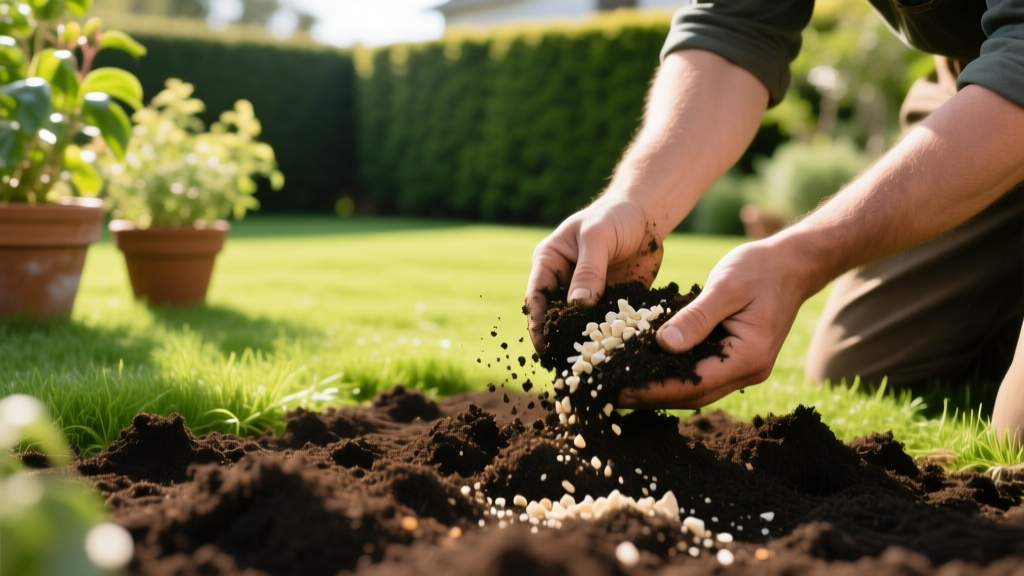
Soil Amendment Definition: What It Is and How to Apply It
The Core Soil Amendment Definition
If you search for a soil amendment definition, you will find a straightforward answer: a soil amendment is any material added to soil to improve its physical or chemical properties. Unlike fertilizers, which are formulated specifically to supply essential plant nutrients (like nitrogen, phosphorus, and potassium), amendments focus on the soil's architecture. They dictate how well the soil holds water, drains excess moisture, allows root penetration, and buffers pH levels.
According to the University of Minnesota Extension, the primary goal of an amendment is to create an optimal environment for root growth by altering soil texture and structure. Fertilizers feed the plant; amendments feed and fix the soil.
Quick Distinction Framework
- Amendment: Compost, peat moss, perlite, biochar, lime. (Fixes texture, drainage, and pH).
- Fertilizer: 10-10-10 synthetic blends, fish emulsion, bone meal. (Provides direct N-P-K nutrition).
- Mulch: Wood chips, straw, pine needles. (Applied to the surface to retain moisture and suppress weeds; only becomes an amendment when it breaks down and is incorporated into the soil).
Physical vs. Chemical Soil Amendments
To truly understand the soil amendment definition in a practical gardening context, you must divide amendments into two categories: physical and chemical. Physical amendments alter the soil's tilth and pore space, while chemical amendments alter the soil's pH or sodium levels without necessarily changing the physical texture.
| Amendment Type | Primary Function | Best For | 2026 Avg. Cost |
|---|---|---|---|
| Organic Compost | Improves moisture retention and microbial life | Sandy or clay soils | $40-$65 / cubic yard (bulk) |
| Sphagnum Peat Moss | Lowers pH, increases water holding capacity | Alkaline soils, acid-loving plants | $15-$22 / 3.0 cu ft bale |
| Horticultural Perlite | Increases aeration and drainage | Heavy clay, container mixes | $35-$45 / 4 cu ft bag |
| Garden Lime (Calcitic) | Raises soil pH, adds calcium | Acidic soils (pH below 6.0) | $12-$18 / 40 lb bag |
| Gypsum | Flocculates clay, adds calcium without raising pH | Sodic (high sodium) clay soils | $15-$20 / 50 lb bag |
Critical Failure Modes: What NOT to Do
Understanding the soil amendment definition also means knowing what fails in practice. Many gardeners rely on outdated folklore that leads to disastrous soil chemistry and physics.
The Sand and Clay Concrete Myth
Adding coarse builder's sand to heavy clay soil does not improve drainage; it creates a substance remarkably similar to concrete. Clay particles are microscopic and plate-like, while sand particles are large and round. When mixed, the tiny clay particles fill the void spaces between the sand grains, locking them together into an impenetrable mass. To amend clay, you must use organic matter (like compost or leaf mold) to bind clay particles into larger aggregates, or use expanded shale and perlite.
The Nitrogen Robbery of Raw Wood Chips
Tilling raw, uncomposted wood chips or sawdust directly into garden beds triggers a severe carbon-to-nitrogen (C:N) imbalance. Raw wood has a C:N ratio of roughly 400:1. Soil microbes require a ratio of about 24:1 to function. To break down the raw wood, microbes will scavenge all available nitrogen from the surrounding soil, causing severe chlorosis (yellowing) and stunting in your plants. Only use fully composted wood products for in-ground amendment; reserve raw chips strictly for surface mulch.
Calculating Application Volumes and Costs
Precision is vital. Over-amending can lead to excessive salt buildup, particularly with manure-based composts, while under-amending yields no structural benefit. The Colorado State University Extension recommends incorporating 2 to 3 inches of organic amendment into the top 6 to 8 inches of soil for new beds.
The 1,000 Square Foot Formula
To apply exactly 1 inch of amendment over 1,000 square feet of garden space, you need 2.75 cubic yards of material. For a standard 3-inch incorporation, you will need 8.25 cubic yards.
2026 Pricing Note: Bulk delivery of screened organic compost typically runs $40 to $65 per cubic yard, plus a $75-$120 delivery fee. Bagged compost at big-box retailers costs roughly $5.50 per cubic foot (approx. $150 per cubic yard), making bulk purchasing mandatory for any area larger than 200 square feet.
Step-by-Step Integration Protocol
- Test First: Never amend blindly. Perform a mason jar soil texture test to determine your sand/silt/clay ratio, and use a digital pH meter or mail-in lab test to establish your baseline pH.
- Moisture Check: Only till or broadfork soil when it is moderately moist. Working soil when it is soaking wet destroys soil aggregates and creates hard clods that take years to repair.
- Surface Application: Spread your calculated volume of compost or physical amendment evenly across the bed surface using a steel landscape rake.
- Deep Incorporation: Use a broadfork or a rear-tine rototiller to incorporate the material to a depth of 6 to 8 inches. If using a tiller, make two passes: one shallow, one deep, to ensure even distribution.
- Rest and Settle: Allow the amended bed to rest for 10 to 14 days before planting. This allows the soil microbiome to stabilize and any initial decomposition gases to dissipate.
Mastering the practical application behind the soil amendment definition transforms dead dirt into a living, resilient growing medium capable of supporting high-yield vegetable crops and vibrant perennial borders.

