
Gardening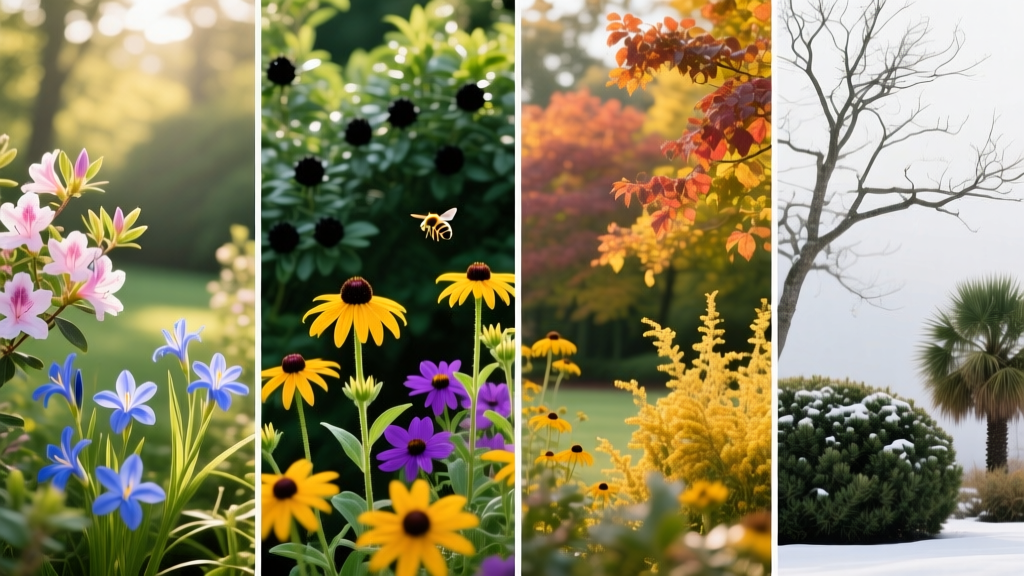
When to Plant South Carolina Native Plants: A Seasonal Calendar
Understanding South Carolina's Distinct Microclimates
Timing your garden work in South Carolina requires abandoning the generic 'spring planting' rule. The state spans three distinct USDA Hardiness Zones (7b in the Upstate to 9a in the coastal Lowcountry), meaning soil temperatures and frost dates vary by up to six weeks from the mountains to the sea. Furthermore, the geological divide between the heavy Cecil clay of the Piedmont and the sandy loam of the Coastal Plain dictates entirely different watering and establishment schedules.
According to the Clemson University Home & Garden Information Center, native plants adapted to these specific microclimates require vastly less maintenance once established. However, the initial 18 months of establishment demand precise seasonal timing to survive the state's intense summer humidity and periodic winter freezes.
Regional Frost & Soil Temperature Baselines
- Upstate (Zones 7b/8a): Last spring frost typically April 10-20; first fall frost October 25-November 10. Soil reaches 60°F (ideal for planting) by mid-April.
- Midlands (Zones 8a/8b): Last spring frost March 20-April 5; first fall frost November 5-20. Soil reaches 60°F by late March.
- Lowcountry (Zones 8b/9a): Last spring frost February 20-March 10; rare hard freezes in winter. Soil reaches 60°F by early March.
The South Carolina Native Plant Seasonal Matrix
Use this decision matrix to align your gardening tasks with the biological rhythms of regional flora. This framework prioritizes root development over top-growth, which is the primary failure point for newly installed natives.
| Season | Primary Action | Target Plant Types | Soil Temp Requirement | Risk Factor |
|---|---|---|---|---|
| Spring (Mar-May) | Planting herbaceous perennials, dividing grasses | Wildflowers, Ferns, Sedges | Minimum 60°F | Late Upstate frosts killing new shoots |
| Summer (Jun-Aug) | Deep watering, deadheading, pest monitoring | All (Focus on survival) | N/A (Often >85°F) | Heat stress, root rot in heavy clay |
| Fall (Sep-Nov) | Planting woody shrubs and trees, seeding | Trees, Shrubs, Vines | 50°F - 70°F | Planting too late before ground freeze |
| Winter (Dec-Feb) | Dormant pruning, cold stratification, hardscape | Deciduous natives, Spring bloomers | <45°F (Dormancy) | Pruning spring-flowering buds off |
Spring (March - May): Herbaceous Establishment
Spring is the optimal window for planting herbaceous perennials and wildflowers, but only after the soil has sufficiently warmed. Planting natives like Echinacea purpurea (Purple Coneflower) or Rudbeckia fulgida (Black-Eyed Susan) in cold, wet Upstate clay in early March invites immediate crown rot.
Execution Protocol for Spring Planting
- Verify Soil Temperature: Use a digital soil probe. Wait until the temperature at a 4-inch depth consistently reads 60°F for three consecutive mornings.
- Amend by Region: In the Upstate, incorporate 2 inches of pine bark fines into the top 6 inches of clay to improve drainage. In the Lowcountry, mix 3 inches of compost into sandy soil to increase water retention.
- Watering Schedule: Apply 1 inch of water per week (approximately 0.62 gallons per square foot). Use a rain gauge to track natural precipitation and supplement only the deficit.
Expert Insight: Never fertilize newly planted South Carolina native perennials in the spring. Most natives, particularly those in the aster family, will produce excessive, weak foliage and fewer blooms if exposed to high-nitrogen synthetic fertilizers. Rely on the existing soil biology.
Summer (June - August): Heat Stress & Hydro-Zoning
Summer in South Carolina is about survival, not establishment. Daytime temperatures routinely exceed 90°F, and nighttime humidity prevents transpiration cooling. This is when improper mulching and overwatering kill more natives than drought does.
The 3-Inch Mulch Rule
As of 2026, premium hardwood mulch averages $45 to $55 per cubic yard in the Midlands, while pine straw remains a highly economical and ecologically appropriate alternative at $8 to $12 per bale. Apply a strict 2-to-3-inch layer of pine straw or shredded hardwood. Crucially, keep the mulch exactly 3 inches away from the main stem or trunk of the plant. 'Volcano mulching' against the bark of an Hydrangea quercifolia (Oakleaf Hydrangea) will cause stem girdling and fungal cankers within a single season.
Hydro-Zoning for Drought Tolerance
Group plants by water needs. Natives like Asclepias tuberosa (Butterfly Weed) and Yucca filamentosa (Spanish Bayonet) possess deep taproots and require zero supplemental watering once their first year is complete. Conversely, Itea virginica (Virginia Sweetspire) and Clethra alnifolia (Summersweet) thrive in moist soils and will need deep, infrequent soakings (1.5 inches every 10 days) during July and August droughts.
Fall (September - November): The Prime Woody Planting Window
While spring gets the marketing hype, autumn is biologically the superior time to plant woody native shrubs and trees in South Carolina. Soil temperatures remain warm enough to stimulate root growth, while cooler air temperatures reduce transpiration stress. According to the South Carolina Native Plant Society, fall-planted natives develop root masses up to 40% larger by the following spring compared to spring-planted specimens.
Fall Planting Deadlines
Root growth continues until the soil temperature drops below 40°F. To ensure adequate establishment before the ground chills:
- Upstate: Complete all woody planting by October 15.
- Midlands: Complete planting by November 10.
- Lowcountry: You can safely plant woody natives through December 15, provided the ground is not frozen.
Callout: The Bare-Root Advantage
Order bare-root native trees (like Quercus alba or White Oak) from regional nurseries in late fall. They are 50% to 70% cheaper than container-grown equivalents and do not suffer from circling root defects. Plant them immediately upon arrival in November, ensuring the root flare sits exactly 2 inches above the surrounding soil grade to account for settling.
Winter (December - February): Dormancy & Strategic Pruning
Winter is for structural maintenance and ecological support. The impulse to 'clean up' the garden in January destroys vital overwintering habitats for native pollinators and birds.
The Pruning Decision Tree
Incorrect winter pruning is the most common cause of missing spring blooms. Follow this strict taxonomy:
- Spring-Blooming Natives (Prune AFTER flowering in late spring/early summer): Gelsemium sempervirens (Carolina Jessamine), Calycanthus floridus (Carolina Allspice), and Rhododendron canescens (Piedmont Azalea). Pruning these in January removes the flower buds formed the previous autumn.
- Summer/Fall-Blooming Natives (Prune in late winter - February): Hydrangea arborescens (Smooth Hydrangea) and Spiraea tomentosa (Steeplebush). These bloom on new wood and can be cut back hard in February before bud break.
Ecological Winter Care
Leave the seed heads of Echinacea, Rudbeckia, and native grasses like Schizachyrium scoparium (Little Bluestem) standing through February. The National Audubon Society notes that these structures provide critical high-fat seeds for overwintering goldfinches and chickadees, while the hollow stems harbor dormant native bee larvae. Cut them back to 12 inches in early March, and leave the debris on the soil surface as natural mulch.
Soil Testing: The Non-Negotiable First Step
Before executing any seasonal calendar, you must understand your soil chemistry. South Carolina's soils are notoriously acidic, often hovering between pH 4.5 and 5.5. While natives like Vaccinium corymbosum (Highbush Blueberry) and Magnolia grandiflora (Southern Magnolia) thrive in this acidity, many prairie-adapted perennials will suffer from iron chlorosis and stunted growth.
Submit a soil sample to the Clemson Extension Agricultural Service Laboratory. The standard fertility and pH test costs $10 and provides exact lime application rates. If your test indicates a pH below 5.8 for a mixed native perennial bed, apply pelletized dolomitic limestone at the recommended rate in late fall, allowing winter rains to integrate it into the root zone before spring planting.

