
Gardening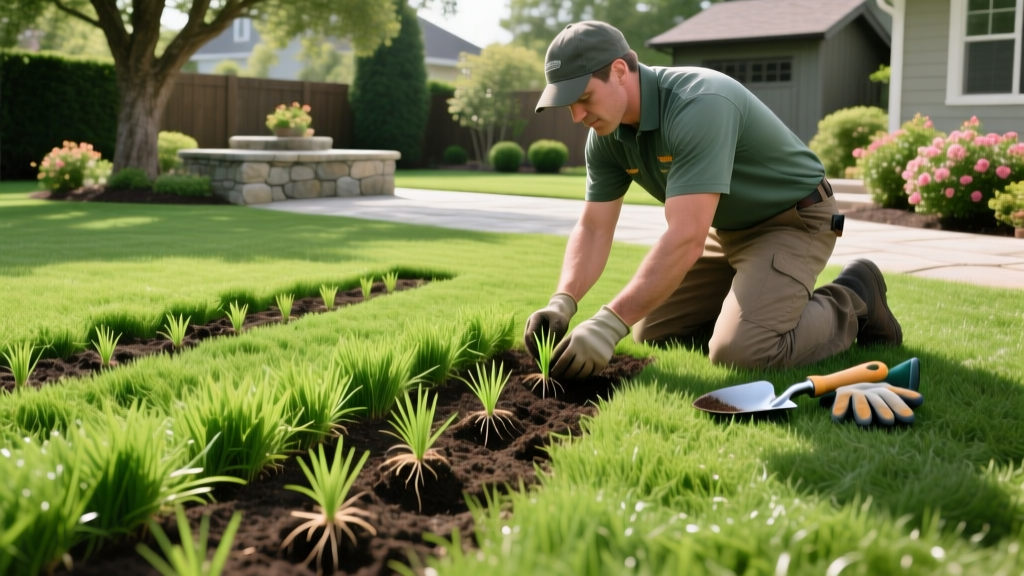
St. Augustine Seed Reality: The Ultimate Plug Planting Guide
The Horticultural Reality of St. Augustine Seed
When homeowners search for 'st augastine seed' or 'St. Augustine seed' online, they are typically looking for a cost-effective way to establish a lush, shade-tolerant, warm-season lawn. However, from a strict botanical and commercial agriculture perspective, pure St. Augustine grass seed does not exist on the consumer market.
St. Augustinegrass (Stenotaphrum secundatum) is a polyploid species. The most popular commercial cultivars—such as 'Floratam', 'Palmetto', 'Seville', and 'CitraBlue'—are triploid or tetraploid, meaning they possess uneven or multiple sets of chromosomes. This genetic structure results in sterile flowers or non-viable seed production. Because the seed is either sterile or produced in such microscopic quantities that commercial harvesting is economically impossible, vegetative propagation (sod, sprigs, and plugs) is the only scientifically viable method for establishing this turf.
⚠️ WARNING: The Online Seed Scam
If you find a marketplace listing selling 'St. Augustine seed' for $15 a pound, do not buy it. These sellers are almost universally shipping annual ryegrass (Lolium multiflorum) or cheap Bermuda grass. Annual ryegrass germinates rapidly in 5 to 7 days, tricking the buyer into believing the St. Augustine is growing. Once the summer heat arrives, the ryegrass dies off, leaving you with bare dirt and wasted money.
The Real Solution: High-Density Plug Establishment
Since seeding is a biological dead end, the closest alternative in terms of labor, cost, and DIY feasibility is planting St. Augustine plugs. Plugs are 2-to-3-inch cylindrical cores of mature grass and soil. When planted in a grid pattern, their aggressive above-ground stolons will knit together to form a solid carpet. As of 2026, a standard tray of 50 plugs costs between $40 and $65, making it significantly cheaper than full sod installation while offering faster coverage than sprigs.
Step 1: Soil Preparation and pH Balancing
St. Augustine requires a soil pH between 6.0 and 7.5 to access vital micronutrients like iron. If your soil test indicates a pH below 6.0, apply 50 lbs of dolomitic lime per 1,000 square feet and till it into the top 4 inches of soil. Remove all existing weeds using a non-selective herbicide (like glyphosate) at least 14 days prior to planting, ensuring the active ingredient has fully broken down in the soil profile.
Step 2: The Spacing and Budget Matrix
The distance between your plugs dictates your upfront cost and the time required for the lawn to achieve 100% canopy closure. Use the matrix below to calculate your project requirements based on a 1,000 sq. ft. area, assuming an average 2026 plug price of $0.90 each.
| Spacing Grid | Plugs per 1,000 sq ft | Estimated Material Cost | Time to Full Coverage |
|---|---|---|---|
| 12" x 12" (High Density) | 100 | $90.00 | 2 - 3 Months |
| 18" x 18" (Standard) | 45 | $40.50 | 4 - 5 Months |
| 24" x 24" (Economy) | 25 | $22.50 | 7 - 9 Months |
Step 3: Planting and Initial Hydration
- Extract the Core: Use a manual 3-inch plugger tool or a bulb planter to remove a soil core at your designated grid intervals.
- Insert the Plug: Place the St. Augustine plug into the hole. The crown of the grass (where the stems meet the roots) must be perfectly level with the surrounding soil grade. Burying the crown too deep will cause rot; leaving it exposed will dry out the roots.
- Firm the Soil: Step firmly on the soil around the plug to eliminate air pockets, ensuring direct soil-to-root contact.
- Immediate Hydration: Water the entire area within 30 minutes of planting, applying roughly 0.5 inches of water to settle the soil.
First-Year Establishment and Maintenance Protocol
Establishing St. Augustine from plugs requires a strict maintenance regimen to encourage rapid stolon (runner) growth. According to the Clemson University Home & Garden Information Center, new plantings are highly susceptible to moisture stress and chemical damage.
'Newly planted St. Augustinegrass should be watered daily for the first two weeks, then tapered to every other day. Do not apply broadleaf herbicides containing atrazine or 2,4-D until the lawn has been mowed at least three times, as young stolons are highly sensitive to chemical burn.'
Fertilization Schedule
Wait 30 days after planting to apply your first fertilizer. Use a starter formula with a 1-2-1 ratio (such as 10-20-10) at a rate of 1 lb of actual nitrogen per 1,000 sq ft. Once the lawn is fully knit together, transition to a 3-1-2 ratio (like 16-4-8) applied every 8 weeks during the active growing season (May through September).
Mowing Heights for Shade vs. Sun
St. Augustine is prized for its shade tolerance, but mowing height must be adjusted based on light exposure. In full sun, maintain a cutting height of 2.5 to 3 inches. In heavily shaded areas under tree canopies, raise your mower deck to 3.5 to 4 inches. This increased leaf surface area allows the grass to photosynthesize more efficiently in low-light conditions, a critical factor noted by Texas A&M AgriLife Extension for preventing turf thinning.
True Seeded Alternatives for Warm-Season Lawns
If your heart is set on broadcasting seed rather than planting plugs, you must pivot to a different warm-season grass species that produces viable commercial seed. The NC State Extension TurfFiles database highlights several alternatives that offer similar aesthetics and growth habits.
| Grass Species | Seed Cost (per lb) | Germination Window | Shade Tolerance | Traffic Tolerance |
|---|---|---|---|---|
| Zoysiagrass (e.g., Zenith) | $15 - $25 | 14 - 21 Days | Moderate | High |
| Bermudagrass (e.g., Yukon) | $8 - $14 | 7 - 14 Days | Poor | Very High |
| Centipedegrass | $12 - $18 | 14 - 21 Days | Moderate | Low |
While Zoysiagrass seed is more expensive upfront, it requires significantly less physical labor to establish than St. Augustine plugs and offers superior drought resistance once mature. Centipedegrass is an excellent low-maintenance alternative for acidic soils (pH 5.0 to 6.0) where St. Augustine would struggle without heavy lime applications.
Final Establishment Takeaway
Abandon the search for St. Augustine seed. Protect your budget and your landscape by investing in high-quality vegetative plugs or pivoting to a proven seeded warm-season alternative. Proper soil preparation, precise spacing, and strict adherence to the 30-day fertilization delay will ensure your new lawn establishes a dense, weed-choking canopy before the first frost.

