
Gardening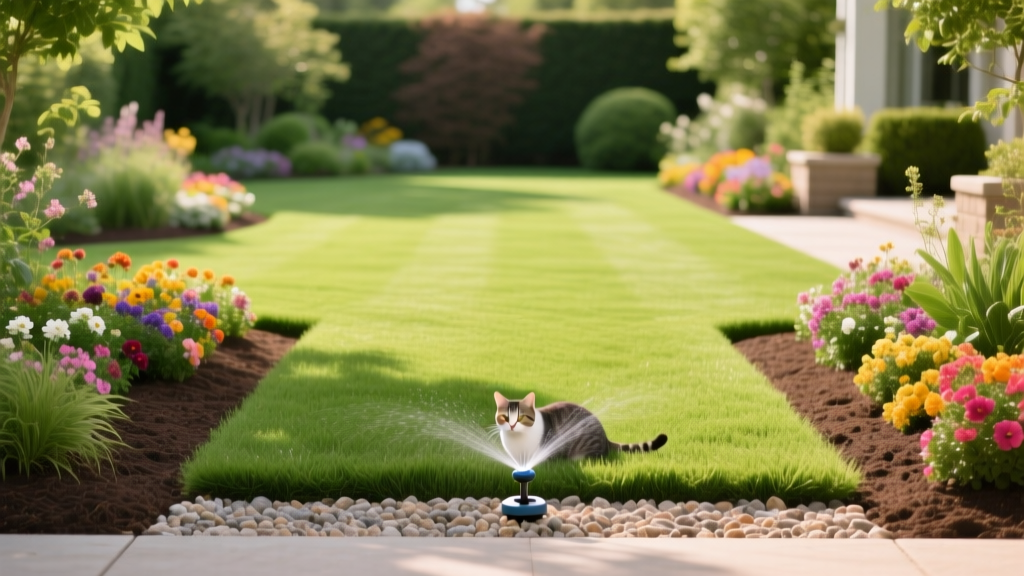
How to Stop Cats Messing in Garden Soil and Beds
The Feline Pest Profile: Why Cats Target Your Soil
Neighborhood and feral cats do not target gardens out of malice; they target them because freshly tilled topsoil perfectly mimics the texture and depth of commercial clumping clay litter. A standard garden bed offers 3 to 5 inches of loose, easily excavated substrate, making it an ideal latrine and territorial marking zone. To effectively solve this, you must treat the cat as a nuisance pest and apply a layered deterrence strategy that targets their tactile, olfactory, and auditory sensitivities.
Health Risk Alert: Toxoplasmosis
Cat feces in garden soil is not merely a nuisance; it is a biohazard. Feline waste is the primary transmission vector for Toxoplasma gondii, a parasite that causes toxoplasmosis. This is particularly dangerous for pregnant women and immunocompromised individuals handling soil or consuming unwashed root vegetables grown in contaminated beds. According to Cornell University Wildlife Damage Management, preventing feline access to food-producing gardens is a critical public health measure, not just a landscaping preference.
Tier 1: Physical Barriers and Tactile Deterrents
Cats rely heavily on their paws for balance and digging. If a surface is uncomfortable or impassable, they will relocate. Physical barriers offer the highest long-term success rate but require upfront labor.
1/2-Inch Galvanized Hardware Cloth
Do not use standard chicken wire; it rusts quickly, creates sharp edges that can injure wildlife, and has gaps large enough for determined cats to push through. Instead, use 1/2-inch galvanized steel hardware cloth. Lay it flat over the soil surface and cover it with 2 inches of mulch or compost. Plant roots will easily penetrate the mesh, but cat claws cannot dig through the steel grid. Expect to pay around $15 to $25 for a 25-foot roll at most hardware stores.
Plastic Prickle Strips (Scat Mats)
For established perennial beds where laying wire is impossible, use plastic prickle strips. These flexible mats feature blunt, 1-inch plastic spikes that are uncomfortable to step on but do not pierce the skin, adhering to RSPCA guidelines on humane cat deterrence. Place them on the bare soil between mature plants. A 10-square-foot coverage typically costs between $18 and $30. Failure mode: If you apply more than 2 inches of mulch over the strips, the spikes are buried and rendered useless.
Tier 2: Olfactory and Botanical Repellents
Cats possess roughly 200 million odor-sensitive cells in their nasal cavity (compared to 5 million in humans). You can exploit this by introducing scents that overwhelm their olfactory receptors or signal danger.
Commercial Methyl Nonyl Ketone Sprays
Liquid repellents containing methyl nonyl ketone (such as Liquid Fence Cat & Dog Repellent) mimic the scent of predator urine and irritate the feline nasal passage. A 32-ounce ready-to-spray bottle costs about $18. Application protocol: Spray the perimeter of the garden bed and the base of focal plants every 14 days, and immediately after any rainfall exceeding 0.5 inches. Do not spray directly on edible plant foliage, as it can taint the flavor of leafy greens.
Botanical Deterrents: Coleus Canina
Coleus canina (often sold as Plectranthus ornatus or 'Scaredy Cat' plant) emits a strong terpene odor that cats find highly offensive, though it is barely noticeable to humans unless crushed. Plant these as a border hedge around your vulnerable beds. Space them 18 inches apart to create a continuous scent wall. Note that this plant is a tender perennial and will die back in hard freezes (USDA Zones 7 and below), requiring replanting or overwintering indoors.
Tier 3: Tech-Based Deterrents (Ultrasonic & Motion)
For large properties where physical barriers are cost-prohibitive, automated tech deterrents provide scalable coverage. However, they require strategic placement to avoid failure.
Ultrasonic Emitters (18–24 kHz)
Devices like the Aspectek HR208 or PestBye Advanced emit high-frequency sound waves paired with a strobe flash when triggered by a passive infrared (PIR) motion sensor. They typically cost between $35 and $60 per unit and cover a 30-foot arc.
Expert Placement Tip
Ultrasonic waves cannot penetrate solid objects. If you place the emitter behind dense shrubbery or a thick trellis, the sound will be blocked. Mount the device at a height of 12 to 18 inches—exactly at the head-level of a foraging cat—and ensure a clear line of sight to the entry points of your garden.
Critical Edge Case: Ultrasonic deterrents lose effectiveness on senior cats. Felines over the age of 10 often experience high-frequency hearing loss and may simply ignore the 20+ kHz emissions. If you have an older neighborhood cat, you must pair ultrasonic devices with a physical water deterrent, such as the Orbit 62100 Yard Enforcer, which uses a sudden burst of water to startle the animal ($45-$55).
Deterrent Comparison Matrix
| Deterrent Method | Upfront Cost | Longevity | Effectiveness | Best Use Case |
|---|---|---|---|---|
| 1/2' Galvanized Hardware Cloth | $15 - $25 | 10+ Years | Very High | New raised beds, vegetable plots |
| Plastic Prickle Strips | $18 - $30 | 2 - 4 Years | High | Established perennial borders |
| Methyl Nonyl Ketone Sprays | $18 / bottle | 2 - 4 Weeks | Medium | Temporary protection, small areas |
| Ultrasonic PIR Emitters | $35 - $60 | 1 - 3 Years | Medium-High | Large lawns, open garden borders |
| Motion-Activated Sprinklers | $45 - $55 | 3 - 5 Years | Very High | Lawns, large open beds (summer) |
The Decoy Strategy: Sacrificial Planting
If deterrence fails because the local feline population is too high or deeply entrenched, pivot to diversion. Cats are highly attracted to Nepeta cataria (Catnip) and Valeriana officinalis (Valerian root). By planting a dedicated 'cat garden' in a far corner of your property—preferably near a fence line away from your main landscaping—you can draw them away from your prized beds. Prepare a 4x4 foot sandbox filled with loose sand and plant catnip around the perimeter. This satisfies their instinct to dig and mark in a designated zone, sparing your vegetables and ornamentals.
Troubleshooting Decision Tree
Use this framework to diagnose and correct failing deterrent strategies:
- Symptom: Cats are ignoring the ultrasonic emitter.
Cause: The cat is likely elderly (hearing loss) or the PIR sensor is blocked by foliage.
Fix: Clear the sensor line-of-sight. If the cat persists, swap the ultrasonic unit for a motion-activated sprinkler. - Symptom: Cats are digging through the mulch despite prickle strips.
Cause: Mulch depth exceeds the 1-inch plastic spike height.
Fix: Rake mulch away from the strips, exposing the spikes, or switch to 1/2-inch hardware cloth buried just under the soil surface. - Symptom: Liquid scent repellent is not working after a week.
Cause: Rain or irrigation has washed away the active methyl nonyl ketone compounds.
Fix: Reapply immediately. Consider switching to granular repellents, which bind to the soil and survive light watering better than liquid sprays.
Stopping cats from messing in garden soil requires consistency. No single method is 100% foolproof against every feline, but by layering a physical barrier (hardware cloth) with an automated perimeter defense (motion sprinkler or ultrasonic emitter), you create an environment that is fundamentally hostile to their instincts, forcing them to seek easier territory elsewhere.

