
Gardening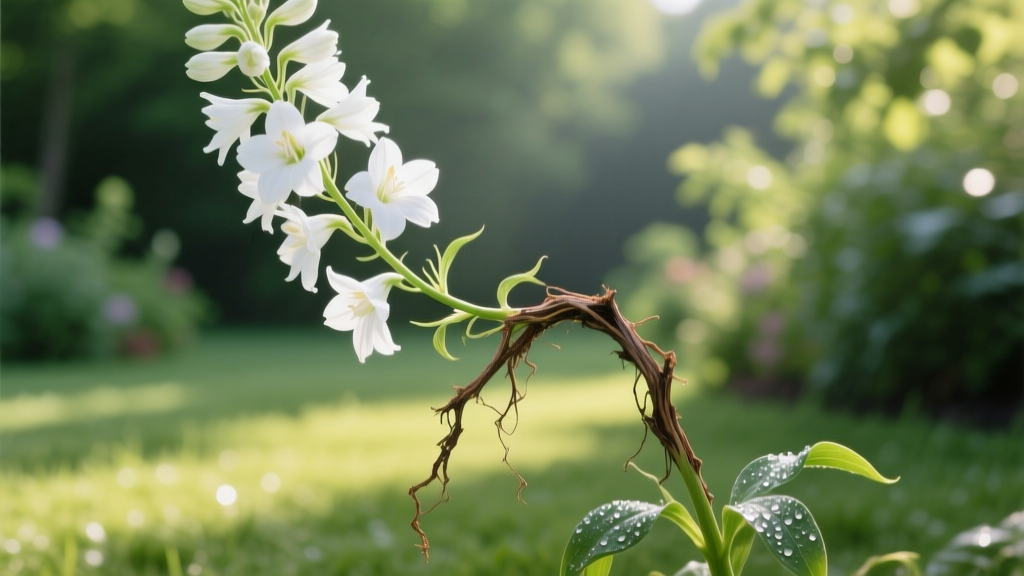
Tall White Flowers Drooping? Diagnosing & Fixing Stem Failure
The Unique Vulnerability of Tall White Flowers
Tall white flowers—such as Delphinium elatum 'Galahad', Digitalis purpurea 'Alba' (White Foxglove), and Alcea rosea 'Nigra' Alba (Hollyhock)—create striking vertical architecture in cottage and perennial borders. However, gardeners frequently encounter a frustrating problem: these specific cultivars are disproportionately prone to drooping, snapping, and sudden vascular collapse compared to their pigmented counterparts.
The reason is deeply rooted in plant biochemistry. Anthocyanins, the pigments responsible for red, blue, and purple hues in flowers and stems, also function as secondary metabolites that reinforce plant cell walls and provide UV protection. White-flowering cultivars lack these specific anthocyanin concentrations, resulting in epidermal layers that are slightly more elongated, pithy, and susceptible to mechanical shearing under wind loads or heavy rainfall. When you combine this genetic predisposition with improper soil nutrition or late-season staking, stem failure becomes almost inevitable.
Diagnostic Matrix: Symptoms vs. Immediate Solutions
Before applying a fix, you must accurately diagnose whether the drooping is mechanical (physical stress), pathological (fungal/bacterial), or entomological (pest damage). Use this diagnostic matrix to identify the exact failure mode of your tall white flowers.
| Visual Symptom | Probable Cause | Immediate Action Required |
|---|---|---|
| Clean, horizontal snap at mid-stem; foliage remains green. | Wind shear or top-heavy bloom spikes. | Splint with bamboo; deadhead spent florets to reduce weight. |
| Sudden wilting; stem base turns black, mushy, or hollow. | Sclerotinia stem rot or Erwinia soft rot. | Excise plant below soil line; apply Bacillus subtilis soil drench. |
| Gradual drooping; lower leaves curl and turn yellow. | Verticillium wilt or severe root aphid damage. | Improve drainage; apply beneficial nematodes (Steinernema feltiae). |
| Hollowed-out stem base with sawdust-like frass (droppings). | Stem borers or Delphinium worms. | Inject Btk (Bacillus thuringiensis var. kurstaki) into entry holes. |
| Stems bend at a 45-degree angle but do not break; weak tissue. | Nitrogen toxicity (spongy cell growth). | Halt high-N fertilizers; apply gypsum (calcium sulfate) immediately. |
Structural Solutions: The Early Intervention Staking Protocol
The most common mistake home gardeners make with tall white flowers is waiting until the plants are 3 to 4 feet tall and already leaning before attempting to stake them. According to the University of Minnesota Extension, staking must occur during the early vegetative stage so the plant can grow through and hide the support structure while developing straight, reinforced internodes.
Hardware Selection by Plant Architecture
- Clump-Forming Perennials (e.g., White Shasta Daisies, Astilbe): Use 24-inch diameter galvanized grow-through rings. These typically cost $18 to $25 for a 3-pack. Install them on 18-inch legs when the spring shoots are exactly 6 to 8 inches tall.
- Single-Spike Biennials (e.g., White Foxgloves, Hollyhocks): Use 4-foot, 1/2-inch thick bamboo canes or powder-coated steel T-posts. Drive the stake 10 inches into the soil, positioned 2 inches away from the main taproot to avoid severing it.
- Heavy-Spike Perennials (e.g., White Delphiniums): Delphiniums require a multi-stake approach. Place three 3-foot bamboo stakes in a triangle around the clump and weave soft jute twine in a figure-eight pattern. Never use wire or zip-ties, which will slice through the soft, anthocyanin-deficient epidermis of white cultivars during high winds.
Vascular Collapse: Managing Fungal and Bacterial Wilt
White-flowering cultivars are highly susceptible to Sclerotinia sclerotiorum (white mold) and Botrytis cinerea (gray mold). Because these plants lack the natural antimicrobial properties of darker pigments, a single humid week (temperatures above 75°F with humidity exceeding 80%) can trigger rapid vascular collapse.
The Bio-Fungicide Defense Strategy
If your tall white flowers are drooping and the stems feel slimy or show white fuzzy growth at the soil line, chemical fungicides are often ineffective once the pathogen has entered the xylem. Instead, utilize biological controls:
- Preventative Soil Drench: Apply a bio-fungicide containing Bacillus subtilis (such as Cease or Serenade Garden, approximately $35 to $45 per pint). Mix at a rate of 2 ounces per gallon of water and drench the root zone every 14 days starting in early May.
- Airflow Metrics: The Royal Horticultural Society emphasizes that Delphiniums and Foxgloves require a minimum of 24 inches of spacing between mature crowns. If your plants are closer than 18 inches, microclimates form at the stem base, trapping moisture and inviting rot.
- Mulching Protocol: Never pile bark mulch directly against the crown of a white Foxglove or Hollyhock. Leave a 3-inch 'donut' of bare soil around the central stem to allow the crown to dry rapidly after morning dew.
Nutritional Imbalances: Building Cellular Rigidity
Drooping is frequently a nutritional issue disguised as a structural one. Many gardeners inadvertently feed their flower beds with leftover lawn fertilizers (e.g., 24-8-16 or 32-0-4). The massive nitrogen load forces the plant to produce rapid, spongy, water-filled cells that lack the structural integrity to hold up a heavy white bloom spike.
Expert Tip: The Calcium-Potassium Shift
To build rigid cell walls in tall white flowers, you must prioritize Calcium (Ca) and Potassium (K). Calcium forms calcium pectate, the literal 'glue' that holds plant cell walls together, while Potassium regulates turgor pressure within the cells. In early spring, apply agricultural gypsum (calcium sulfate) at a rate of 2 lbs per 100 square feet. Gypsum adds calcium without altering your soil pH. Follow this with a low-nitrogen, high-potassium granular fertilizer (like a 5-10-10 NPK ratio) when the first flower buds begin to form.
Pest Vectors: Borers and Defoliators
If a tall white flower droops suddenly at the very tip (the 'shepherd's crook' effect) while the base remains firm, suspect a stem borer or the Delphinium worm (Chrysodeixis includens). These pests hollow out the interior of the pithy white stems, destroying the plant's internal water-transport system.
Inspect the stem closely for tiny entry holes surrounded by sawdust-like frass. If caught early, you can inject a liquid formulation of Btk (Bacillus thuringiensis var. kurstaki) directly into the hole using a syringe, then seal it with grafting wax. For foliar defoliators that weaken the plant by stripping its photosynthetic capacity, apply a 2% Neem oil emulsion at dusk to avoid harming daytime pollinators.
'The structural integrity of tall perennials is determined in the first 30 days of spring growth. If you wait until the flower spike is visible to address nutrition and staking, the cellular damage from wind and gravity has already occurred.' — Perennial Cultivation Guidelines, Missouri Botanical Garden Plant Finder Database
Proactive Maintenance Checklist for White Cultivars
To ensure your tall white flowers remain upright and vibrant throughout the blooming season, adhere to this strict maintenance schedule:
- Week 1-2 (Spring Emergence): Clear winter debris, apply gypsum (2 lbs/100 sq ft), and install grow-through rings or bamboo stakes while shoots are under 8 inches tall.
- Week 4-6 (Vegetative Growth): Apply preventative Bacillus subtilis soil drench. Thin crowded Foxglove rosettes to ensure 24-inch spacing.
- Week 8-10 (Budding Stage): Switch to a 5-10-10 liquid fertilizer to boost potassium for turgor pressure. Check twine ties to ensure they are not girdling the expanding stems.
- Peak Bloom: Deadhead lateral florets immediately after they fade to reduce top-heavy wind resistance and prevent Botrytis from colonizing rotting petals.
By understanding the unique biochemical limitations of white-flowering cultivars and implementing early, structurally sound interventions, you can eliminate stem failure and maintain flawless vertical blooms season after season. For further cultivar selection and regional planting data, consult the Missouri Botanical Garden Plant Finder.

