
Gardening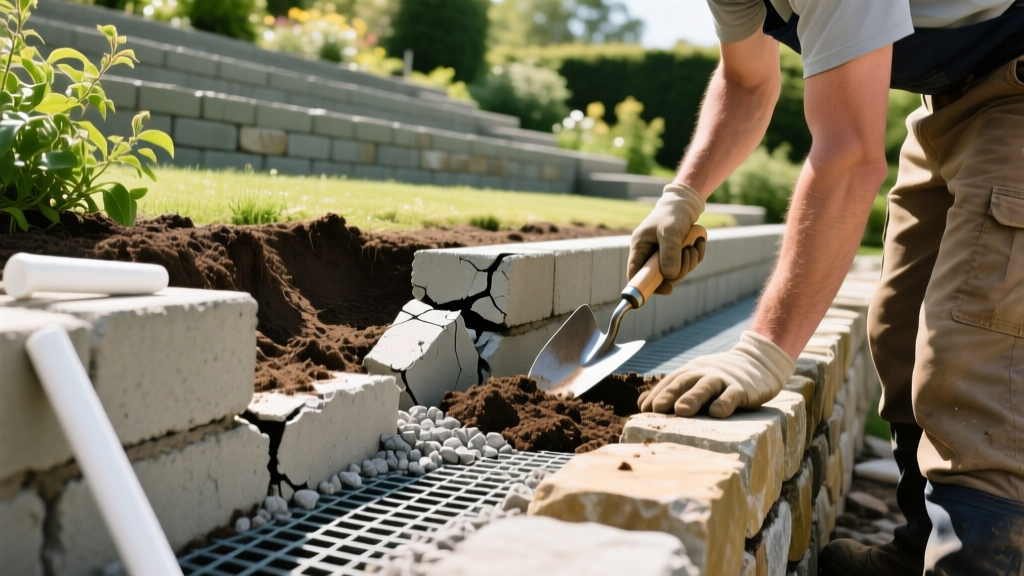
Diagnosing and Fixing Terraced Garden Retaining Wall Failures
The Hidden Physics of Terraced Garden Failures
Terraced gardens transform unusable slopes into productive, tiered growing zones, but they are fundamentally gravity-defying structures. When a terraced garden fails, the culprit is rarely the horticulture; it is almost always a structural or hydrological breakdown. The primary enemy is hydrostatic pressure. Saturated soil exerts immense lateral force against retaining structures—weighing up to 120 pounds per cubic foot compared to roughly 90 pounds for dry soil. According to Penn State Extension, inadequate drainage and improper base preparation account for over 80% of residential retaining wall failures.
This guide bypasses superficial landscaping advice to diagnose the exact mechanical failures in tiered beds and provides engineered, actionable solutions to stabilize your terraced garden.
⚠️ Critical Structural Warning: If your retaining wall exceeds 4 feet in height (measured from the bottom of the base gravel to the top of the wall), most municipal building codes require a stamped engineering design and a building permit. Do not attempt to retrofit walls over this height without professional geotechnical consultation.
Symptom 1: Retaining Wall Bulging, Leaning, or Bowing
Diagnosis: Hydrostatic Pressure and Inadequate Base Depth
A wall that leans outward at the top or bulges in the center is failing to resist the lateral earth pressure behind it. This occurs when water accumulates in the backfill, turning the soil into a heavy, fluid-like mass, or when the wall's base is too shallow to prevent frost heave and settling.
The Solution: Base Reconstruction and French Drain Integration
To permanently stabilize a bulging segmental block or timber wall, you must relieve the hydrostatic pressure and deepen the structural foundation.
- The Base Rule: Excavate a trench that provides 1 inch of compacted base gravel for every 8 inches of wall height. For a 3-foot wall, you need a minimum 4.5-inch compacted base of 3/4-inch clear crushed stone (angular gravel with no fine dust or "fines" that could trap water).
- Drainage Aggregate: Backfill the area immediately behind the wall (at least 12 inches deep) with the same 3/4-inch clear crushed stone. Never use round pea gravel, as it lacks the shear strength to interlock and support the wall.
- Weeping System: Install a 4-inch NDS corrugated perforated drain pipe at the base of the gravel backfill. Wrap the pipe in Mirafi 500X geotextile fabric to prevent soil infiltration, and ensure the pipe daylight (exits to the surface) at a lower elevation with a minimum 1% slope (1/8 inch drop per foot).
Symptom 2: Topsoil Erosion and Washouts Between Tiers
Diagnosis: Surface Runoff Velocity and Lack of Edge Containment
If you notice deep gullies forming in the soil between your terraced tiers, or if mulch and topsoil are washing over the lip of the lower walls after heavy rain, your surface water management is failing. Water cascading from an upper tier gains kinetic energy, scouring the soil of the tier below.
The Solution: Swale Integration and Riprap Armoring
Surface water must be intercepted before it gains enough velocity to erode the planting beds.
- Install Interception Swales: Dig a shallow, 4-inch deep U-shaped trench along the back edge of each upper tier (where the soil meets the retaining wall above). Line this swale with heavy-duty 20-mil EPDM pond liner and cover it with river rock. This catches cascading water and routes it to the sides of the garden.
- Apply Riprap at Transition Zones: Where water must exit a swale or downspout onto a terraced bed, armor the impact zone with 3-inch to 5-inch angular riprap stone. This dissipates the water's kinetic energy before it hits the topsoil.
- Biological Armoring: Plant deep-rooted, native grasses along the edges of the tiers. Panicum virgatum (Switchgrass) develops root systems that penetrate up to 10 feet deep, acting as living rebar that binds the soil profile together far more effectively than shallow-rooted groundcovers.
Symptom 3: Waterlogging and Root Rot in Lower Tiers
Diagnosis: Cascading Saturation and Clay Subsoil Trapping
Plants in the lowest tier of a terraced garden are chronically dying from root rot, even when upper tiers are dry. This happens because gravity pulls all subsurface moisture down the slope, and the lowest tier acts as a basin. If the native subsoil beneath the lowest tier is heavy clay, the water has nowhere to percolate.
The Solution: Subgrade Amendment and Vertical Weeping
You must create an artificial escape route for the trapped water.
- Vertical Chimney Drains: Excavate 12-inch diameter vertical holes at the lowest points of the bottom tier, going down 24 inches into the native clay subsoil. Fill these holes with 3/4-inch crushed stone. This creates a vertical French drain that bypasses the impermeable clay layer and allows water to dissipate into deeper, more porous soil strata.
- Soil Profile Amendment: Do not just add more topsoil to the waterlogged tier. Remove the top 12 inches of soil and replace it with a engineered mix: 50% native topsoil, 30% coarse horticultural sand (not play sand), and 20% pine bark fines. This specific ratio ensures a percolation rate of at least 2 inches per hour, preventing anaerobic conditions that trigger Phytophthora root rot.
Material Selection Matrix for Tiered Beds
Choosing the wrong retaining material for your specific soil and slope conditions guarantees premature failure. Use this matrix to select the appropriate structural material for your terraced garden.
| Material | Avg. Cost (per sq. ft.) | Lifespan | Drainage Requirement | Best Use Case |
|---|---|---|---|---|
| Pressure-Treated Timber | $4 - $7 | 15-20 Years | High (Requires weep holes drilled every 4 ft) | Short walls (under 3 ft), rural settings, budget builds. |
| Segmental Concrete Block | $8 - $15 | 50+ Years | Moderate (Naturally porous joints allow weeping) | Curved walls, medium heights (up to 4 ft without geogrid). |
| Corten Steel Edging | $12 - $22 | 40+ Years | Low (Impermeable; requires dedicated pipe drainage) | Modern aesthetics, very tight spaces, shallow tier drops. |
| Poured Concrete | $25 - $45 | 100+ Years | Critical (Zero permeability; requires engineered weep tubes) | Tall walls (4+ ft), heavy clay soils, high load-bearing needs. |
Step-by-Step Retrofit for a Failing Timber Terrace
If your existing 6x6 pressure-treated timber terraced garden is leaning forward but you cannot afford a full teardown, you can stabilize it using deadmen anchors. This technique ties the failing wall back into the stable soil behind it.
- Locate the Anchor Points: Mark spots on the failing timber wall every 6 feet horizontally. These will be your anchor locations.
- Excavate the Trench: Dig a trench perpendicular to the wall, extending 6 feet back into the terraced bed. The trench should be 12 inches deep.
- Install the Deadman: Place a 2-foot length of 6x6 timber horizontally at the back of the trench (the "deadman").
- Connect with Rebar: Drill a 5/8-inch hole through the center of the failing front wall and the deadman timber. Drive a 36-inch length of 1/2-inch galvanized steel rebar through the front wall, across the trench, and into the deadman. Use a sledgehammer to seat it flush.
- Backfill and Compact: Fill the trench with 3/4-inch crushed gravel, compacting it in 2-inch lifts using a hand tamper. This provides drainage and locks the rebar in place, effectively pulling the leaning wall back into plumb.
Expert Insight: Never use standard galvanized lag screws to tie timber retaining walls together. The tannins and copper compounds in modern pressure-treated wood (like MCA or ACQ) will corrode standard zinc galvanization within 5 years, leading to catastrophic snap failures. Always use hot-dipped galvanized (HDG) or stainless steel fasteners rated for ACQ lumber.
Preventative Maintenance for Long-Term Stability
A terraced garden requires specific seasonal maintenance to ensure the drainage infrastructure remains functional. In late autumn, flush the daylight openings of your perforated drain pipes with a high-pressure garden hose nozzle to clear out silt and root intrusions. Inspect the geotextile fabric exposure points; if UV degradation has made the fabric brittle, cover it with a 2-inch layer of mulch or decorative river rock. By managing the water, you manage the soil, and by managing the soil, your terraced garden will remain structurally sound for decades.

