
Gardening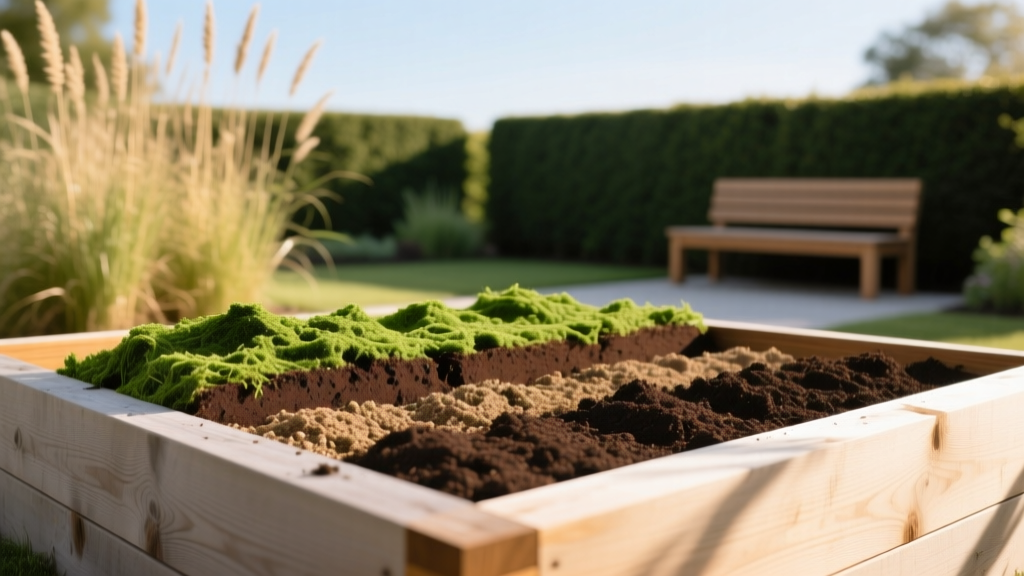
Perfect Topsoil and Compost Mix Ratios for Raised Garden Beds
The Science Behind the Topsoil and Compost Mix
Building a thriving garden requires more than just dropping seeds into dirt; it demands a precise balance of mineral structure and organic biology. A properly formulated topsoil and compost mix bridges the gap between physical soil architecture and nutrient cycling. Topsoil provides the mineral fraction—sand, silt, and clay—which dictates drainage, aeration, and the soil's Cation Exchange Capacity (CEC). Compost provides the organic fraction, introducing humus, beneficial microbes, and slow-release nutrients.
According to the USDA Natural Resources Conservation Service, maintaining optimal soil organic matter (SOM) is critical for moisture retention and microbial health. While native in-ground soils typically thrive with a 3% to 5% SOM, enclosed raised beds require a much higher organic concentration—often between 15% and 30% by volume—to prevent compaction and sustain intensive planting cycles over multiple seasons.
Exact Topsoil and Compost Mix Ratios by Application
There is no universal dirt recipe. The ideal topsoil and compost mix shifts dramatically depending on whether you are filling a cedar raised bed, amending a heavy clay lawn, or potting container vegetables. Use the matrix below to calculate your exact material requirements.
| Application | Topsoil Ratio | Compost Ratio | Aeration / Amendment | Target Organic Matter |
|---|---|---|---|---|
| Standard Raised Beds (Vegetables) | 60% | 30% | 10% (Perlite or Pumice) | 15% - 20% |
| Heavy-Feeder Raised Beds (Corn, Squash) | 50% | 40% | 10% (Coarse Sand) | 20% - 25% |
| In-Ground Clay Amendment | 0% (Use Native) | 20% (Tilled In) | Gypsum (if sodic) | 5% - 8% |
| Lawn Topdressing | 70% | 30% | Screened to 1/4 inch | 3% - 5% |
Calculating Volume and Bulk Costs
For a standard 4x8 foot raised bed that is 12 inches deep, you need exactly 32 cubic feet (1.18 cubic yards) of fill. Buying bagged soil like Kellogg Garden Organics or Coast of Maine Quoddy Blend at $8 to $12 per 1.5-cubic-foot bag will cost upwards of $170 per bed. Conversely, ordering a bulk topsoil and compost mix from a local landscape supply yard typically costs $25 to $40 per cubic yard for screened topsoil and $35 to $60 per cubic yard for premium compost. Bulk ordering cuts your material costs by roughly 60%, though you must factor in a $75 to $150 local delivery fee.
Sourcing Materials: What to Buy and What to Avoid
The quality of your topsoil and compost mix is entirely dependent on the source material. 'Screened topsoil' simply means the soil has been passed through a mesh screen to remove rocks and debris; it does not guarantee fertility or a neutral pH. Always request a soil test report from your bulk supplier. You want a loamy topsoil with a pH between 6.2 and 6.8.
For compost, the gold standard is OMRI (Organic Materials Review Institute) certification. The OMRI label ensures the compost was created without synthetic fertilizers, sewage sludge (biosolids), or prohibited pesticides. Avoid municipal compost that includes 'yard waste' unless the facility explicitly tests for persistent herbicides, as grass clippings from treated lawns frequently contaminate municipal piles.
⚠️ WARNING: The Persistent Herbicide Trap
Aminopyralid and clopyralid are broadleaf herbicides that do not break down during the composting process. If your topsoil and compost mix contains contaminated manure or grass clippings, these chemicals will cause severe leaf curling, stunted growth, and crop failure in sensitive plants like tomatoes, beans, and peas. The Fix: Before filling your beds, perform a bioassay test. Plant three fast-growing bean seeds in a pot of your mixed soil and three in a known safe potting mix. If the test beans emerge with twisted, deformed leaves after 14 days, your compost is contaminated and must be returned.
Step-by-Step Blending and Layering Technique
Dumping raw materials into a bed and watering them will result in stratified layers that restrict root penetration and water percolation. Proper integration requires mechanical blending.
- Pre-Moisten the Compost: Dry compost, especially if it contains peat moss, becomes hydrophobic. Wet your compost pile with a hose 24 hours before blending until it feels like a wrung-out sponge.
- The Wheelbarrow Method (For Small Batches): Add three shovels of topsoil, one shovel of aeration material (perlite/pumice), and two shovels of compost into a wheelbarrow. Use a 5-tine garden fork to turn the mixture until the color is uniform.
- The In-Bed Broadfork Method (For Large Volumes): Dump your bulk topsoil and compost in alternating layers directly into the raised bed. Insert a broadfork or deep-digging garden fork every 12 inches, rocking it back and forth to fold the layers together without inverting the soil profile.
- Settle and Cap: Water the blended mix deeply to eliminate large air pockets. Allow it to settle for 48 hours. If the soil level drops below your desired depth, cap the top 2 inches with pure compost as a nutrient-dense mulch layer.
Troubleshooting Common Mix Failures
Even with precise ratios, environmental factors can compromise your soil architecture. Here is how to diagnose and fix the most common topsoil and compost mix failures.
- Nitrogen Immobilization (Yellowing Leaves): If your compost was not fully cured and still contains high-carbon wood chips, soil microbes will consume available nitrogen to break down the carbon, starving your plants. Solution: Apply a fast-acting organic nitrogen source, such as blood meal or feather meal, at a rate of 2 pounds per 100 square feet.
- Hydrophobic Soil (Water Pooling on Surface): High peat-moss content in commercial composts can cause the soil to repel water when it dries out. Solution: Apply a liquid soil wetting agent (surfactant) or yucca extract to break the surface tension, followed by deep, slow drip irrigation.
- Mid-Season Compaction: If your raised bed soil shrinks and hardens by July, your topsoil likely had too high a clay content. Solution: Top-dress with 1 inch of coarse compost and plant deep-rooting cover crops like daikon radish in the fall to naturally fracture the compacted layers.
Pro-Tip: Annual Rejuvenation
A topsoil and compost mix is not a one-time investment. Because plants extract organic matter and minerals each season, you must replenish the bed annually. Every early spring, remove old mulch and top-dress your raised beds with a 1-inch layer of pure, OMRI-listed compost. Scratch it into the top 3 inches of soil with a hand cultivator to maintain the biological food web without disturbing deep root channels.
Frequently Asked Questions
Can I use potting soil instead of a topsoil and compost mix?
Potting soil is engineered for containers and is primarily composed of peat moss, coir, and perlite. It lacks the mineral weight and structural stability of topsoil. Using potting soil in a large raised bed is cost-prohibitive and can lead to excessive drainage and nutrient leaching. Stick to the 60/30/10 topsoil and compost mix for any garden volume exceeding 10 cubic feet.
How do I test my topsoil quality before mixing?
Perform a simple ribbon test. Moisten a handful of topsoil and squeeze it between your thumb and forefinger. If it forms a ribbon longer than 2 inches before breaking, it is heavy clay and requires extra aeration amendments. If it crumbles immediately and won't hold shape, it is too sandy and needs more compost to retain moisture. For exact nutrient baselines, submit a sample to your local university cooperative extension, as recommended by University of Minnesota Extension.

