
Gardening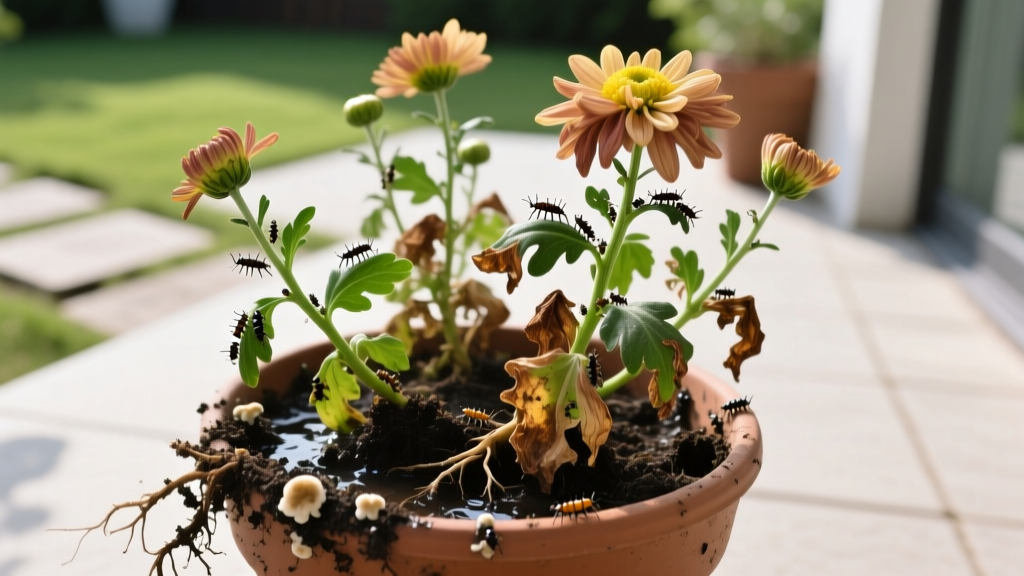
Problem-Solving Care of Mums in Containers: Wilting, Rot, and Pests
The Diagnostic Approach to Potted Chrysanthemums
Potted mums (Chrysanthemum × morifolium) are the undisputed champions of autumn porches, yet they are notoriously ephemeral. Most homeowners treat them as disposable annuals, watching them collapse into brown, crispy husks within three weeks of purchase. However, with precise diagnostic care, container mums can thrive for months and even overwinter successfully. The secret lies in moving beyond generic watering advice and treating the container as a closed micro-ecosystem. When a potted mum declines, it is almost always due to one of three specific failures: moisture mismanagement, fungal canopy infections, or root-zone temperature shock. Below is a comprehensive diagnostic framework to identify and reverse these decline patterns.
Rapid Symptom Diagnostic Matrix
Before applying any treatments, match your plant's visual symptoms to the primary suspects below. Misdiagnosing overwatering as underwatering is the most common fatal error in container mum care.
| Visual Symptom | Primary Suspect | Immediate Corrective Action |
|---|---|---|
| Lower leaves turn yellow and mushy; soil smells sour | Root Rot (Overwatering) | Elevate pot on 1-inch feet; remove catch saucer; apply biological fungicide. |
| Leaves droop but remain green; lower leaves shatter when touched | Desiccation (Underwatering) | Submerge entire pot in a 5-gallon bucket of water for 15 minutes. |
| White, talcum-like dusting on upper leaves and buds | Powdery Mildew | Prune lower 2 inches of foliage; apply chlorothalonil or Bacillus subtilis. |
| Sticky residue on leaves; distorted new growth at stem tips | Aphid Infestation | Spray with 2% Neem oil emulsion at dusk; introduce ladybugs if outdoors. |
| Blooms fade and drop prematurely; foliage looks pale green | Nutrient Burnout | Switch to a high-potassium, low-nitrogen liquid feed (e.g., 2-10-10). |
The Hydration Paradox: Root Rot vs. Desiccation
Mums possess shallow, highly dense root systems. In a standard 12-inch nursery container, the root ball can desiccate completely in just four hours on a 75°F autumn day, yet drown in 48 hours if decorative catch saucers trap rainwater. According to the University of Minnesota Extension, consistent moisture is critical, but 'moist' does not mean 'saturated'.
Diagnosing Underwatering
When a mum lacks water, the leaves will droop dramatically. However, unlike overwatered mums, the leaves will remain green and feel papery. The lowest, oldest leaves will crisp up and shatter when brushed. The Fix: Top-watering is ineffective here because the hydrophobic peat moss in the potting mix will channel water down the sides of the pot, bypassing the dry root ball. Instead, use the submersion method. Fill a 5-gallon bucket with water and lower the entire pot into it until the soil surface is submerged. Leave it for 15 to 20 minutes, or until air bubbles cease rising to the surface. Allow it to drain completely before returning it to its display location.
Diagnosing Overwatering and Root Rot
Overwatered mums also droop, but the leaves turn a sickly yellow and feel mushy or limp. If you scratch the soil surface, it may emit an anaerobic, sour odor. The Fix: Immediately remove the plant from any decorative foil wraps or catch saucers. Elevate the pot using 1-inch terracotta 'pot feet' or wooden blocks to ensure unobstructed drainage from the bottom holes. If the soil is completely waterlogged, gently tilt the pot on its side for an hour to let gravity pull excess water from the core. To combat early-stage root rot, drench the soil with a biological fungicide containing Bacillus amyloliquefaciens (such as RootShield) to outcompete Pythium pathogens.
Warning: Never rely on the 'finger test' alone for 12-inch pots. The top two inches may feel bone dry while the bottom four inches are completely saturated. Invest in a long-probe soil moisture meter (like the XLUX T10) and insert it to the bottom third of the pot. Only water when the meter reads a 3 or 4 on a 1-10 scale.
Fungal Pathogens in the Dense Canopy
Chrysanthemums are bred for dense, multi-branching habits, which creates a microclimate that traps humidity. This stagnant air is a breeding ground for fungal pathogens, most notably Podosphaera xanthii (Powdery Mildew) and Botrytis cinerea (Gray Mold).
Powdery Mildew Identification and Control
Powdery mildew presents as a white, talcum-like dusting on the upper surfaces of the leaves and flower buds. As the Penn State Extension notes, this fungus thrives in high humidity but requires dry leaf surfaces to germinate, making the interior canopy of a potted mum the perfect host. The Fix: Begin with cultural controls. Use sterilized bypass pruners to remove the bottom two inches of foliage entirely. This breaks the 'soil-to-leaf splash zone' and allows air to circulate under the canopy. If the infection is active, apply a fungicide containing chlorothalonil (e.g., Daconil) or an organic alternative like potassium bicarbonate (GreenCure). Apply every 7 to 10 days until the weather cools significantly and humidity drops.
Gray Mold (Botrytis Blight)
Gray mold attacks senescing (dying) flower petals and wounded stems, appearing as fuzzy, gray-brown spores. It is exacerbated by overhead watering late in the day. The Fix: Deadhead spent blooms immediately by pinching the stem one inch below the flower head. Never water the foliage; always apply water directly to the soil surface using a long-spout watering can.
Pest Invasions: Aphids and Spider Mites
Because potted mums are often clustered tightly together on porches, pests can spread rapidly from plant to plant. Aphids are the most common invaders, congregating on the tender apical meristems (the new growth at the very tips of the stems). They secrete a sticky substance called honeydew, which subsequently attracts sooty mold. For detailed identification of aphid species, refer to the University of Minnesota Extension entomology guide.
The 2% Neem Oil Emulsion Protocol
Commercial insecticidal soaps can sometimes burn the delicate petals of blooming mums if applied in direct sunlight. A safer, highly effective alternative is a custom 2% Neem oil emulsion.
- Recipe: Mix 2 tablespoons of cold-pressed, 100% pure Neem oil and 1 teaspoon of liquid castile soap (to act as an emulsifier) into one gallon of lukewarm water.
- Application: Shake vigorously and spray the entire plant, focusing on the undersides of the leaves and the stem tips where aphids cluster.
- Timing: Apply strictly at dusk. Neem oil applied during the heat of the day will cause severe phototoxicity, burning the leaves and ruining the blooms.
Nutrient Burnout and Bloom Longevity
Nursery-grown mums are heavily fertilized with slow-release prills (typically Osmocote 14-14-14) to force a massive, uniform bloom display for the retail market. By the time you purchase the plant in mid-autumn, those prills are largely depleted. If the plant continues to push leafy growth at the expense of flowers, or if the lower leaves begin to pale and yellow uniformly, it is experiencing nutrient burnout.
Pro-Tip: Stop using balanced fertilizers (like 10-10-10) once the plant is in full bloom. High nitrogen levels promote soft, leafy growth that is highly susceptible to early frost damage. Switch to a water-soluble, high-potassium bloom booster (such as a 2-10-10 or 0-10-10 ratio) every 10 days. Potassium strengthens cell walls, improves cold tolerance, and extends the lifespan of existing flowers.
Overwintering the Container: The Zone Shift Rule
The ultimate test of container mum care is surviving the winter. The most critical concept to understand is the 'Zone Shift Rule.' Roots in above-ground containers are exposed to ambient air temperatures, effectively dropping the plant's hardiness by 1 to 2 USDA zones. A Zone 5 mum planted in the earth experiences Zone 5 root temperatures; that same mum in a plastic pot on a porch experiences Zone 3 or 4 root temperatures, leading to fatal root freeze.
The Insulation and Microclimate Protocol
If you intend to keep your potted mums alive for the following spring, you must artificially insulate the root zone.
- Wrap the Pot: Wrap the exterior of plastic, resin, or terracotta pots with two layers of heavy-duty, large-bubble bubble wrap, or wrap them in burlap stuffed tightly with dry oak leaves. (Avoid maple or birch leaves, as they mat down and hold moisture).
- Relocate: Move the insulated pot to an unheated garage, a cold frame, or tightly against a south-facing foundation wall where it will benefit from radiant heat escaping the house.
- Winter Hydration: Dormant mums still need moisture to prevent the root ball from desiccating completely. Water the pot lightly once a month during the winter, providing just enough water to keep the soil slightly damp, but never wet.

