
Gardening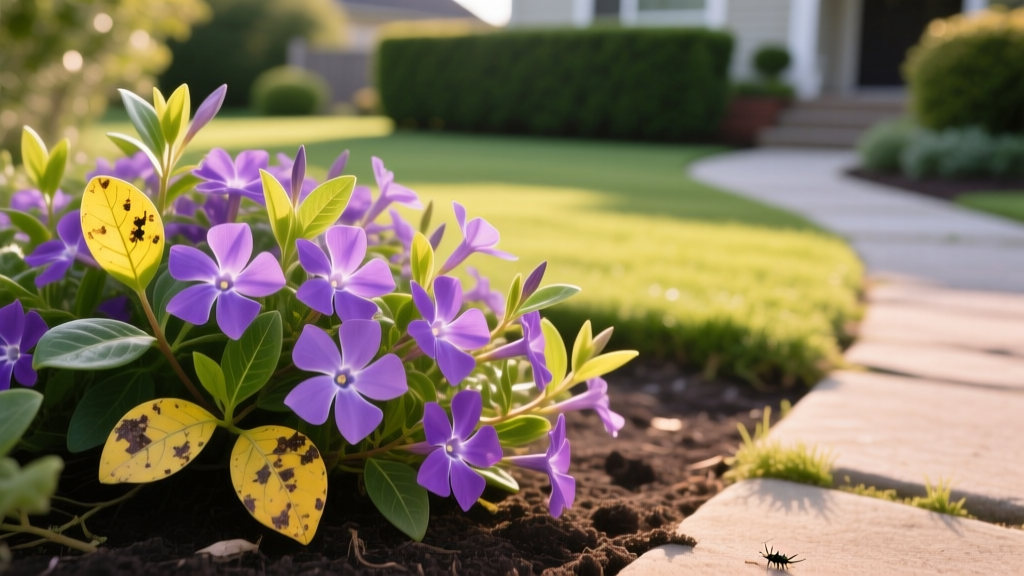
Purple Ground Cover Problems: Diagnosis and Proven Fixes
The Breakdown of Purple Ground Covers
Purple ground covers like Ajuga reptans (Bugleweed), Vinca minor (Periwinkle), Tradescantia pallida (Purple Heart), and Thymus serpyllum (Creeping Thyme) are deployed to suppress weeds, stabilize slopes, and provide persistent color. However, when these dense mats begin to thin, chlorize, or collapse, homeowners often misdiagnose the issue as simple drought stress. In reality, the failure of a purple ground cover is almost always tied to specific soil-borne pathogens, microclimate mismatches, or severe compaction.
As of 2026, expanded hardiness zones and shifting precipitation patterns mean that fungal pathogens previously confined to the Deep South are now routinely decimating Ajuga and Vinca beds in the Mid-Atlantic and Midwest. Accurate diagnosis requires looking past the surface foliage and examining the root crown, soil structure, and drainage metrics.
Symptom-to-Solution Diagnostic Matrix
Use this matrix to identify the primary stressor affecting your specific purple ground cover. Match the visual symptoms in your garden to the corresponding pathology and immediate intervention.
| Visual Symptom | Primary Culprit | Affected Species | Immediate Intervention |
|---|---|---|---|
| Water-soaked lesions on lower stems; white, fan-like mycelium at soil line; tan, mustard-seed-sized sclerotia. | Southern Blight (Sclerotium rolfsii) | Ajuga, Vinca | Remove infected plants and 2 inches of surrounding soil. Apply azoxystrobin fungicide. |
| Leaves fading from deep purple to pale green; stunted vertical growth; no visible fungal signs. | Chlorosis / High Soil pH / Shade | Tradescantia pallida | Test soil pH. Apply chelated iron (Fe-EDDHA) and reduce overhead canopy shade by 20%. |
| Center of the mat turning brown and woody while outer edges remain green; poor water infiltration. | Thatch Accumulation / Crown Rot | Thymus serpyllum | Core aerate the mat. Top-dress with 1/4 inch of coarse silica sand to improve crown drainage. |
| Sudden wilting and blackening of vascular tissue; foul odor when stems are crushed. | Phytophthora Root Rot | Vinca minor, Ajuga | Improve grading. Drench soil with phosphorous acid fungicide at 4 oz per 1,000 sq ft. |
Deep Dive: Fungal Pathogens and Crown Rot
The most rapid and destructive failure in purple ground covers is caused by Sclerotium rolfsii, commonly known as Southern Blight. According to NC State Extension, this pathogen thrives in temperatures between 85°F and 95°F combined with high soil moisture. It is particularly lethal to Ajuga reptans planted in heavy, unamended clay soils.
Identifying Southern Blight vs. Phytophthora
Gardeners often confuse Southern Blight with Phytophthora root rot. The distinction lies in the physical evidence at the soil surface. Southern Blight produces distinct sclerotia—small, spherical, tan-to-brown resting bodies roughly 0.5mm to 1.5mm in diameter that resemble mustard seeds. You will find these clustered around the base of dying stems alongside white, fan-shaped mycelial growth. Phytophthora, conversely, attacks the root system and lower stem internally, causing the vascular tissue to turn dark brown or black without producing surface sclerotia.
⚠️ Warning: Herbicide Drift Mimicry
Before treating for fungus, rule out herbicide damage. Glyphosate or dicamba drift from neighboring lawn treatments will cause Vinca minor and Ajuga to exhibit severe chlorosis, leaf cupping, and necrotic spotting that closely mimics fungal blight. If the dieback follows a uniform pattern aligned with wind direction from a recently sprayed lawn, the issue is chemical, not pathological.
Targeted Fungicide Application Rates
If Southern Blight is confirmed, cultural controls alone will not eradicate the sclerotia, which can survive in the soil for up to four years. You must deploy a targeted chemical intervention. For residential application, products containing azoxystrobin (such as Scotts DiseaseEx) are highly effective. Apply at a rate of 2.5 lbs per 5,000 square feet, watering it into the top 1 inch of soil immediately after application. For severe Phytophthora outbreaks, a soil drench of phosphorous acid (e.g., Agri-Fos) at 1/4 ounce per gallon of water, applied at 2 gallons per 100 square feet, will halt the pathogen's progression.
Environmental Stressors: Sun, Soil, and Water
Not all purple ground cover failures are biological. Environmental mismatches frequently cause aesthetic degradation and slow decline, particularly in Tradescantia pallida (Purple Heart) and Thymus serpyllum.
Fixing Chlorosis in Purple Heart (Tradescantia)
Tradescantia pallida is cultivated specifically for its vibrant, deep violet foliage. When the leaves revert to a pale, washed-out green, the plant is experiencing chlorosis. According to UF/IFAS Gardening Solutions, this is rarely a nitrogen deficiency; it is almost always a micronutrient lockout caused by alkaline soil or excessive shade.
- The pH Fix: Purple Heart requires a soil pH between 5.5 and 6.5. If your soil tests above 7.0, iron becomes chemically unavailable to the roots. Apply elemental sulfur at a rate of 1 lb per 100 square feet to drop the pH by approximately 0.5 points over six months.
- The Immediate Fix: For rapid color restoration, apply a foliar spray of chelated iron (Fe-EDDHA). Mix 2 ounces per gallon of water and mist the foliage in the early morning. The purple pigmentation (anthocyanin production) will resume within 10 to 14 days.
- The Light Fix: Purple Heart requires a minimum of 6 hours of direct sunlight to maintain its color. If planted under dense tree canopies, prune the lower limbs of the overstory trees to increase dappled light penetration by at least 20%.
Winter Dieback and Crown Rot in Creeping Thyme
Purple creeping thyme is highly drought-tolerant but exceptionally vulnerable to winter crown rot in USDA Zones 4 through 6. The primary failure mode is planting in heavy clay soils that retain winter precipitation. When the soil freezes and thaws repeatedly, the trapped water expands, rupturing the shallow root system and suffocating the crown. Penn State Extension notes that ground covers in poorly drained sites suffer up to 60% higher winter mortality rates.
The Solution: Never plant creeping thyme in unamended clay. Excavate the planting area to a depth of 6 inches and amend the native soil with 30% coarse builder's sand or crushed pumice by volume. After establishment, top-dress the thyme bed every November with a 1/4-inch layer of pea gravel to keep the crown dry and prevent soil splashing onto the lower leaves during winter rains.
Step-by-Step Recovery Protocol for Blighted Beds
If your Ajuga or Vinca bed has suffered a total collapse from Southern Blight or Root Rot, do not simply replant the same species in the same soil. Follow this exact remediation protocol to prevent reinfection:
- Excavate and Isolate: Remove all dead and dying plant material. Dig 2 inches beyond the visible margin of necrosis to capture advancing mycelium. Bag the debris in heavy-duty contractor bags and dispose of it in the municipal landfill; do not compost blighted material.
- Solarize the Soil: During the peak heat of summer (July-August), moisten the bare soil and cover it with 2-mil clear polyethylene sheeting. Bury the edges 6 inches deep to seal the heat. Leave in place for 4 to 6 weeks. This will raise soil temperatures to 120°F at a 2-inch depth, effectively pasteurizing the topsoil and destroying sclerotia.
- Rebuild the Structure: Remove the plastic and incorporate 2 inches of fully composted pine bark fines into the top 4 inches of soil. Pine bark contains naturally suppressive compounds that inhibit Phytophthora and Pythium species.
- Replant with Resistant Cultivars: Switch to a more resistant alternative. If Ajuga failed, replant with Vinca minor 'Bowles' (which shows higher blight tolerance) or shift to a non-host species like Liriope muscari 'Big Blue'.
Preventative Spacing and Maintenance Metrics
Overcrowding is the leading cultural cause of ground cover failure. When plants are spaced too closely, the canopy traps humidity, creating an ideal microclimate for fungal spore germination. Adhere to these specific spacing and maintenance metrics to ensure long-term viability:
- Ajuga reptans: Space plugs 9 to 12 inches apart. Thin the mat every 3 years by pulling up 20% of the oldest rosettes to allow air circulation at the soil line.
- Vinca minor: Space plants 12 to 15 inches apart. Mow the entire bed on the highest mower setting (approx. 3.5 inches) every 4 years in early spring to remove accumulated woody thatch and stimulate new, disease-resistant growth.
- Tradescantia pallida: Space 12 inches apart. Pinch back the growing tips by 2 inches in late May to encourage lateral branching and prevent the center of the plant from becoming leggy and bare.
By matching the specific physiological needs of your purple ground cover to your site's drainage and pH metrics, you can transition from reactive disease management to proactive, low-maintenance cultivation.

