
Gardening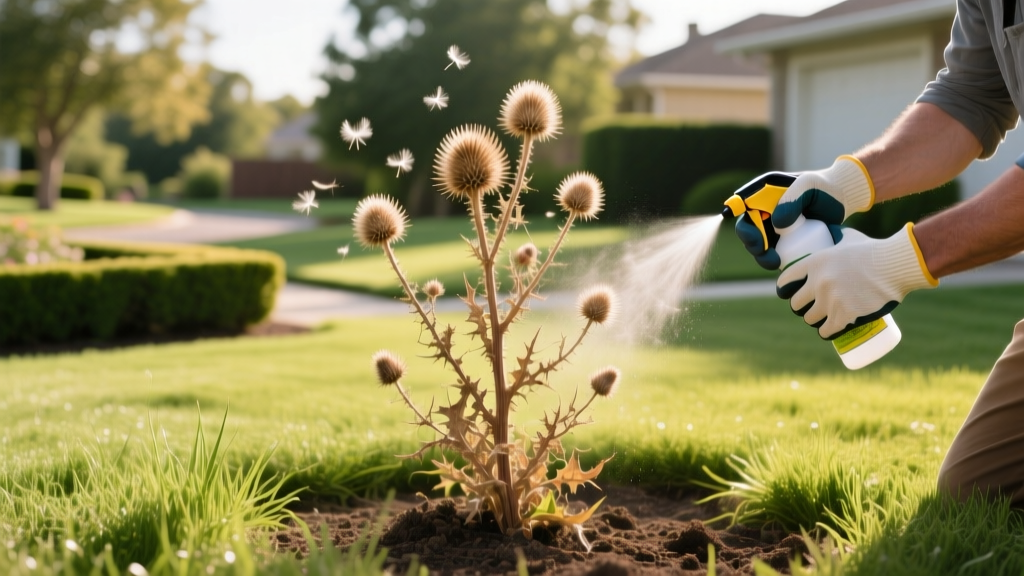
How to Kill a Tumbleweed Plant: Spot-Treatment & Prevention
The Biological Threat of the Tumbleweed Plant
The iconic tumbleweed plant, scientifically classified as Russian thistle (Salsola tragus), is not a harmless desert aesthetic; it is a highly invasive annual weed capable of producing up to 250,000 seeds per specimen. According to the University of California Agriculture and Natural Resources (UC ANR), this aggressive broadleaf weed thrives in disturbed soils, garden edges, and hardscape cracks, outcompeting native vegetation for limited moisture.
The primary challenge in managing the tumbleweed plant lies in its unique reproductive mechanism. As the plant matures and dries in late summer, an abscission layer forms at the stem base. The plant detaches from its taproot and rolls across the landscape, actively broadcasting seeds over miles of terrain. Spot-treating a mature, rolling tumbleweed is largely ineffective because the seeds have already set and the plant's vascular system has shut down. Effective eradication requires targeting the plant during its vulnerable rosette stage or preventing germination entirely.
⚠️ Critical Failure Mode: Homeowners frequently attempt to spray glyphosate on mature, woody tumbleweeds in August. This fails because the plant develops a thick, waxy cuticle that repels aqueous herbicides, and the taproot has already begun to die back naturally. You are wasting chemical and money on a plant that is already dead.
Pre-Emergent Defense: Stopping Germination
The most cost-effective and labor-saving spot-treatment strategy for the tumbleweed plant is applying a pre-emergent herbicide barrier. Russian thistle seeds germinate when soil temperatures consistently reach 52°F to 55°F, typically in early to mid-spring depending on your hardiness zone.
Pre-Emergent Herbicide Comparison Matrix
| Active Ingredient | Product Example | Application Rate | Estimated Cost (per 1,000 sq ft) | Longevity |
|---|---|---|---|---|
| Prodiamine (65 WDG) | Barricade, Prograss | 0.4 - 0.8 oz / 1,000 sq ft | $0.12 - $0.18 | 4 - 6 months |
| Pendimethalin (3.3 EC) | Pendulum, Pre-M | 1.5 - 2.0 oz / 1,000 sq ft | $0.15 - $0.22 | 3 - 4 months |
| Isoxaben (75 DF) | Gallery | 0.5 - 1.0 oz / 1,000 sq ft | $0.25 - $0.35 | 4 - 5 months |
Application Protocol: Apply Prodiamine 65 WDG at a rate of 0.5 ounces per 1,000 square feet. Dissolve the granules in 1 to 2 gallons of water and spray evenly over the target soil. Crucially, you must water the area with 0.25 to 0.5 inches of irrigation immediately after application to activate the chemical barrier in the top inch of the soil profile. Without this watering step, the pre-emergent will degrade in UV light and fail to stop the tumbleweed plant seeds from sprouting.
Post-Emergent Spot-Treatment Protocols
If pre-emergent timing is missed, you must target the tumbleweed plant during its early vegetative growth phase. The USDA Forest Service Fire Effects Information System (FEIS) notes that Russian thistle is most susceptible to systemic herbicides when it is in the 2-inch to 4-inch rosette stage, before it bolts upward and develops its rigid, spiny structure.
Herbicide Selection by Zone
- In Lawn and Turf Areas: Use a selective broadleaf herbicide containing a mix of 2,4-D, dicamba, and MCPP. Products like SpeedZone Broadleaf Herbicide are highly effective. Mix at a rate of 2 ounces per gallon of water. Spot-treat the center of the rosette until the leaves are wet but not dripping. This will kill the tumbleweed plant without harming your surrounding Bermuda, Zoysia, or Fescue grass.
- In Garden Beds and Hardscapes: Use a non-selective glyphosate concentrate (41% active ingredient). Mix at 2 ounces per gallon of water. Pro-Tip: Because young tumbleweed leaves begin developing a waxy surface early, you must add a non-ionic surfactant (like DyneAmic or Surf-Ac 820) at a rate of 0.5% v/v (roughly 1/2 teaspoon per gallon). The surfactant breaks the surface tension, allowing the glyphosate to penetrate the leaf cuticle and translocate down to the taproot.
Mechanical Eradication: Pulling vs. Hoeing
For organic gardeners or those managing small infestations near sensitive pollinator plants, mechanical removal is viable if executed correctly. The tumbleweed plant develops a deep, woody taproot that can penetrate 12 to 15 feet into the soil in arid environments, though the upper 6 inches are the most critical for removal.
- Timing: Pull or hoe the weeds when the soil is slightly moist (e.g., 24 hours after a rain or irrigation event). Dry, compacted soil will cause the taproot to snap, leaving the crown intact to regenerate.
- Tool Selection: Use a heavy-duty stirrup hoe or a Warren hoe to slice the taproot exactly 1 inch below the soil surface. You do not need to extract the entire deep root; severing the crown from the root system kills the plant.
- Protective Gear: Even young tumbleweed plants possess micro-spines that can cause contact dermatitis. Always wear 13-gauge nitrile-coated or thick leather work gloves during manual extraction.
🛑 Composting Warning: Never place pulled, mature tumbleweed plants in a standard home compost bin. The seeds of Salsola tragus possess a hard seed coat that can survive compost pile temperatures of 130°F unless the pile is meticulously turned and maintained at 140°F+ for several consecutive weeks. Bag mature plants in heavy-duty contractor trash bags and send them to the municipal landfill.
Frequently Asked Questions (FAQ)
Will vinegar kill a tumbleweed plant?
Horticultural vinegar (20% to 30% acetic acid) will burn off the top growth of a very young, 1-inch tumbleweed rosette. However, it is a contact-only burn-down agent with no systemic action. It will not reach the taproot, and the plant will almost certainly resprout within 10 to 14 days. For mature plants, vinegar is entirely ineffective against the waxy leaf cuticle.
How do I stop tumbleweeds from blowing into my yard from a neighbor's property?
You cannot control the wind, but you can install a physical barrier. Erect a snow fence or a specialized windbreak netting (with a 50% porosity rating) along the property line in late July. This catches the rolling tumbleweeds before they scatter seeds. You must then manually collect and dispose of the trapped weeds before they degrade and release their seed bank.
Is the tumbleweed plant toxic to pets or livestock?
Russian thistle is not inherently toxic, but it poses a severe mechanical hazard. The rigid, sharp spines of mature plants can puncture the paws of dogs, cause oral impactions in horses, and lead to gastrointestinal blockages if ingested by livestock. Furthermore, tumbleweeds accumulating against structures create a massive fire hazard in dry climates, as the dead plant material is highly combustible.

