
Gardening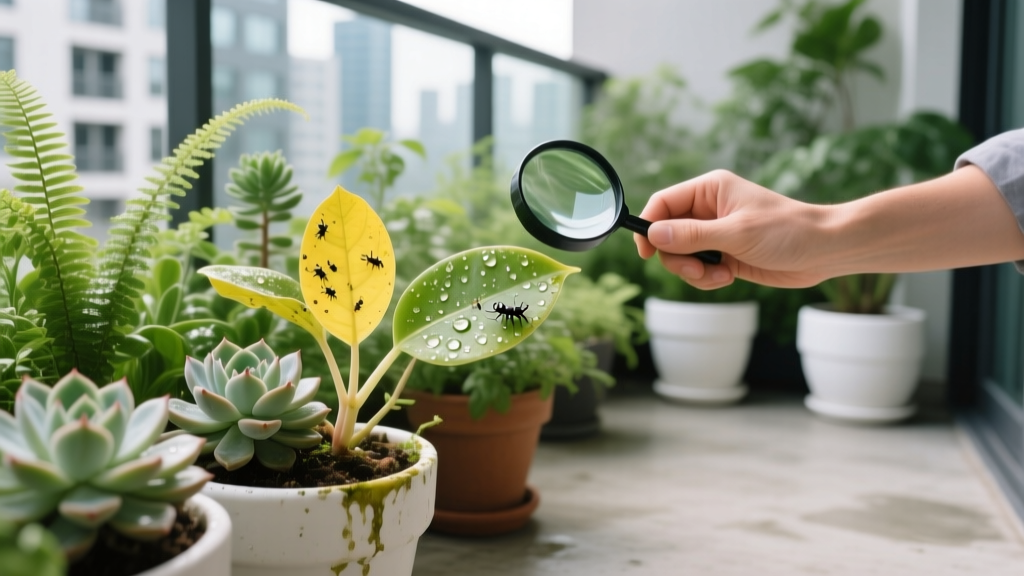
Urban Gardening Small Apartment: Diagnosing and Fixing Plant Issues
Cultivating a thriving indoor oasis in a compact city dwelling requires overcoming a unique set of environmental hurdles. The microclimate of an apartment is heavily influenced by artificial HVAC systems, limited window access, and restricted airflow. When practicing urban gardening small apartment cultivation, standard outdoor gardening rules do not apply. Plants that thrive on a sunny patio will quickly deteriorate six feet away from a north-facing window. This diagnostic guide identifies the four most common physiological failures in apartment-grown plants and provides exact, measurable solutions to correct them.
Rapid Diagnostic Matrix: Symptom to Solution
Before altering your care routine, cross-reference your plant's visual symptoms with this diagnostic table to identify the primary environmental stressor.
| Visual Symptom | Primary Suspect | Apartment Trigger | Immediate Fix |
|---|---|---|---|
| Elongated, pale stems (etiolation) | Light Deficiency | Inverse square law drop-off from windows | Install full-spectrum LED at 12-18 inches |
| Crispy brown leaf margins | Low Humidity / Mineral Burn | Winter HVAC drying air; hard tap water | Ultrasonic humidifier (45% RH); flush soil |
| Yellowing lower leaves; soil mold | Chronic Overwatering | Lack of cross-breeze; dense potting mix | Switch to bottom-watering; amend soil |
| Sudden, massive leaf drop | Thermal Shock | Proximity to AC vents or radiators | Relocate 3+ feet from HVAC sources |
Problem 1: The "Leggy" Stretch (Light Deficiency)
Diagnosis: Etiolation and Chlorosis
Human eyes adapt to low light, making an apartment living room feel brightly lit. However, plants measure light in Photosynthetic Photon Flux Density (PPFD). A south-facing window might deliver 800 µmol/m²/s at the glass, but due to the inverse square law, that intensity drops to less than 100 µmol/m²/s just four feet into the room. When plants stretch toward the light source with wide gaps between leaves, they are etiolating.
The Apartment Solution: Targeted PPFD Supplementation
Do not rely on "grow bulbs" that simply change the color temperature of standard lamps. You need high-output, full-spectrum LEDs. For foliage plants (pothos, philodendrons, ferns), target a PPFD of 150-250 µmol/m²/s. For fruiting or flowering plants (citrus, orchids), you need 400+ µmol/m²/s.
- Hardware: Use a dedicated pendant light like the Soltech Solutions Aspect or a high-output bulb like the SANSI 24W LED Grow Light Bulb.
- Placement: Suspend the light exactly 12 to 18 inches above the top canopy. Any higher, and the light dispersion will fail to deliver adequate PPFD to the lower leaves.
- Photoperiod: Run the lights on a smart plug for 12 to 14 hours daily. According to University of Minnesota Extension, consistent photoperiods are critical for maintaining circadian rhythms in indoor flora.
Problem 2: Crispy Margins and Brown Tips
Diagnosis: Atmospheric Desiccation and Salt Accumulation
When the edges of your calathea, spider plant, or palm turn brown and brittle, the issue is rarely underwatering. In winter, apartment forced-air heating systems can drop indoor relative humidity (RH) to 15-20%. Tropical plants require a minimum of 40% RH to keep their stomata functioning properly without losing excessive moisture to the dry air. Furthermore, municipal tap water often contains high levels of dissolved solids (TDS), chlorine, and fluoride. As the water evaporates, these salts concentrate in the soil and burn the root tips, manifesting as necrotic leaf margins.
The Apartment Solution: Microclimate Engineering
Grouping plants together or using pebble trays only increases local humidity by 2-3%, which is insufficient for a dry apartment. You must actively humidify the air.
- Active Humidification: Invest in an ultrasonic smart humidifier, such as the Levoit Classic 300S. Place it within 2 feet of your most humidity-sensitive plants and use the companion app to lock the target RH at 45%. The EPA recommends keeping indoor humidity between 30% and 50% to balance plant health with mold prevention.
- Water Quality: Stop using tap water for sensitive species. Use distilled water, or install an under-sink Reverse Osmosis (RO) system to reduce TDS to near zero.
- Soil Flushing: If salt buildup is already present, take the plant to the shower and run lukewarm distilled water through the soil for 3 minutes to leach out accumulated minerals.
Warning: Thermal Shock Drafts
Before placing a humidifier, ensure your plants are not sitting directly in the path of an HVAC supply vent or a leaky single-pane window. Cold drafts combined with high humidity will rapidly induce fungal leaf spot diseases and sudden leaf abscission. Maintain a minimum 3-foot clearance from all active air registers.
Before placing a humidifier, ensure your plants are not sitting directly in the path of an HVAC supply vent or a leaky single-pane window. Cold drafts combined with high humidity will rapidly induce fungal leaf spot diseases and sudden leaf abscission. Maintain a minimum 3-foot clearance from all active air registers.
Problem 3: Fungus Gnats and Soil Mold
Diagnosis: Stagnant Moisture and Poor Gas Exchange
Fungus gnats (Bradysia species) are the bane of apartment gardeners. They thrive in the top two inches of potting soil that remains constantly damp. Small apartments often lack the cross-breezes necessary to evaporate surface moisture, creating a perfect breeding ground for gnat larvae, which feed on fungi and delicate root hairs.
The Apartment Solution: Biological Warfare and Physical Barriers
Yellow sticky traps only catch adults and do not solve the infestation. You must break the breeding cycle using a multi-pronged approach.
- Biological Control: Brew a "tea" using Summit Mosquito Bits, which contain Bacillus thuringiensis israelensis (Bti). Steep 4 tablespoons of bits in a gallon of water for 30 minutes, then use this water to bottom-water your plants. The Bti bacteria will eradicate the larvae in the soil. As noted by entomology researchers, Bti is highly specific to dipteran larvae and safe for indoor use.
- Physical Barrier: Top-dress the soil with a 1/2-inch layer of coarse aquarium gravel or horticultural sand. This creates a dry, hard physical barrier that prevents adult females from laying eggs in the moist soil below.
- Airflow: Install a small, oscillating USB desk fan on your plant shelf. Run it on the lowest setting for 4 hours a day to simulate natural wind and accelerate surface evaporation.
The Foundation: Formulating an Apartment-Specific Soil Mix
Most commercial "indoor potting soils" are heavily reliant on peat moss, which retains too much water in low-evaporation apartment environments. To prevent root rot and gnat issues, mix your own structural substrate.
| Ingredient | Percentage | Purpose |
|---|---|---|
| High-quality potting soil (e.g., FoxFarm Ocean Forest) | 40% | Base nutrients and moisture retention |
| Orchid bark (medium grade) | 30% | Creates large air pockets for root respiration |
| Pumice or Perlite (1/4 inch size) | 30% | Ensures rapid drainage and prevents soil compaction |
By diagnosing the specific microclimate failures inherent to compact city living and applying targeted, measurable interventions, you can transform a struggling collection into a resilient, thriving indoor ecosystem.

