
Gardening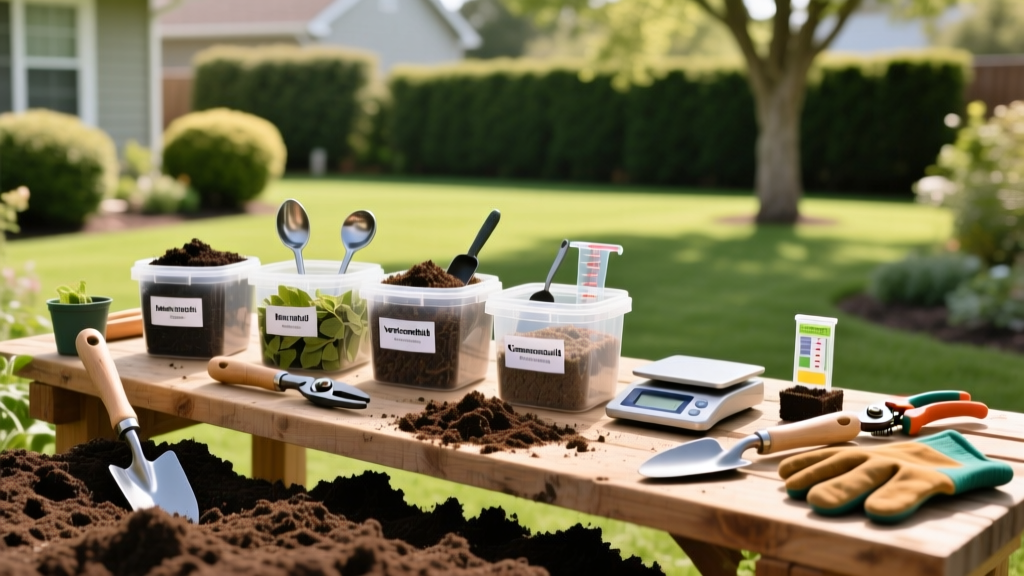
Best Compost for Topsoil Amendment: Ratios, Types & Costs
The Science of Amending Topsoil with Compost
Native topsoil in residential landscapes is rarely ideal. Construction grading strips away the O and A horizons, leaving behind compacted subsoil with poor drainage and low microbial activity. Adding compost for topsoil amendment is the most effective way to restore soil structure, but success depends entirely on precise volumetric ratios and selecting the correct compost feedstock.
Compost improves topsoil primarily by increasing the Cation Exchange Capacity (CEC). A typical clay loam has a CEC of 15-20 meq/100g, while high-quality compost can boast a CEC of 50-100 meq/100g. By blending the two, you exponentially increase the soil's ability to hold onto essential nutrients like calcium, magnesium, and potassium, preventing them from leaching during heavy rains. According to research from the University of Wisconsin-Madison Extension, incorporating organic matter also creates stable soil aggregates, which increases pore space and improves both water infiltration and root penetration.
Choosing the Right Compost for Topsoil
Not all compost is created equal. The feedstock dictates the nutrient profile, pH, and salt content. Using the wrong type can inadvertently harm your plants. Below is a comparison matrix of the most common commercial and municipal composts used for topsoil amendment.
| Compost Type | NPK Ratio (Approx) | pH Level | Best Application | Primary Risk / Drawback |
|---|---|---|---|---|
| Composted Cow Manure | 0.5 - 0.5 - 0.5 | 6.5 - 7.5 | General vegetable beds, new lawn prep | High soluble salts if not fully aged; potential weed seeds |
| Mushroom Compost | 1.0 - 0.5 - 1.0 | 7.5 - 8.0 | Acidic native soils, turfgrass establishment | Too alkaline for acid-loving plants (azaleas, blueberries) |
| Leaf Mold / Leaf Compost | 0.5 - 0.2 - 0.2 | 6.0 - 7.0 | Woodland gardens, improving clay drainage | Low nutrient density; requires supplemental fertilization |
| Vermicompost (Worm Castings) | 1.5 - 2.0 - 1.5 | 7.0 | Top-dressing, seed starting, container mixes | Prohibitively expensive for large-scale topsoil amendment |
Calculating Compost-to-Topsoil Ratios
The most common mistake homeowners make is over-applying compost. The goal is to amend the soil, not replace it entirely. Exceeding a 30% compost-to-soil volume ratio can lead to nutrient toxicity, poor root anchorage, and excessive moisture retention.
The 25% Rule for Clay Soils
Heavy clay soils require organic matter to break up compaction. To achieve a 25% volumetric amendment in the top 6 inches of the root zone:
- Application Rate: Spread 1.5 to 2 inches of compost evenly over the soil surface.
- Incorporation Depth: Till or broadfork the compost into the top 6 inches of native topsoil.
- Volume Math: For a 100-square-foot bed, 2 inches of compost equals roughly 16.6 cubic feet (about 0.6 cubic yards).
The 30% Rule for Sandy Soils
Sandy soils drain too quickly and lack nutrient-holding capacity. They can handle a slightly higher organic matter load.
- Application Rate: Spread 2.5 to 3 inches of compost over the surface.
- Incorporation Depth: Incorporate into the top 8 to 10 inches of soil to create a deeper moisture-holding sponge.
Critical Failure Modes to Avoid
When sourcing bulk compost for topsoil, you must be aware of biological and chemical failure modes that can destroy a garden season.
Warning: Herbicide Carryover
Persistent broadleaf herbicides (specifically aminopyralid, clopyralid, and picloram) used on hay and pasture grasses do not break down during the composting process. If the compost contains manure from animals that grazed on treated hay, these chemicals will survive and severely stunt broadleaf crops like tomatoes, beans, and peas, causing severe leaf cupping and twisting. The Penn State Extension strongly recommends performing a "bean seed bioassay" before applying bulk compost. Plant 5 bean seeds in a 50/50 mix of the compost and potting soil, and 5 in pure potting soil. If the compost beans show deformed growth after 2-3 weeks, the compost is contaminated and must be returned.
Pro-Tip: Avoiding Nitrogen Immobilization
Never use unfinished or "hot" compost for topsoil amendment. If the compost has a Carbon-to-Nitrogen (C:N) ratio higher than 30:1, soil microbes will consume all available nitrogen to break down the excess carbon, starving your plants. Finished compost should have a C:N ratio between 15:1 and 20:1, smell like rich earth, and be cool to the touch (under 85°F).
Real-World Costs and Sourcing Analysis
Pricing for compost varies drastically based on whether you buy in bulk or by the bag. Here is the 2026 cost breakdown for amending a standard 200-square-foot vegetable garden (requiring roughly 1.2 cubic yards for a 2-inch application).
- Bulk Municipal/Local Compost: $30 to $55 per cubic yard. Total cost: $36 - $66. (Note: Delivery fees usually add $50-$100, making bulk only cost-effective if you need 3+ cubic yards or can pick it up in a truck).
- Bulk Premium Blended Compost: $60 to $90 per cubic yard. Total cost: $72 - $108.
- Bagged Compost (e.g., Black Kow, Coast of Maine): $6 to $12 per 1-cu-ft bag. You need 32 bags to equal 1.2 cubic yards. Total cost: $192 - $384.
The Verdict: For beds under 50 square feet, bagged compost is more convenient and cost-effective. For anything larger, source bulk compost from a local landscape supply yard and ensure it is OMRI-listed if you are growing organic edibles.
Step-by-Step Application Guide
Follow this sequence to properly integrate compost into your existing topsoil without destroying the soil food web.
- Test the Native Soil: Before amending, send a soil sample to a university lab or use a reputable testing service to establish your baseline pH and phosphorus levels. Over-composting can lead to phosphorus runoff issues.
- Clear and Loosen: Remove existing weeds. Instead of using a gas-powered rototiller—which pulverizes soil structure and destroys beneficial mycorrhizal fungal networks—use a broadfork to fracture and aerate the top 8 inches of soil.
- Spread the Compost: Dump the compost in wheelbarrow loads across the bed. Use a steel bow rake to spread it to your calculated depth (e.g., 2 inches).
- Incorporate: Use a garden fork or the broadfork to gently fold the compost into the native topsoil. Do not invert the soil; simply lift and fold to mix the layers.
- Water and Settle: Water the bed deeply to activate the microbial life and help the compost settle into the soil pores. Allow the bed to rest for 7 to 14 days before planting to let any residual microbial heat dissipate.
Frequently Asked Questions
Can I use compost as a complete replacement for topsoil?
No. Pure compost lacks the mineral fraction (sand, silt, clay) required for long-term structural stability and drainage. Planting directly into 100% compost will result in poor root anchorage, rapid drying, and potential nutrient burn. Always blend it with native soil or a mineral topsoil base at a maximum 30% volume ratio.
How often should I add compost to my garden beds?
For established vegetable gardens, apply a 0.5-inch to 1-inch top-dressing of compost annually in the spring or fall. This replaces the organic matter that is consumed by microbes and crops during the growing season without risking phosphorus buildup in the soil profile.
Is mushroom compost safe for all plants?
Mushroom compost is typically highly alkaline (pH 7.5 to 8.0) due to the addition of lime during the mushroom growing process. While it is excellent for neutralizing acidic soils and establishing lawns, it should never be used around acid-loving plants like blueberries, azaleas, rhododendrons, or potatoes, as it will induce nutrient lockout and increase the risk of potato scab.

