
Gardening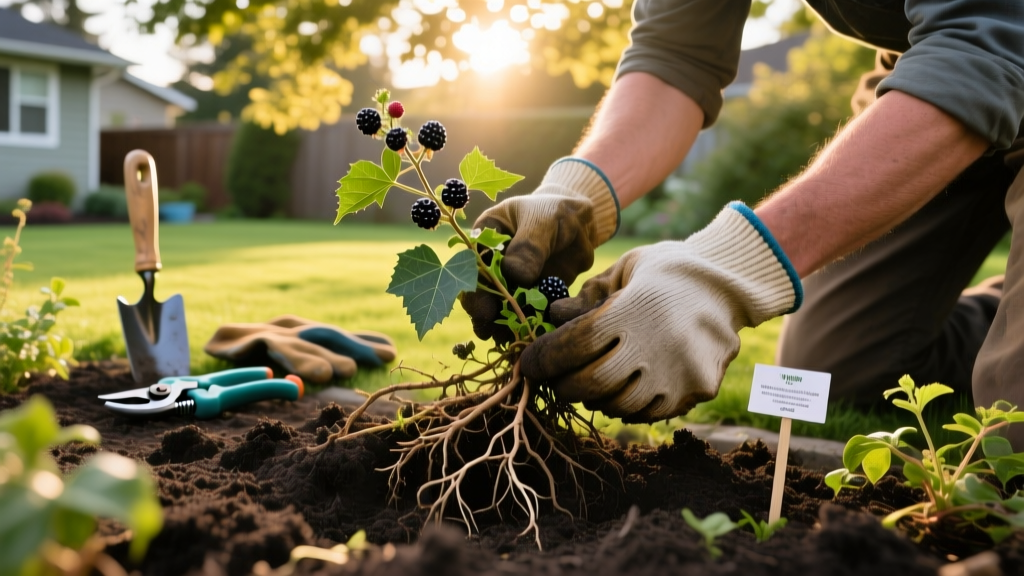
Invasive Plants in Washington: A Beginner's Removal Guide
Why Washington's Climate Fuels Invasive Nightmares
Washington State’s unique microclimates—from the damp, mild winters west of the Cascades to the arid, sun-baked summers in the east—create an unintentional paradise for aggressive non-native flora. For beginner gardeners, purchasing a home with an established yard often means inheriting a hidden ecological battleground. Invasive species outcompete native flora, alter soil chemistry, and destroy local pollinator habitats. According to the Washington State Noxious Weed Control Board, landowners are legally required to control specific Class A, B, and C noxious weeds on their property. Ignorance of these regulations can result in county-level fines and forced remediation costs billed directly to the homeowner.
This guide provides a targeted, actionable framework for identifying the most common invasive plants in Washington yards, executing precise removal strategies, and restoring your landscape with resilient Pacific Northwest natives.
The 4 Most Common Invasive Plants in Washington Yards
Before you can eradicate an invader, you must correctly identify it. Misidentification often leads to ineffective treatment and rapid regrowth. Here are the primary offenders found in Washington residential landscapes.
1. Himalayan Blackberry (Rubus bifrons)
Often mistaken for native trailing blackberries, Himalayan blackberry is a Class C noxious weed that forms impenetrable, arching thickets. Canes can reach 40 feet in length and root at the tips. Identification key: Look for palmate leaves with exactly five leaflets (native blackberries typically have three) and thick, ridged, heavily thorned canes that grow upright before arching over. The root system is a massive, woody crown that can extend 3 to 4 feet deep, making casual pulling useless.
2. English Ivy (Hedera helix)
English ivy is a Class C noxious weed that destroys structural integrity and suffocates native understory plants. It exhibits two distinct growth phases: a juvenile ground-cover phase with lobed, dark green leaves, and a mature climbing phase with unlobed, lighter green leaves that produce toxic berries. Damage profile: When ivy climbs trees, the added weight makes them highly susceptible to windthrow during Washington's winter storms, posing a severe hazard to homes and power lines.
3. Scotch Broom (Cytisus scoparius)
A Class B noxious weed, Scotch broom thrives in poor, disturbed soils and full sun. It fixes its own nitrogen, allowing it to outcompete native plants in nutrient-poor Washington soils. Identification key: Bright yellow, pea-like flowers in late spring, and distinctly five-angled (pentagonal) green stems. A single mature plant can produce over 20,000 seeds that remain viable in the soil for up to 80 years.
4. Tansy Ragwort (Jacobaea vulgaris)
This Class B noxious weed is highly toxic to livestock, particularly horses and cattle, causing irreversible liver damage. It frequently invades pastures, rural lawns, and garden borders. Identification key: Flat-topped clusters of bright yellow daisy-like flowers blooming from July to August, accompanied by dark green, deeply lobed, fern-like leaves that emit a pungent odor when crushed.
Invasive Plant Threat & Removal Matrix
Use this comparison matrix to prioritize your eradication efforts based on the specific biology and threat level of each plant.
| Species | WA Weed Class | Primary Spread Method | Root/Crown Depth | Removal Difficulty | Optimal Treatment Window |
|---|---|---|---|---|---|
| Himalayan Blackberry | Class C | Seed & Cane Tip Rooting | 3–4 ft (Woody Crown) | High | Late Summer / Early Fall |
| English Ivy | Class C | Vegetative & Bird Seed | Shallow (1–2 ft) | Moderate | Year-Round (Winter preferred) |
| Scotch Broom | Class B | Explosive Seed Pods | Deep Taproot | Moderate | Spring (Before Seed Set) |
| Tansy Ragwort | Class B | Wind & Water Seed | Shallow Fibrous | Low | Spring (Rosette Stage) |
Proven Removal Strategies: Timing and Techniques
Successful eradication requires matching the removal technique to the plant's life cycle. Applying the wrong method at the wrong time of year will only stimulate aggressive regrowth.
Manual and Mechanical Extraction
For small infestations or areas near edible gardens, mechanical removal is the safest approach. However, standard garden trowels will fail against established invasives.
- For Himalayan Blackberry: Use a heavy-duty bypass lopper (such as the Fiskars 32" PowerGear) to cut canes down to 6 inches. Then, use a Root Slayer shovel or a Weed Wrench (approx. $150–$200) to leverage the woody crown out of the soil. If the crown snaps, the plant will regenerate multiple new canes from the remaining root tissue.
- For English Ivy: Do not pull ivy directly off trees; the suction cups will strip the bark and invite disease. Instead, use a pruning saw to cut a 2-foot "window" through all ivy vines at the base of the tree trunk. The upper ivy will die and detach naturally within 12 months. Roll the ground-cover ivy up like a carpet, ensuring you extract the shallow root nodes.
- For Scotch Broom: Pull young plants when the soil is saturated after a heavy rain. For mature plants, use an Uprooter Weed Puller tool to extract the deep taproot. Never simply cut Scotch broom at the base; it will vigorously resprout from the root collar.
Targeted Chemical Control
When mechanical removal is impractical due to scale or terrain, targeted herbicide application is necessary. According to King County Noxious Weed Control, the timing of chemical application is more critical than the product itself.
- Cut-Stump Method (Blackberry & Scotch Broom): Cut the plant down to 2 inches above the soil. Within 15 minutes, paint the outer cambium ring of the fresh cut with a concentrated systemic herbicide containing Triclopyr (e.g., Garlon 4 or Ortho Poison Ivy Killer). This must be done in late summer or early fall (August–October) when the plant is actively pulling carbohydrates down into the root system for winter storage.
- Foliar Spray (Tansy Ragwort): Apply a broadleaf selective herbicide containing Aminopyralid (e.g., Milestone) during the spring rosette stage before the plant bolts and flowers. Aminopyralid is highly effective on Tansy but requires careful management if you plan to compost yard waste later, as it persists in organic matter.
⚠️ CRITICAL WARNING: The Composting Trap
Washington State law strictly prohibits the composting of Class A and B noxious weeds, and heavily discourages composting Class C weeds like English Ivy and Himalayan Blackberry. Most residential compost piles do not reach the sustained 140°F+ temperatures required to kill invasive seeds or destroy resilient root crowns. Action: Bag all invasive plant material in heavy-duty contractor trash bags and dispose of them in your municipal solid waste bin. Never place them in your green yard-waste cart, as this contaminates commercial composting facilities.
Replacing Invasives with Pacific Northwest Natives
Leaving bare soil after removing an invasive plant guarantees a new weed invasion. You must immediately replant the area with aggressive, site-appropriate native species that occupy the same ecological niche. Consult the WSU Hortsense Database for localized planting advice.
Shade & Understory Replacements (Instead of English Ivy)
- Salal (Gaultheria shallon): A dense, evergreen groundcover that thrives in dry shade and acidic soils. It suppresses weeds effectively once established and provides crucial winter forage for birds.
- False Lily of the Valley (Maianthemum dilatatum): Excellent for deep, moist shade where ivy previously dominated. It spreads via rhizomes to form a lush, impenetrable green carpet.
Sun & Thicket Replacements (Instead of Blackberry & Scotch Broom)
- Oregon Grape (Mahonia aquifolium): A tough, drought-tolerant evergreen shrub with holly-like leaves and bright yellow spring flowers. It provides the structural barrier that homeowners often want from blackberry, without the invasive thorns.
- Red Osier Dogwood (Cornus sericea): Fast-growing and excellent for wet areas or property borders. Its bright red winter stems provide year-round visual interest and its dense root system stabilizes soil.
- Snowberry (Symphoricarpos albus): A native deciduous shrub that produces striking white berries. It is highly effective at outcompeting Scotch broom in disturbed, sunny sites.
Frequently Asked Questions
Will my county fine me for having invasive plants?
Yes, but usually only after a warning. County Noxious Weed Control inspectors actively patrol for Class A and B weeds (like Tansy Ragwort and Scotch Broom). If they spot an infestation, they will mail a notice of violation giving you a specific timeframe (usually 14 to 30 days) to control the plants. If you fail to act, the county will hire a contractor to remove them and bill you for the labor, which can easily exceed $1,000 for large properties.
Can I use goats to clear Himalayan Blackberry?
Targeted grazing is a viable biological control method for large, rural properties. Goats will readily eat blackberry leaves and strip bark from canes. However, goats will not eat the woody root crowns, meaning the blackberry will return the following spring unless followed up with manual crown extraction or targeted cut-stump herbicide application. Furthermore, goats will also eat your desirable native plantings if not managed with temporary electric netting.
How do I dispose of Scotch Broom seed pods safely?
Scotch Broom seed pods dry and literally explode in the heat of late summer, scattering seeds up to 15 feet away. If you are removing a plant with mature, dark brown pods, do not shake or drag it. Carefully tie a heavy canvas bag over the seed-bearing branches before cutting the stem, and immediately transport the bagged plant to the trash.

