
Gardening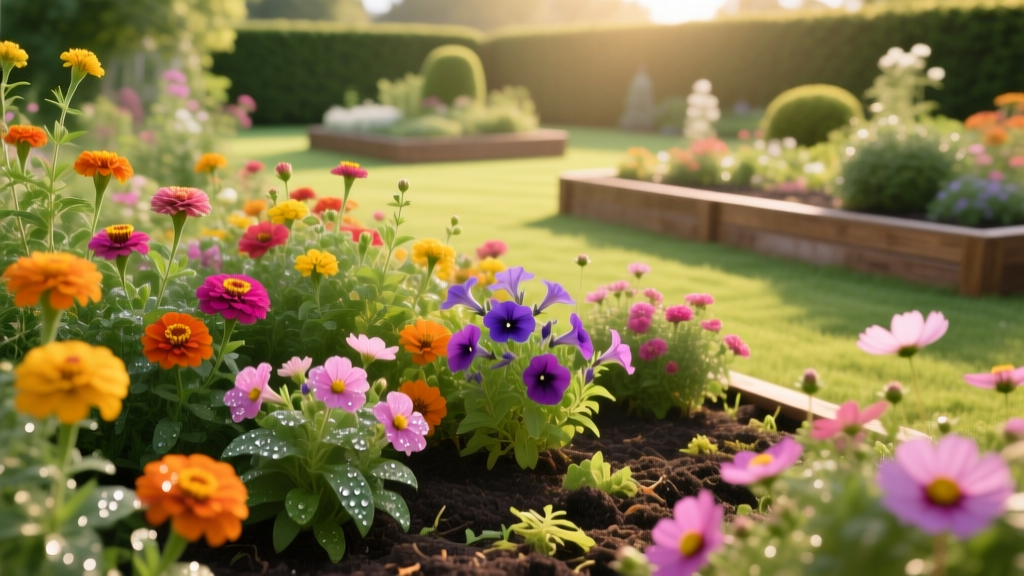
What Do Annuals Mean in Gardening? A Complete Plant Guide
The Core Definition: What Do Annuals Mean for Your Garden?
When gardeners ask, 'what do annuals mean,' they are usually trying to understand plant lifecycles and how they dictate garden planning. Botanically, an annual is a plant that completes its entire lifecycle—from germination to vegetative growth, flowering, seed production, and death—within a single growing season. Once an annual drops its seeds, the parent plant senesces and dies, leaving the next generation to sprout when conditions are favorable.
However, the horticultural definition is slightly more flexible. In the nursery trade, the term 'annual' is frequently applied to tender perennials. These are plants that would live for multiple years in their native, frost-free tropical environments (USDA Zones 9-11) but are killed by winter frost in colder climates. Understanding this distinction is critical for budgeting, garden design, and overwintering strategies.
True Annuals vs. Tender Perennials
True Annuals: Marigolds (Tagetes), Zinnias (Zinnia elegans), Cosmos (Cosmos bipinnatus), and Sunflowers (Helianthus annuus). These plants are genetically programmed to die after seeding, regardless of your climate.
Tender Perennials Grown as Annuals: Geraniums (Pelargonium), Impatiens (Impatiens walleriana), Begonias, and Coleus. These will survive indefinitely if protected from freezing temperatures.
The Annual Lifecycle: From Seed to Senescence
To maximize bloom production, you must understand the biological drive of an annual. The primary evolutionary goal of an annual plant is reproduction. If you allow an annual to set seed, it receives a hormonal signal that its lifecycle goal is complete, and it will drastically reduce or stop producing new flowers.
The Importance of Deadheading
Deadheading—the act of pinching off spent blooms before they form seed pods—tricks the plant into thinking it has failed to reproduce. This triggers a survival response, forcing the plant to push out a new flush of flowers to try again. For heavy bloomers like petunias and snapdragons, deadheading should be done every 5 to 7 days during peak summer heat.
Annuals vs. Biennials vs. Perennials: A Comparison Matrix
Deciding between plant types requires balancing upfront costs against long-term labor. Here is how annuals stack up against other lifecycle categories in a typical residential garden setting.
| Feature | Annuals | Biennials | Herbaceous Perennials |
|---|---|---|---|
| Lifecycle Duration | 1 Season | 2 Seasons | 3+ Years (Often 10+) |
| Bloom Duration | Continuous (Months) | Brief (Weeks in Year 2) | Brief (2-4 Weeks) |
| Initial Cost (per sq ft) | $3.00 - $6.00 | $2.00 - $4.00 | $8.00 - $15.00 |
| Winter Maintenance | Remove and compost | Mulch crown in Year 1 | Cut back, divide every 3 yrs |
According to the University of Minnesota Extension, annuals are the most cost-effective choice for high-impact, continuous color in focal areas like entryways and patio containers, while perennials are better suited for structural background planting.
Strategic Planting: Hardiness Zones and Soil Temperatures
The most common failure mode for home gardeners is planting annuals based on calendar dates rather than soil temperatures. Air temperature is deceptive; soil retains cold long after the spring thaw.
Cool-Season vs. Warm-Season Annuals
Categorizing your annuals by their thermal preferences ensures high germination rates and prevents root rot in cold, damp soil.
- Cool-Season Annuals: Pansies (Viola × wittrockiana), Snapdragons (Antirrhinum majus), and Sweet Alyssum (Lobularia maritima). These can be transplanted outdoors when soil temperatures reach 45°F to 55°F. They thrive in daytime temps of 60°F-70°F and will often melt out or stop blooming when summer heat exceeds 85°F.
- Warm-Season Annuals: Zinnias, Cosmos, Vincas, and Sunflowers. These require soil temperatures of at least 70°F to 75°F for optimal germination and root establishment. Planting these in 55°F soil will stunt their growth permanently, a condition known as 'cold shock.'
Soil Preparation and Fertilization Costs
Because annuals grow rapidly and bloom continuously, they are heavy feeders. Relying on native topsoil without amendment will result in sparse foliage and poor flower set.
The N-P-K Ratio for Continuous Blooms
At planting time, incorporate a balanced, slow-release granular fertilizer (such as Osmocote 14-14-14) at a rate of 1 tablespoon per square foot. This costs roughly $15 for a 3-pound bottle, which treats about 150 square feet.
Once the plants enter their peak reproductive phase in mid-summer, switch to a water-soluble, high-phosphorus bloom booster. Look for an N-P-K ratio around 10-30-20 (like Jack's Classic Blossom Booster). Phosphorus (the middle number) is the primary driver of flower and root development. Apply this every 10 to 14 days via your watering can.
Expert Insight: 'Over-fertilizing annuals with high-nitrogen formulas (like a 20-10-10 lawn fertilizer) will result in massive, lush green foliage but virtually zero flowers. The plant shifts its energy entirely to vegetative growth at the expense of reproduction.' — Royal Horticultural Society (RHS)
Overwintering 'Annuals': Hacking the Lifecycle
If you are growing tender perennials masquerading as annuals, you can save significant money by overwintering them indoors rather than buying new flats next spring. A single retail flat of 72 geraniums can cost upwards of $60 in 2026, making overwintering highly economical.
The Bare-Root Storage Method for Pelargoniums (Geraniums)
- Preparation: Before the first hard frost, dig up the plants and gently shake off all soil from the root ball.
- Pruning: Cut the top growth back by half, leaving stems about 6 to 8 inches tall.
- Storage: Place the bare-root plants upside down in a paper bag (never plastic, which traps moisture and causes fungal rot). Store them in a cool, dark basement or garage where temperatures remain strictly between 45°F and 50°F.
- Revival: In early spring, about four weeks before your last frost date, soak the roots in lukewarm water for two hours, pot them in fresh sterile potting mix, and move them to a south-facing window or under LED grow lights.
Frequently Asked Questions
Do annuals come back every year from seed?
True annuals drop seeds that may germinate the following spring, a process called 'self-seeding.' However, many modern garden annuals are F1 hybrids. If a hybrid drops seed, the resulting offspring will not look like the parent plant; they often revert to a less vigorous, wild-type form with smaller, duller flowers.
Can I plant annuals in the same spot every year?
It is not recommended. Planting the same species in the exact same soil year after year leads to a buildup of species-specific soil-borne pathogens, such as Fusarium wilt or Verticillium fungus. Practice crop rotation by moving plant families (e.g., Solanaceae like petunias) to different beds every 2 to 3 years.

