
Gardening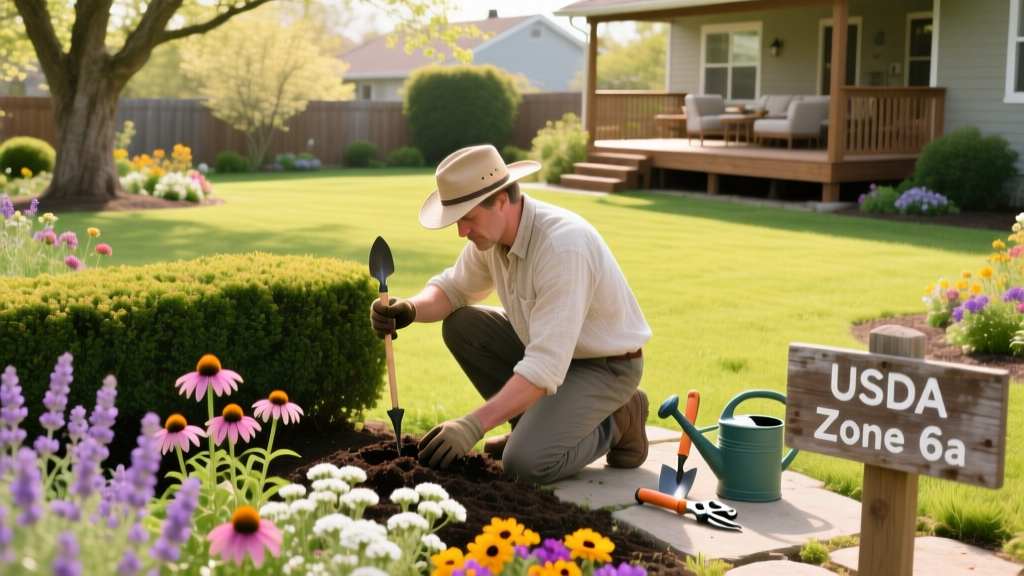
What Growing Zone Are We In? Finding Your USDA Hardiness Zone
When gardeners ask, 'what growing zone are we in,' they are usually looking for a single number to dictate their plant purchases, pruning schedules, and seeding dates. The USDA Plant Hardiness Zone Map is the definitive standard for this, categorizing regions based on their average annual extreme minimum winter temperatures. However, simply plugging in a zip code only provides a baseline. To truly master your garden's perennial survival and annual timing, you must understand how the current map data intersects with your property's specific microclimates.
Pinpointing Your Zone: The Current USDA Standard
The most current USDA Plant Hardiness Zone Map—updated in late 2023 and serving as the definitive standard for gardeners in 2026—is based on 30 years of temperature data (1991–2020) collected from over 13,000 weather stations. The map divides North America into 13 primary zones, each representing a 10°F band of extreme minimum temperatures. These are further split into 'a' and 'b' subzones, representing 5°F increments.
Data Highlight: The Half-Zone Shift
Compared to the previous 2012 map, the current USDA data reveals that roughly half of the United States has shifted to a warmer half-zone (a 2.5°F increase). For example, many areas previously classified as Zone 6a (-10°F to -5°F) are now designated as Zone 6b (-5°F to 0°F). This shift expands the palette of viable perennials but increases the overwintering risk for plants that require deep chilling hours.
To find your exact baseline, visit the USDA Agricultural Research Service interactive map. Enter your specific zip code, but do not stop there. The interactive map allows you to zoom in to a half-mile radius, which is critical because broad county-level maps often obscure localized temperature variations.
Understanding the Temperature Bands
- Zones 3-4 (-40°F to -20°F): Deep freeze territories (Northern MN, ND, MT, AK). Requires heavily insulated root systems and cold-hardy cultivars like 'Autumn Magic' chokeberry.
- Zones 5-6 (-20°F to 0°F): The temperate core (Midwest, Northeast, Mid-Atlantic). Supports a vast array of deciduous fruit trees and herbaceous perennials, though late spring frosts remain a primary threat.
- Zones 7-8 (0°F to 20°F): Transitional and Southern regions (Pacific Northwest, Deep South). Winters are mild enough to grow semi-evergreen varieties, but summer heat and humidity dictate plant selection more than winter lows.
- Zones 9-10 (20°F to 40°F): Frost-free or near-frost-free (Coastal CA, Central FL, Southern TX). Chilling hours are insufficient for traditional apples or peaches; low-chill varieties and tropicals thrive here.
The Microclimate Reality Check
Knowing your USDA zone answers the macro question, but your garden's survival is dictated by microclimates. A microclimate can shift your effective growing zone up or down by a full 10°F (one entire zone). If your baseline is Zone 6b, a sheltered courtyard might function as Zone 7a, while a low-lying frost pocket at the back of your property might act like Zone 6a.
| Microclimate Modifier | Effect on Hardiness | Practical Garden Application |
|---|---|---|
| South-Facing Masonry | Increases ambient heat; radiates warmth at night. | Plant marginally hardy species like 'Natchez' Crepe Myrtle or espaliered figs against brick walls. |
| Topographical Frost Pockets | Cold air sinks; valleys and low spots freeze first and thaw last. | Avoid planting early-blooming perennials or frost-tender vegetables in depressions; use these areas for late-season crops. |
| Wind Corridors | Accelerates desiccation (winter burn) on evergreen foliage. | Install burlap windbreaks for broadleaf evergreens like Rhododendrons, or plant dense conifer hedges to disrupt wind flow. |
| Urban Heat Island | Asphalt and concrete retain heat, raising nighttime winter lows. | City gardeners can often successfully overwinter plants rated for one zone warmer than their official suburban USDA designation. |
Sunset Climate Zones vs. USDA Zones: The Western Dilemma
If you live in the Western United States, the USDA map is insufficient. The USDA system only accounts for winter minimums, ignoring summer highs, rainfall patterns, humidity, and wind—all of which dictate plant survival in the West. A gardener in coastal Seattle and a gardener in arid inland Nevada might share the same USDA Zone 8, but their plant palettes are entirely different.
For gardeners in the 13 Western states, the Sunset Climate Zone system is the superior metric. Sunset divides the West into 24 highly specific zones based on total climate profiles, including the length of the growing season, summer heat, and winter chill hours. Always cross-reference USDA tags with Sunset zone guides when buying plants at Western nurseries.
Translating Zones into Planting Action: A Decision Framework
Once you have established your baseline USDA zone and adjusted for your specific microclimates, use this framework to make purchasing and planting decisions.
1. The 'Two-Zone Buffer' Rule for Unprotected Perennials
When planting bare-root trees, shrubs, or herbaceous perennials without winter protection (like mulch mounds or burlap wraps), select cultivars rated for at least one to two zones colder than your location. If you are in Zone 6b, buy plants rated hardy to Zone 5a (-20°F). This buffer accounts for anomalous polar vortex events and the reality that nursery tags often reflect idealized, sheltered conditions rather than exposed garden beds.
2. Pushing the Zone with Root Insulation
You can successfully grow plants rated one zone warmer than your area if you insulate the root zone. For a Zone 5 garden attempting to grow Zone 6 'Albemarle Pippin' apples or marginally hardy roses, apply a 4-inch layer of shredded hardwood mulch over the root zone after the ground freezes in late November. This prevents the freeze-thaw cycle that heaves roots out of the soil, which is the actual cause of most winter plant death, rather than the absolute cold itself.
3. Annuals and the Frost Date Matrix
Your hardiness zone does not dictate your annual vegetable garden; your frost dates do. However, zones correlate closely with frost-free windows.
- Zones 3-4: 90-110 frost-free days. Rely on fast-maturing cultivars (e.g., 'Sub-Arctic Plenty' tomatoes, 50 days).
- Zones 5-6: 130-170 frost-free days. Standard season vegetables thrive; utilize row covers to extend the season by 3 weeks on both ends.
- Zones 7-8: 180-220+ frost-free days. Implement succession planting; grow cool-season crops (brassicas, peas) in early spring and fall, and heat-loving crops (peppers, eggplant) in the summer.
Ultimately, answering 'what growing zone are we in' is the first step in a broader site analysis. Combine your USDA baseline with a soil percolation test, a sunlight exposure map, and a microclimate audit to build a resilient, high-yielding garden tailored exactly to your property's unique environmental fingerprint.

