
Gardening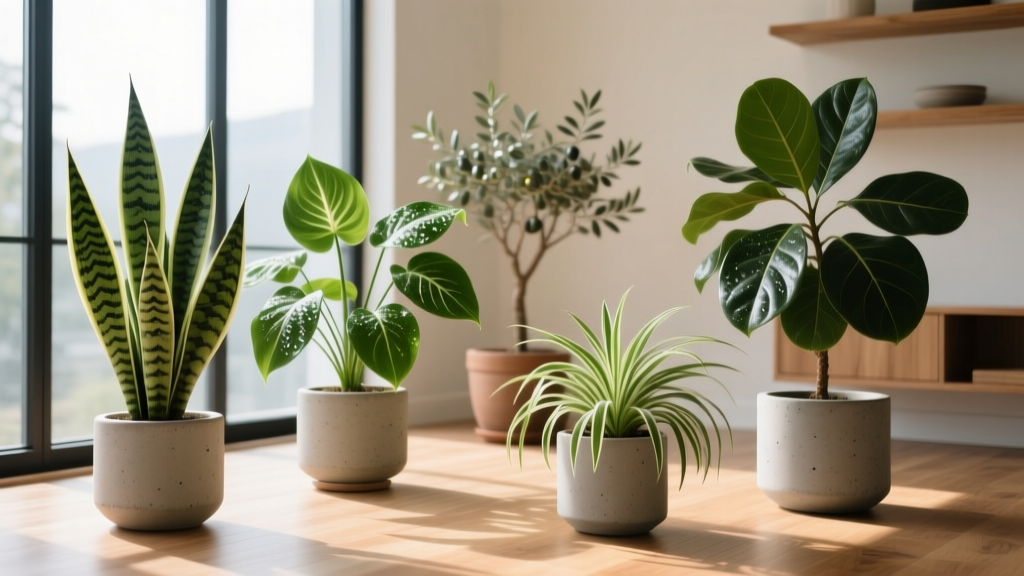
What Plants Clean the Air? Top Indoor Purifiers & Care Guide
The Science: What Plants Clean the Air (and How Many Do You Need?)
When homeowners ask, what plants clean the air, they are usually referencing the famous 1989 NASA Clean Air Study. In that study, researchers placed plants in sealed, 1-cubic-meter chambers and observed significant reductions in volatile organic compounds (VOCs) like formaldehyde, benzene, and trichloroethylene. However, translating those sealed-chamber results to a modern, 2,000-square-foot home requires a critical reality check.
According to a comprehensive meta-analysis published in the Journal of Exposure Science & Environmental Epidemiology, a standard home's HVAC system and natural building leakage exchange air at a rate that dwarfs the filtration capacity of a few potted plants. To match the Clean Air Delivery Rate (CADR) of a standard mechanical HEPA/Carbon purifier, you would need between 10 and 100 plants per square meter.
The Expert Consensus: While plants alone cannot replace mechanical ventilation or HEPA filtration for whole-home air purification, they remain highly effective at localized air quality improvement. Dense plant groupings increase indoor humidity through transpiration, trap airborne particulate matter on their leaf cuticles, and utilize their root-zone microbiome to break down specific VOCs in the immediate breathing zone.
To maximize these benefits, you must select species with high transpiration rates, large leaf surface areas, and robust rhizosphere microbiomes. Below is an identification and care guide for the highest-performing indoor air-cleaning plants.
5 High-Performance Air-Cleaning Plants: Identification & Specs
1. Snake Plant (Dracaena trifasciata)
Formerly classified as Sansevieria, the Snake Plant is unique because it utilizes Crassulacean Acid Metabolism (CAM). Unlike most plants, it opens its stomata at night to absorb CO2 and release oxygen, making it an ideal bedroom companion. Its thick, waxy cuticle also traps fine dust and particulate matter.
- Target VOCs: Formaldehyde, xylene, toluene.
- Light Requirement: 1,000 to 20,000 lux (tolerates deep shade to direct indoor sun).
- Watering: Allow soil to dry 100% to the bottom of the pot before watering (typically every 21-30 days).
- Pet Safety: Toxic to cats and dogs (saponins). Check the ASPCA Toxic Plant List for specifics.
2. Peace Lily (Spathiphyllum wallisii)
The Peace Lily is a high-transpiration powerhouse. A single mature plant in a 10-inch pot can transpire up to a quarter-liter of water into the air daily, combating the dry indoor air caused by winter heating systems. Its broad, dark green leaves provide maximum surface area for gas exchange and particulate trapping.
- Target VOCs: Benzene, trichloroethylene, ammonia.
- Light Requirement: 500 to 2,000 lux (bright, indirect light; direct sun scorches leaves).
- Watering: Water when the top 2 inches of soil are dry; leaves will visibly droop when thirsty.
- Pet Safety: Toxic (calcium oxalate crystals).
3. Boston Fern (Nephrolepis exaltata)
If your primary goal is combating dry air and formaldehyde off-gassing from pressed-wood furniture, the Boston Fern is unmatched. Its finely dissected fronds create a massive cumulative surface area. However, it requires strict humidity maintenance to prevent frond desiccation.
- Target VOCs: Formaldehyde, xylene.
- Light Requirement: 1,000 to 5,000 lux (east-facing windows are ideal).
- Watering: Keep soil consistently moist but not waterlogged; mist fronds daily if indoor humidity drops below 45%.
- Pet Safety: Non-toxic and safe for pets.
4. Golden Pothos (Epipremnum aureum)
Pothos is a vigorous vining plant that excels in the removal of carbon monoxide and formaldehyde. Its true strength lies in its aggressive root system, which supports a dense colony of VOC-metabolizing bacteria in the soil.
- Target VOCs: Formaldehyde, carbon monoxide, benzene.
- Light Requirement: 500 to 10,000 lux (highly adaptable).
- Watering: Water thoroughly when the top 50% of the soil volume is dry.
- Pet Safety: Toxic (insoluble calcium oxalates).
5. Rubber Tree (Ficus elastica)
The Rubber Tree features thick, glossy, oversized leaves that act as physical filters for airborne biological contaminants, including mold spores and bacteria. The waxy leaf surface can be wiped down monthly to remove trapped particulates and restore photosynthetic efficiency.
- Target VOCs: Formaldehyde, biological spores.
- Light Requirement: 5,000 to 20,000 lux (requires bright light to maintain compact growth).
- Watering: Water when a moisture meter reads 2/10 at the root ball's center.
- Pet Safety: Toxic.
Optimizing the Plant-to-Space Ratio
To achieve measurable improvements in localized indoor air quality and humidity, follow this spatial framework based on the EPA's indoor air quality guidelines regarding source control and ventilation:
| Room Size | Minimum Plants (8"-10" Pots) | Primary Benefit Achieved |
|---|---|---|
| Small Office (50 sq ft) | 2 - 3 | Localized CO2 reduction, psychological biophilia |
| Bedroom (120 sq ft) | 4 - 6 | Nighttime O2 generation (via CAM plants), humidity |
| Living Room (300 sq ft) | 10 - 15 | Particulate trapping, measurable VOC reduction |
The Rhizosphere Effect: Soil and Microbiome Engineering
A common misconception is that the plant's leaves do all the air-cleaning work. In reality, up to 50% of VOC removal occurs in the rhizosphere—the soil zone surrounding the roots. When leaves absorb VOCs, they transport them down to the roots, where specific soil bacteria (such as Pseudomonas putida and Mycobacterium) metabolize the toxins into harmless amino acids and sugars.
To cultivate a healthy VOC-eating microbiome, you must use a highly aerated soil mix that prevents anaerobic conditions. Standard heavy potting soils suffocate these beneficial bacteria.
Expert Soil Recipe for Air-Purifying Aroids & Ferns:
- 40% Coco Coir (for moisture retention without compaction)
- 30% Coarse Perlite (for oxygen diffusion to the roots)
- 20% Orchid Bark (creates macropores for bacterial colonization)
- 10% Worm Castings (provides slow-release microbial food)
Frequently Asked Questions
Does dust on leaves prevent plants from cleaning the air?
Yes. A layer of dust just 0.1mm thick can reduce a leaf's light absorption and gas exchange (stomatal conductance) by up to 30%. Wipe the leaves of broad-leaf plants like the Rubber Tree and Peace Lily every 14 days using a damp microfiber cloth and distilled water. Avoid commercial "leaf shine" sprays, as they clog the stomata entirely.
Should I use a HEPA filter or plants for wildfire smoke?
Plants cannot filter PM2.5 particulate matter from wildfire smoke at a meaningful rate. For smoke, rely on a mechanical HEPA purifier with an activated carbon pre-filter. Use plants as a secondary, complementary system to maintain humidity and handle the off-gassing VOCs that smoke leaves behind on indoor surfaces.
Do fertilizers negate the air-cleaning benefits?
Over-fertilizing with synthetic nitrogen can cause rapid, weak leaf growth that is highly susceptible to pests, but it does not stop VOC absorption. However, synthetic fertilizers can harm the rhizosphere bacteria responsible for breaking down toxins. Stick to organic, liquid kelp or diluted worm casting teas during the active spring and summer growing seasons to feed both the plant and the soil microbiome.

