
Gardening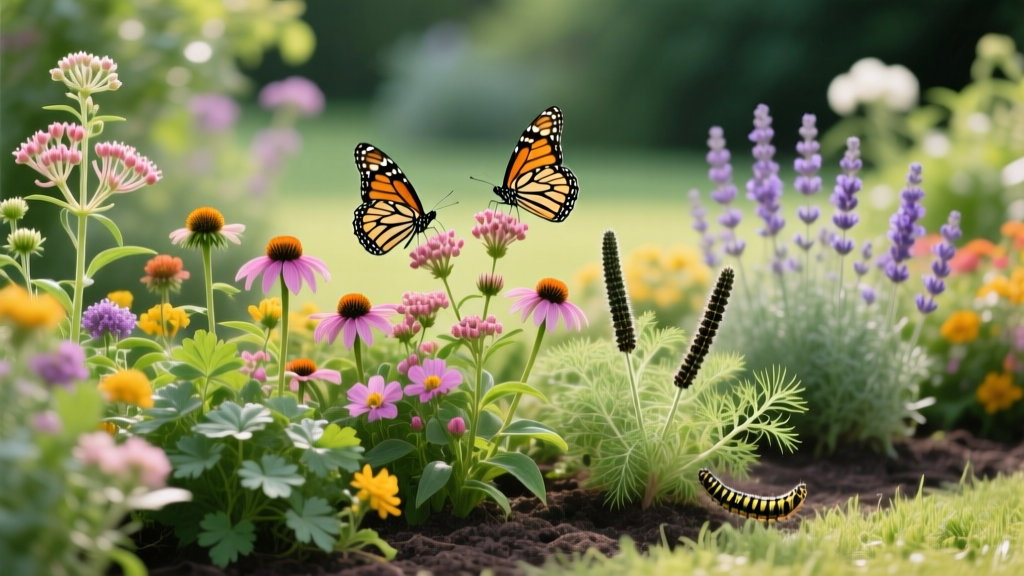
What Plants Do Butterflies Like? Nectar & Host Guide
To build a thriving pollinator habitat, you must answer a fundamental biological question: what plants do butterflies like? The answer requires understanding that butterflies have two distinct life stages with entirely different botanical requirements. Adult butterflies need high-carbohydrate nectar for flight and mating, while their caterpillar offspring require specific host plants to complete their life cycle. Planting a garden that only addresses one of these needs will result in transient visitors rather than a self-sustaining local population.
This guide breaks down the exact native species, cultivars, and garden layout tactics required to support both phases of the butterfly life cycle, moving beyond generic seed mixes to provide actionable, region-specific planting data.
The Dual-Plant Framework: Nectar vs. Host Plants
A common mistake in pollinator gardening is over-indexing on bright, showy flowers while ignoring the unassuming foliage required for reproduction. Understanding the distinction between nectar and host plants is critical for garden planning.
The Nectar-Host Ratio Rule: For every 3 to 4 nectar-producing perennials you plant, include at least 1 dedicated host plant. Nectar plants provide the fuel for adults, but host plants are the nurseries. Without host plants, butterflies will drink from your garden but fly elsewhere to lay their eggs.
What Plants Do Butterflies Like by Region?
Native butterflies have co-evolved with regional flora. Planting species adapted to your specific USDA Hardiness Zone and local ecology ensures higher survival rates and better nectar production. According to the National Wildlife Federation, native plants support up to four times more local wildlife biomass than non-native ornamentals.
| Region | Top Nectar Plant | Top Host Plant | Target Butterfly |
|---|---|---|---|
| Northeast | Eutrochium purpureum (Joe-Pye Weed) | Asclepias syriaca (Common Milkweed) | Monarch & Swallowtail |
| Southeast | Liatris spicata (Blazing Star) | Passiflora incarnata (Passion Vine) | Gulf Fritillary |
| Midwest | Echinacea purpurea (Purple Coneflower) | Asclepias tuberosa (Butterfly Weed) | Monarch & Painted Lady |
| Pacific West | Erigeron glaucus (Seaside Daisy) | Asclepias speciosa (Showy Milkweed) | Western Monarch |
Top Nectar Plants for Adult Foraging
When selecting nectar plants, flower morphology dictates which species can access the food. Butterflies require a landing pad or specific tube lengths to uncoil their proboscis effectively.
Flat-Topped Clusters (Corymbs and Umbels)
Species like the Black Swallowtail and Eastern Tailed-Blue prefer flat landing surfaces.
- Yarrow (Achillea millefolium): Cultivar 'Moonshine' offers pale yellow blooms that contrast well with purple nectar sources. Thrives in poor, dry soil (pH 6.0-7.5).
- Common Boneset (Eupatorium perfoliatum): A late-summer bloomer critical for migrating Monarchs. Grows 3-4 feet tall and requires full sun to partial shade.
Tubular and Thistle-Like Flowers
Larger butterflies with longer proboscises, such as the Tiger Swallowtail, excel at extracting nectar from deep corollas.
- Blazing Star (Liatris spicata): The 'Kobold' cultivar stays compact at 24 inches, making it ideal for border edges. It blooms from the top down, providing a long nectar window in mid-summer.
- Purple Coneflower (Echinacea purpurea): Avoid double-flowered hybrid cultivars like 'Razzmatazz', as the extra petals often replace the nectar-producing disc florets. Stick to single-bloom native varieties.
Essential Host Plants for Caterpillar Rearing
Caterpillars are highly specialized. Most have evolved to bypass the chemical defenses of only one specific plant genus. The Xerces Society for Invertebrate Conservation emphasizes that without these specific host plants, local butterfly populations will collapse regardless of nectar availability.
- Monarchs & Milkweed (Asclepias spp.): Monarch caterpillars exclusively eat milkweed. In wet, clay-heavy soils, plant Swamp Milkweed (Asclepias incarnata). In dry, sandy soils, use Butterfly Weed (Asclepias tuberosa). Never plant Tropical Milkweed (Asclepias curassavica) in year-round warm climates, as it harbors the OE parasite that deforms Monarchs.
- Black Swallowtails & Apiaceae Family: These caterpillars feed on carrot family members. Dedicate a section of your vegetable garden to let Dill (Anethum graveolens), Parsley (Petroselinum crispum), and Fennel (Foeniculum vulgare) go to seed and flower.
- Great Spangled Fritillaries & Violets: Fritillary caterpillars feed exclusively on native violets (Viola spp.) in the spring. Allow Common Blue Violets to naturalize in your lawn or shaded garden beds rather than treating them as weeds.
Soil Preparation and Garden Layout Tactics
How you arrange the plants is just as important as what you plant. Butterflies are ectothermic and rely on visual cues and microclimates to navigate.
Clustering and Color Massing
Butterflies have poor near-field vision but excellent color detection from a distance. Plant in drifts or clusters of at least three to five individuals of the same species. A 4-foot-wide continuous block of Liatris is vastly more attractive to passing butterflies than a single isolated specimen.
Creating a Puddling Station
Male butterflies require sodium and amino acids for reproduction, which they extract from damp soil. Create a dedicated puddling zone:
- Bury a shallow terracotta saucer (12-inch diameter) flush with the soil line.
- Fill it with coarse builder's sand.
- Mix in a single pinch of sea salt and a handful of compost.
- Keep the sand consistently moist using a drip emitter or by watering manually during dry spells.
Critical Pesticide Warning: Never use neonicotinoid insecticides (such as imidacloprid or clothianidin) in a butterfly garden. These systemic chemicals are absorbed into plant tissues, making the nectar and leaves toxic to both caterpillars and adult butterflies. If you must treat aphids on host plants, use a targeted blast of water or apply insecticidal soap strictly in the evening when butterflies are inactive.
Common Mistakes to Avoid
When researching what plants do butterflies like, many gardeners encounter outdated or ecologically harmful advice. Avoid these frequent pitfalls:
- Planting Invasive Butterfly Bush (Buddleja davidii): While it attracts adults, it provides zero host value and is highly invasive in states like Oregon, Washington, and parts of the Northeast. Replace it with native Summersweet (Clethra alnifolia) or New Jersey Tea (Ceanothus americanus).
- Over-Mulching: Many native butterfly species, particularly skipper butterflies, overwinter as pupae in the leaf litter or at the base of host plants. Applying a thick layer of dyed hardwood mulch can smother these overwintering sites. Leave a 2-inch layer of natural leaf litter undisturbed through the winter.
- Ignoring Bloom Succession: A garden that peaks in July but lacks September blooms will starve late-season migrants. Ensure at least 20% of your nectar plants are late-blooming asters (Symphyotrichum spp.) and goldenrods (Solidago spp.).
Frequently Asked Questions
Do butterflies like lavender?
Yes, adult butterflies will drink nectar from lavender (Lavandula spp.), particularly in drought-tolerant Mediterranean gardens. However, lavender is not native to North America and serves as a host plant for zero native butterfly species. Use it as a secondary nectar source, but prioritize native flora for primary habitat support.
How long does it take for a butterfly garden to establish?
Perennial nectar and host plants typically follow the 'sleep, creep, leap' growth pattern. Expect minimal blooms and root establishment in year one, moderate growth in year two, and full habitat capacity by year three. Supplement with fast-growing annuals like native Zinnias (Zinnia hageana) or Sunflowers (Helianthus annuus) during the first two seasons to provide immediate nectar.

