
Gardening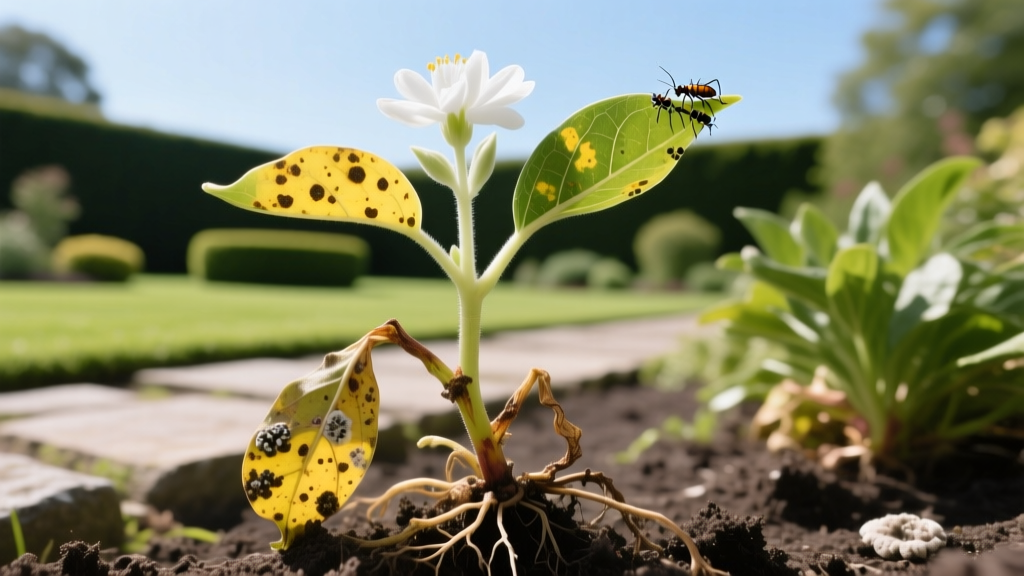
Diagnosing Failing White Perennial Plants: Blight, Wilting, and Fixes
The Hidden Mechanics of Perennial Decline
White perennial plants anchor moon gardens, provide high-contrast borders, and reflect ambient light in shaded spaces. However, when cultivars like Leucanthemum x superbum 'Becky' (Shasta daisy) or Phlox paniculata 'David' (Garden phlox) begin to collapse, the cause is rarely a single factor. Decline in white-flowering perennials is typically a compounding failure of fungal pressure, soil asphyxiation, and specific pest vectors. Diagnosing the exact failure mode requires moving beyond generic 'water and feed' advice into targeted pathological and environmental triage.
Quick Symptom Checker:
- White powdery residue on upper leaves: Powdery Mildew (Erysiphe cichoracearum)
- Brown, mushy spots on white petals: Botrytis Blight (Gray Mold)
- Sudden wilting despite moist soil: Root Asphyxiation or Iris Borer
- Interveinal chlorosis (yellowing between green veins): Iron lockout due to high soil pH
Fungal Pathogens: Powdery Mildew and Botrytis Blight
White perennials are notoriously susceptible to fungal pathogens, primarily because their dense foliage creates microclimates that trap humidity. The two most destructive fungi in these beds are powdery mildew and Botrytis cinerea (gray mold).
Identifying the Fungal Strain
Powdery mildew presents as a superficial white or gray dusting on the upper leaf surfaces of phlox, astilbe, and bee balm. It thrives in high humidity but low moisture conditions, typically striking in late summer when nights are cool and days are warm. Conversely, Botrytis blight attacks the flower buds and petals of Shasta daisies and white coneflowers (Echinacea purpurea 'White Swan'). Botrytis requires free water on the plant tissue to germinate, manifesting as water-soaked brown lesions that quickly turn mushy and develop a fuzzy gray sporulation.
Targeted Fungicide and Cultural Solutions
According to plant pathology research from Penn State Extension, cultural controls must precede chemical interventions. For powdery mildew, prune interior stems to achieve a minimum of 18 inches of clearance between plants, ensuring cross-breeze penetration. If the infection has already colonized more than 15% of the foliage, apply a fungicide containing chlorothalonil or a copper-based compound (like Bonide Liquid Copper Fungicide). Apply at a rate of 2 tablespoons per gallon of water, coating both the upper and lower leaf surfaces every 7 to 10 days until temperatures drop below 60°F.
For Botrytis blight on daisies, immediately deadhead all infected blooms and destroy them in municipal green waste (do not compost). Apply a preventative spray of neem oil (clarified hydrophobic extract) at a 1% solution rate during prolonged rainy periods to coat the petals and prevent spore germination.
Abiotic Stress: Soil pH Lockout and Root Asphyxiation
When white perennials wilt despite adequate rainfall, the issue is often subterranean. Heavy clay soils common in many residential landscapes compact over time, reducing soil oxygen levels below the 10% threshold required for healthy root respiration. Furthermore, alkaline soils (pH above 7.2) cause nutrient lockout, specifically iron and manganese, leading to severe chlorosis in acid-loving white perennials like Astilbe x arendsii and Anemone x hybrida 'Honorine Jobert'.
Ideal Soil Parameters for Top White Perennials
| Perennial Cultivar | Optimal Soil pH | Drainage Requirement | Primary Failure Mode |
|---|---|---|---|
| Leucanthemum x superbum 'Becky' | 6.0 - 7.0 | High (Sandy Loam) | Crown rot in winter wet |
| Phlox paniculata 'David' | 6.5 - 7.5 | Moderate | Powdery mildew, spider mites |
| Astilbe x arendsii 'Deutschland' | 5.5 - 6.5 | Moisture-retentive | Drought stress, iron chlorosis |
| Iris germanica (White Bearded) | 6.8 - 7.0 | Exceptional (Raised) | Rhizome rot, Iris Borer |
Fixing Compacted Clay and Alkaline Lockout
To rescue astilbes and anemones suffering from iron chlorosis in alkaline clay, do not rely solely on liquid iron sprays, which only provide temporary cosmetic greening. You must lower the soil pH. Apply elemental sulfur at a rate of 1.5 pounds per 100 square feet to lower the pH by approximately one full point over six months. Incorporate 30% expanded shale by volume into the top 8 inches of the planting bed to permanently fracture clay compaction without the rapid decomposition issues associated with peat moss.
Pest Intrusions: The Iris Borer and Root-Knot Nematodes
White bearded irises (Iris germanica) are frequent targets of the iris borer (Papaipema nebris). The adult moth lays eggs on old iris debris in late summer. In spring, the hatched larvae tunnel directly into the rhizome, introducing Erwinia bacteria that cause the rhizome to turn into a foul-smelling, mushy liquid. If your white irises show water-soaked streaks on the leaves in May, the borer is already inside.
As detailed by the Clemson University Home & Garden Information Center, sanitation is the primary defense. Clear all dead iris foliage by late November to destroy overwintering eggs. If tunneling is detected early, insert a stiff wire into the borer hole to crush the larva. For severe, recurring infestations, apply a systemic insecticide containing imidacloprid as a soil drench in early April, precisely when new iris shoots reach 4 to 6 inches in height.
The 48-Hour Triage Protocol for Declining Beds
When a section of your white perennial garden begins to fail, execute this diagnostic sequence to halt the spread and stabilize the remaining plants:
- Hour 1: Isolate and Prune. Using bypass pruners sterilized with 70% isopropyl alcohol, remove all necrotic tissue, mushy crowns, and heavily mildewed leaves. Bag and remove this material from the site immediately.
- Hour 2: Soil Probe Test. Use a 6-inch soil probe or trowel to check moisture at the root zone. If the soil smells anaerobic (like sulfur or rotten eggs), root asphyxiation is occurring. Vertically stab a garden fork 8 inches deep around the plant's drip line to introduce immediate oxygen.
- Hour 12: Fungal Application. Apply a broad-spectrum copper fungicide to the remaining foliage and the soil surface to halt secondary Botrytis or Pythium infections taking advantage of the pruning wounds.
- Hour 24: Hydration and Mulch Reset. If the soil is dry, apply 1.5 inches of water directly to the soil level (avoiding overhead wetting). Pull back any existing wood mulch that is touching the plant crowns, maintaining a strict 3-inch mulch-free buffer zone around the base of Shasta daisies and coneflowers to prevent crown rot.
Frequently Asked Questions
Why are the white petals on my Shasta daisies turning brown and crispy?
Petal browning is usually caused by Botrytis blight (if mushy) or thrip damage (if dry and streaked with silver). Inspect the base of the petals with a magnifying glass for tiny, fast-moving yellow insects. If thrips are present, treat with a spinosad-based spray at dusk to avoid harming active pollinators.
Can I use coffee grounds to lower the pH for my white astilbes?
>No. While a common gardening myth, used coffee grounds have a near-neutral pH (around 6.5 to 6.8) because the acidic compounds are water-soluble and wash out during brewing. Use elemental sulfur or aluminum sulfate for reliable, measurable pH reduction in perennial beds.

