
Gardening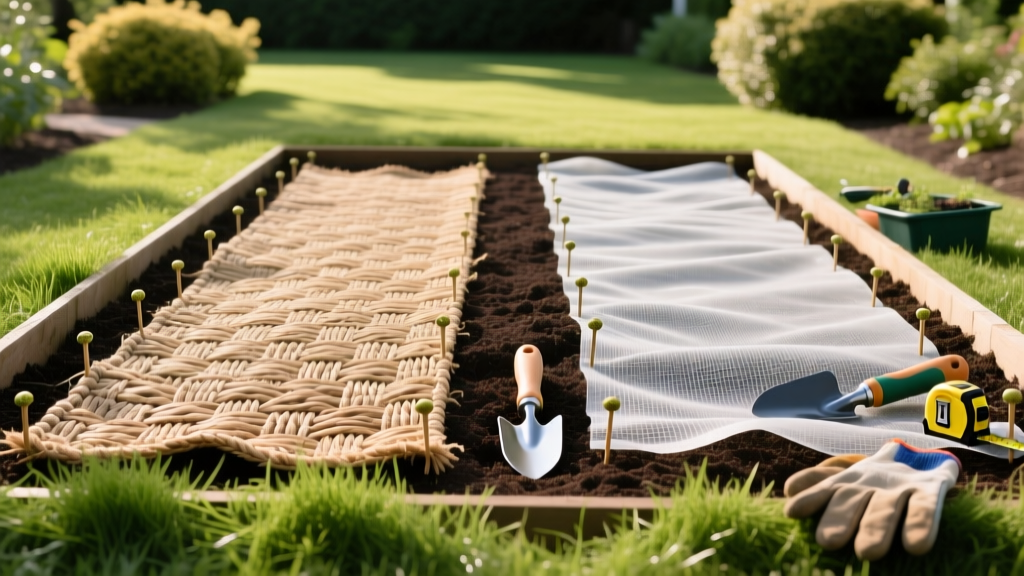
Woven vs Non-Woven Garden Cloth: A Beginner's Installation Guide
The Great Garden Cloth Debate: Woven vs. Non-Woven
When beginners search for weed control solutions, they often encounter the term 'garden cloth' and assume all rolls of black fabric are identical. This assumption leads to the most common landscaping failure in home gardens. Garden cloth—technically known as landscape fabric or weed barrier—falls into two distinct chemical and structural categories: woven polypropylene and non-woven spunbond polyester. Choosing the wrong material for your specific soil type and mulch strategy will result in water pooling, soil asphyxiation, and aggressive weed penetration within 18 months.
Woven garden cloth is created by weaving polypropylene tapes together, creating a grid-like structure with distinct, uniform pores. Non-woven cloth is made by bonding polyester or polypropylene fibers together using heat and chemicals, resulting in a felt-like, continuous sheet.
| Feature | Woven Polypropylene | Non-Woven Spunbond |
|---|---|---|
| Water Permeability | High (flows through woven grid) | Low to Moderate (clogs easily with silt) |
| Average Lifespan | 5 to 10 years (UV treated) | 1 to 3 years before degradation |
| Best Application | Vegetable rows, pathways, inorganic mulch | Underneath heavy river rock or gravel |
| Average Cost (per 100 sq ft) | $12.00 - $18.00 | $8.00 - $14.00 |
The 'Mulch Trap': Why Beginners Fail
The number one reason homeowners abandon garden cloth after two seasons is a phenomenon horticulturists call the 'Mulch Trap.' According to weed management principles outlined by the EPA's Integrated Pest Management guidelines, physical barriers are only effective if maintained. However, beginners typically lay garden cloth down and cover it with 2 to 3 inches of organic wood mulch.
⚠️ The Decomposition Cycle Warning:
Organic mulch breaks down over time, turning into a layer of rich humus on top of your garden cloth. Weed seeds blow in, land in this new humus layer, and germinate. When their taproots hit the impermeable barrier of the cloth, they spread laterally, eventually finding the seams or planting holes and driving deep into your native soil. Pulling these weeds later tears the fabric, rendering it useless.
Organic mulch breaks down over time, turning into a layer of rich humus on top of your garden cloth. Weed seeds blow in, land in this new humus layer, and germinate. When their taproots hit the impermeable barrier of the cloth, they spread laterally, eventually finding the seams or planting holes and driving deep into your native soil. Pulling these weeds later tears the fabric, rendering it useless.
The Expert Fix: If you must use garden cloth, pair it with inorganic mulch like 3/4-inch crushed gravel or river rock. If you prefer organic wood mulch for soil health, skip the garden cloth entirely and rely on a 4-inch layer of arborist wood chips, which naturally suppress weeds while feeding the soil microbiome as they decompose.
Precision Installation: A Step-by-Step Framework
If your site assessment dictates that woven garden cloth is the right choice—such as for high-traffic pathways, beneath heavy stone, or in wide-row commercial vegetable production—proper installation is non-negotiable. Follow these exact measurements to prevent seam failure and wind uplift.
1. Soil Preparation and Leveling
Never lay garden cloth over existing weeds or debris. Sharp rocks and woody roots will puncture the polypropylene under the weight of foot traffic or mulch. Remove all perennial taproots (like bindweed or dandelion) manually. Rake the soil completely level; any depressions will create water puddles that eventually force their way through the fabric seams.
2. The Overlap Rule
Unroll the fabric and let it acclimate to the sun for 30 minutes to relax the material. When joining two rolls, you must overlap the seams by a minimum of 3 inches. For the perimeter edges of the bed, extend the cloth 6 inches beyond the planting zone to prevent weeds from creeping in from the lateral edges.
3. Securing with 11-Gauge Pins
Do not use cheap plastic spikes; they will snap under soil tension and UV exposure. Purchase 11-gauge steel U-shaped landscape staples (minimum 6 inches long). Place a staple every 3 feet along the seams and every 5 feet in the center field of the fabric. As noted by experts at Fine Gardening, inadequate pinning is the primary cause of fabric billowing and tearing during spring storms.
4. The 'X-Slit' Planting Technique
Never cut circular holes for your plants. A circle removes structural material and creates a weak point that will tear outward as the plant's trunk or stem expands. Instead, use a sharp utility knife to cut an 'X' slit. Fold the four resulting flaps back, dig your hole, plant the root ball, and then fold the flaps tightly back around the base of the plant stem.
2026 Product Recommendations by Use Case
The market is flooded with ultra-cheap, thin fabrics that degrade after a single summer. Based on current material durability and UV resistance ratings, here are the top performers for home gardeners:
- Best Overall Woven Barrier: DeWitt Pro 5 Weed Barrier. Weighing in at 4.8 oz per square yard, this woven polypropylene offers exceptional water flow rates while blocking 99% of sunlight. Expect to pay around $45 for a 3x50 foot roll.
- Best for Heavy Rock Landscaping: Agfabric 4.8oz Ground Cover. Features reinforced green striping every 12 inches, which acts as a built-in measuring guide for aligning planting rows and ensuring straight seams.
- Avoid: Any 'non-woven' felt fabric marketed under generic marketplace brands for under $10 per 100 square feet. These lack UV stabilizers and will disintegrate into microplastics in your soil within 14 months.
When to Skip Garden Cloth Entirely
Garden cloth is a tool, not a universal requirement. You should actively avoid using it in the following scenarios:
- Densely Planted Perennial Beds: Plants that spread via rhizomes (like hostas, daylilies, and asters) will be choked and deformed by the physical barrier.
- Vegetable Root Crops: Carrots, parsnips, and potatoes require deep, unobstructed soil profiles. The compaction caused by laying and pinning fabric can lead to stunted, forked roots.
- Sloped Grades: On slopes greater than a 15% grade, water runoff will accelerate over the slick surface of the cloth, causing severe topsoil erosion at the bottom of the slope.
By understanding the mechanical limits of woven versus non-woven materials and avoiding the organic mulch trap, you can deploy garden cloth effectively where it belongs—under hardscapes and pathways—while letting your living soil breathe freely in your planting beds.

