
Gardening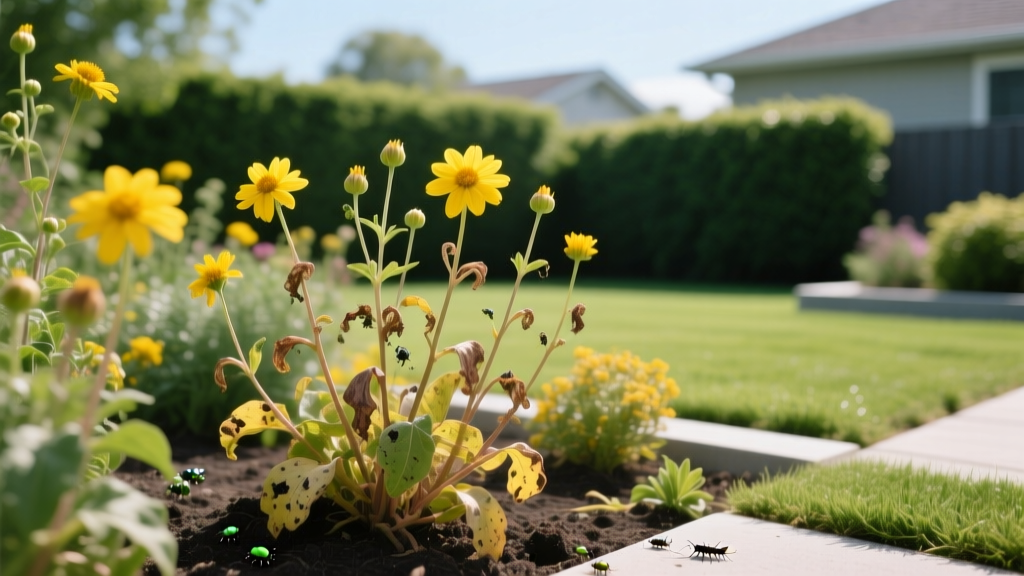
Rescue Fixes for Perennials With Yellow Blooms That Stop Flowering
The Diagnostic Reality for Yellow-Flowering Perennials
You selected Rudbeckia fulgida 'Goldsturm', Coreopsis verticillata 'Moonbeam', and Hemerocallis 'Stella de Oro' to guarantee a reliable, vibrant sea of gold from early summer through autumn. Yet, instead of brilliant canary and lemon hues, your garden is presenting pale foliage, aborted flower buds, or stunted, leggy growth. Perennials with yellow blooms are particularly unforgiving when their specific soil and nutritional thresholds are ignored. The pigments responsible for their coloration—primarily xanthophylls and carotenoids—are highly sensitive to nutrient lockout, phytoplasma infections, and root asphyxiation.
When these plants fail, generic "water and feed" advice usually accelerates the decline. Below is a targeted symptom-to-rescue framework designed to identify the exact failure mode and deploy precise, actionable corrections.
Symptom Matrix: Rapid Triage for Yellow-Blooming Cultivars
Before applying any amendments, cross-reference your plant's physical presentation with this diagnostic matrix. Misidentifying aster yellows as a simple nitrogen deficiency will result in the infection spreading to your entire garden bed.
| Visible Symptom | Primary Culprit | Immediate Rescue Action |
|---|---|---|
| Green veins, but yellow leaf tissue (interveinal chlorosis) | Iron/Manganese lockout due to high pH | Apply Fe-EDDHA chelate; lower soil pH |
| Buds turn green, deformed, leafy; distorted growth | Aster Yellows Phytoplasma | Cull, bag, and destroy the plant immediately |
| Lush, dark green foliage but zero flower buds | Excess Nitrogen / Insufficient Phosphorus | Switch to 2-8-4 fertilizer; reduce watering |
| Center of clump dying out, outer edges thin and weak | Crown Rot / Severe Overcrowding | Excavate, divide, and amend with coarse grit |
| Lower leaves turning solid yellow and dropping prematurely | Mobile nutrient deficiency (Nitrogen/Magnesium) | Foliar spray with Epsom salts or liquid kelp |
Differentiating Aster Yellows from Nutrient Chlorosis
The most catastrophic mistake gardeners make with perennials in the Asteraceae family (like Black-eyed Susans and Coreopsis) is confusing Aster Yellows with a nutrient deficiency. Aster yellows is caused by Candidatus Phytoplasma asteris, a bacteria-like organism transmitted by the aster leafhopper.
⚠ CRITICAL WARNING: Aster Yellows Protocol
If your Rudbeckia or Coreopsis produces bizarre, green, leaf-like structures where yellow flower petals should be, or if the stems exhibit a "witches' broom" growth pattern, the plant is infected. There is no chemical cure. Do not attempt to prune away the affected tissue. Dig up the entire root system, place it in a sealed plastic bag, and send it to the landfill. Never compost infected material, as the phytoplasma can survive and spread.
If the yellowing is strictly confined to the leaf tissue between the veins while the veins themselves remain bright green, you are dealing with interveinal chlorosis. This is almost always an iron or manganese deficiency triggered by alkaline soil conditions (pH above 7.0). In high-pH soils, iron becomes chemically bound and unavailable to the plant's roots, starving the chloroplasts required for photosynthesis and flower production.
Soil Chemistry and Nutrient Rescue Protocols
Correcting chlorosis and forcing bloom production requires precise chemical interventions rather than generic "all-purpose" granular feeds. According to the NC State Extension Plant Database, most yellow-blooming perennials thrive in a slightly acidic pH range of 5.8 to 6.5.
Step 1: Correcting pH Lockout
Test your soil pH using a calibrated digital meter or a professional lab analysis. If your pH reads 7.2 or higher, apply elemental sulfur. The standard application rate is 1.5 pounds of elemental sulfur per 100 square feet to lower the pH by approximately 0.5 points in a loam soil. Incorporate it into the top 3 inches of soil. Note that sulfur takes 3 to 6 months to fully react, so this is a long-term fix.
Step 2: Immediate Iron Rescue
Because sulfur takes months to work, your perennials need immediate iron. Do not use standard iron sulfate (Fe-EDTA); it binds instantly in alkaline soils and becomes useless. You must purchase Fe-EDDHA chelated iron (often sold as a dark red powder). This specific chelate remains stable in soils with a pH up to 9.0. Dissolve 1 to 2 ounces of Fe-EDDHA per 100 square feet in water and apply it as a soil drench directly to the root zone. Expect visible greening of the foliage within 10 to 14 days. Commercial Fe-EDDHA products typically cost between $18 and $30 per pound, making it a premium but highly effective rescue tool.
Step 3: Shifting the NPK Ratio for Bloom Production
If your Hemerocallis 'Stella de Oro' has massive, dark green leaves but no yellow blooms, the soil is saturated with nitrogen. Nitrogen promotes vegetative growth at the expense of reproductive (flower) growth. Halt all high-nitrogen feeds (like 10-10-10 or 20-5-5). Switch to a low-nitrogen, high-phosphorus fertilizer such as a 2-8-4 liquid blend or apply bone meal (4-12-0) at a rate of 1 cup per square yard. Phosphorus stimulates root development and flower bud initiation.
Mechanical Rescue: Dividing Asphyxiated Crowns
Coreopsis and Daylilies are aggressive spreaders. After 3 to 4 years, the central crown becomes woody, congested, and prone to moisture retention, leading to Sclerotium rolfsii (southern blight) or general crown rot. When the center of the clump dies out, the remaining outer shoots lack the vigor to produce yellow blooms.
✅ Pro-Tip: The "V-Cut" Division Method
Instead of digging up the entire clump, use a sharp, sterilized spade to cut a V-shaped wedge out of the center of the dormant plant in early spring. Fill the void with a 50/50 mix of native soil and coarse horticultural grit (not peat moss, which retains too much water). This relieves central congestion and stimulates new, bloom-bearing rhizomes to grow into the gap without the transplant shock of full division.
If full division is required due to severe rot, follow this protocol:
- Excavation: Dig a trench 6 inches outside the drip line of the foliage to avoid severing the primary feeder roots.
- Sanitation: Wash the root mass with a hose to expose the crown. Use a sterilized hori-hori knife to cut away any brown, mushy, or foul-smelling tissue.
- Sectioning: Divide the healthy outer fans into sections containing exactly 3 to 5 growth eyes (fans) each. Discard the woody, dead center.
- Replanting Depth: This is the most common failure point. The crown of the Coreopsis or Daylily must sit exactly at or 0.5 inches above the soil grade. Burying the crown even 1 inch below the soil line will guarantee rot and zero yellow blooms the following season.
Pest Triage: Protecting the Bloom Cycle
Yellow-blooming perennials are highly attractive to sap-sucking insects, particularly the two-spotted spider mite (Tetranychus urticae) and the foxglove aphid. These pests pierce the phloem, draining the carbohydrates the plant needs to sustain flower petals, resulting in blasted (dropped) buds and stippled, bronzed foliage.
Inspect the undersides of the leaves near the base of the plant. If you detect fine webbing or sticky honeydew, initiate treatment immediately. However, do not apply horticultural oils or insecticidal soaps while the plants are in active bloom. These treatments, while organic, will coat and suffocate the pollen, and more importantly, will kill the native sweat bees and syrphid flies that pollinate your garden. Instead, apply a systemic granular insecticide containing Imidacloprid in early spring before bud break, or use a targeted blast of water to dislodge aphids during the flowering window. For severe mite infestations post-bloom, apply a miticide containing Abamectin, rotating chemical classes to prevent resistance.
Summary Checklist for Garden Recovery
- Test pH: Ensure soil is between 5.8 and 6.5; apply elemental sulfur if alkaline.
- Deploy Chelates: Use Fe-EDDHA for immediate correction of interveinal chlorosis.
- Cull Infections: Destroy any plants exhibiting witches' broom or green, leafy flower mutations.
- Adjust Fertilizer: Eliminate high-nitrogen feeds; transition to 2-8-4 or bone meal to force bud set.
- Elevate Crowns: Divide congested clumps and ensure the crown sits slightly above grade to prevent asphyxiation.
By shifting your approach from passive observation to active, chemistry-driven triage, your perennials with yellow blooms will recover their vigor and deliver the intense, saturated color they were bred to produce.

