
Gardening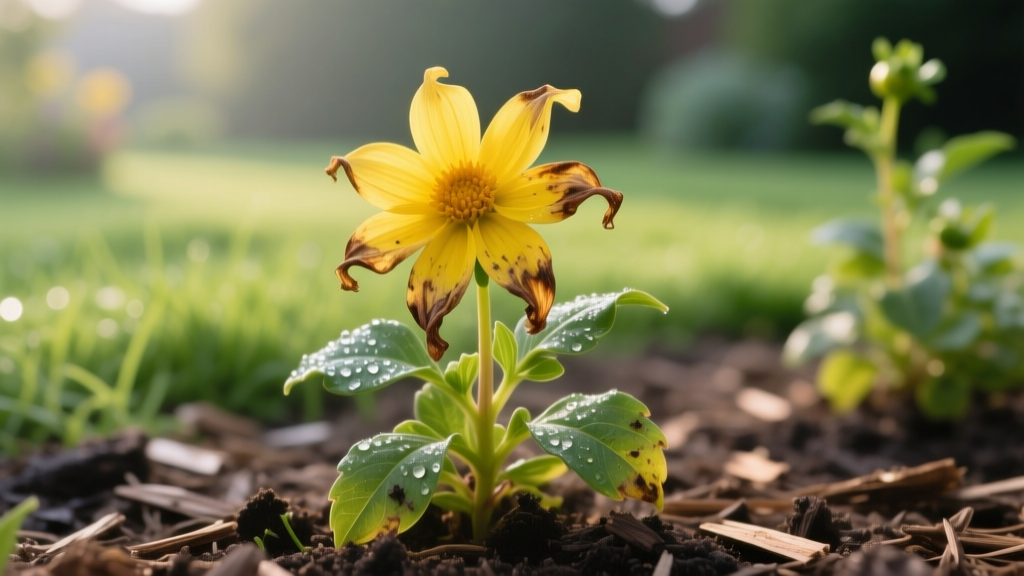
Yellow Flower Plant Wilting or Browning? Diagnosis & Rescue
When your favorite yellow flower plant—whether it is a delicate threadleaf Coreopsis (Coreopsis verticillata), a towering Black-Eyed Susan (Rudbeckia hirta), or a cheerful French Marigold (Tagetes patula)—begins to decline, the visual contrast of failing foliage against bright blooms is incredibly frustrating. Yellow-blooming perennials and annuals are particularly susceptible to specific nutrient lockouts, fungal wilts, and environmental stressors that manifest as sudden wilting, leaf chlorosis, or crispy brown petal edges.
Rather than applying a generic all-purpose fertilizer, successful rescue requires precise symptom diagnosis. Below is a comprehensive diagnostic framework and targeted rescue protocol to reverse decline and restore vigorous blooming.
Rapid Symptom Matcher
- Uniform pale leaves with green veins: Iron chlorosis (high soil pH).
- Lower leaves yellowing and dropping: Nitrogen deficiency or root rot.
- Sudden one-sided wilting: Verticillium or Fusarium fungal wilt.
- Crispy brown leaf margins: Potassium deficiency or fertilizer burn.
Decoding Leaf Chlorosis in Yellow-Blooming Perennials
Chlorosis—the yellowing of leaf tissue while veins remain green—is the most common complaint among gardeners growing yellow flower plants in alkaline soils. According to the Royal Horticultural Society (RHS), iron becomes chemically locked out and unavailable to plant roots when soil pH rises above 7.0. Because yellow-blooming perennials like Coreopsis and Rudbeckia are heavy feeders during their blooming cycle, an iron deficiency will rapidly stall flower production and weaken stems.
The Iron vs. Nitrogen Diagnostic Test
Before treating, you must distinguish between iron and nitrogen deficiency. Iron chlorosis always appears on new, young growth at the top of the plant first. Nitrogen deficiency, conversely, causes older, lower leaves to turn uniformly yellow and drop off as the plant cannibalizes nutrients to support new blooms.
Rescue Fix for Iron Chlorosis: Do not simply add more iron sulfate to the soil; it will remain locked out if the pH is high. Instead, apply a chelated iron product containing Fe-EDDHA, which remains stable in soils with a pH up to 9.0. For a targeted rescue, use a product like Sequestrene 138 Fe or a high-quality liquid chelate. Apply at a rate of 1 teaspoon per gallon of water as a soil drench directly to the root zone. For long-term correction, lower the soil pH by top-dressing with 2 pounds of elemental sulfur per 100 square feet in early spring.
Tackling Bud Drop, Wilting, and Stem Rot
If your yellow flower plant is adequately watered but exhibits sudden, dramatic wilting—often affecting only one side of the plant or individual stems while adjacent stems remain turgid—you are likely dealing with a vascular wilt disease. Fusarium and Verticillium fungi enter through the root system and physically block the plant's xylem (water-conducting tissues).
The University of Minnesota Extension notes that these soil-borne pathogens thrive in cool, moist conditions and can persist in garden beds for over a decade. Marigolds are occasionally used as trap crops, but Rudbeckia and certain Coreopsis cultivars can fall victim if planted in previously infected soil.
Rescue Protocol for Fungal Wilt
- Isolate and Prune: Immediately cut away completely wilted, necrotic stems at the soil line. Sterilize your bypass pruners with a 10% bleach solution between every single cut to prevent spreading the spores.
- Biological Inoculation: Drench the remaining healthy root zone with a mycorrhizal and beneficial bacteria inoculant (such as Great White Premium Mycorrhizae). Beneficial microbes like Trichoderma harzianum will colonize the roots and outcompete pathogenic fungi.
- Moisture Management: Fungal wilts exploit overly saturated soils. Pull back any heavy wood mulch touching the plant's crown to improve airflow and allow the top two inches of soil to dry out completely between waterings.
Expert Insight: Never apply high-nitrogen synthetic fertilizers to a plant suffering from fungal wilt. Excess nitrogen forces rapid, soft cellular growth that is highly susceptible to fungal penetration and accelerates root rot.
Environmental Scorch vs. Potassium Deficiency
When the edges and tips of leaves on your yellow flower plant turn brown and crispy, gardeners often assume the plant needs more water. However, overwatering in response to this symptom often drowns the roots. You must differentiate between environmental sun scorch and a severe potassium (potash) deficiency.
| Symptom Profile | Environmental Sun Scorch | Potassium Deficiency |
|---|---|---|
| Location on Plant | South/West facing leaves, top canopy | Older, lower leaves first, spreading upward |
| Leaf Texture | Papery, bleached centers with brown margins | Yellowing between veins, followed by necrotic brown margins |
| Bloom Impact | Petals fade prematurely and drop | Flowers are small, weak, and fail to fully open |
| Targeted Rescue | Install 30% shade cloth during peak afternoon hours | Apply Sulfate of Potash (0-0-50) at 1 tbsp/gallon |
Potassium is critical for water regulation within the plant's stomata and for developing robust flower structures. If your soil test confirms low potassium, apply a fast-acting Sulfate of Potash (0-0-50). Dissolve 1 tablespoon per gallon of water and apply as a soil drench every 14 days until bloom vigor returns. Avoid Muriate of Potash (potassium chloride), as the chloride ions can cause root burn in sensitive perennials like Coreopsis.
The 14-Day Rescue Protocol for Failing Yellow Bloomers
If your yellow flower plant is exhibiting a combination of the symptoms above, follow this strict 14-day triage schedule to stabilize the root system and encourage new lateral growth.
Day 1: Assessment and Pruning
Test the soil pH and moisture depth using a digital probe. Remove all dead, diseased, or severely chlorotic foliage. Clear away any competing weeds within a 12-inch radius of the plant's base to eliminate competition for water and nutrients.
Day 3: Root Zone Flushing and Inoculation
If fertilizer burn or salt buildup is suspected (common in container-grown marigolds), flush the soil with 3 gallons of plain water per square foot to leach excess salts. Once drained, apply a liquid seaweed extract (such as Maxicrop) at 1 ounce per gallon. Seaweed extract contains natural cytokinins that stimulate root hair regeneration and reduce transplant/stress shock.
Day 7: Targeted Nutrient Application
Based on your Day 1 diagnosis, apply the appropriate targeted amendment. If treating for iron chlorosis, apply the Fe-EDDHA drench. If treating for potassium deficiency, apply the Sulfate of Potash solution. Do not apply both simultaneously, as competing ions can reduce uptake efficiency.
Day 14: Foliar Maintenance and Mulching
Inspect the new growth emerging from the crown. If leaves are emerging green and turgid, the rescue was successful. Apply a 2-inch layer of fine arborist wood chips or composted pine bark around the base, ensuring you leave a 3-inch mulch-free halo directly around the main stem to prevent crown rot. Maintain consistent moisture, providing exactly 1 inch of water per week, preferably via drip irrigation to keep foliage dry and prevent secondary fungal infections like powdery mildew.

