
Gardening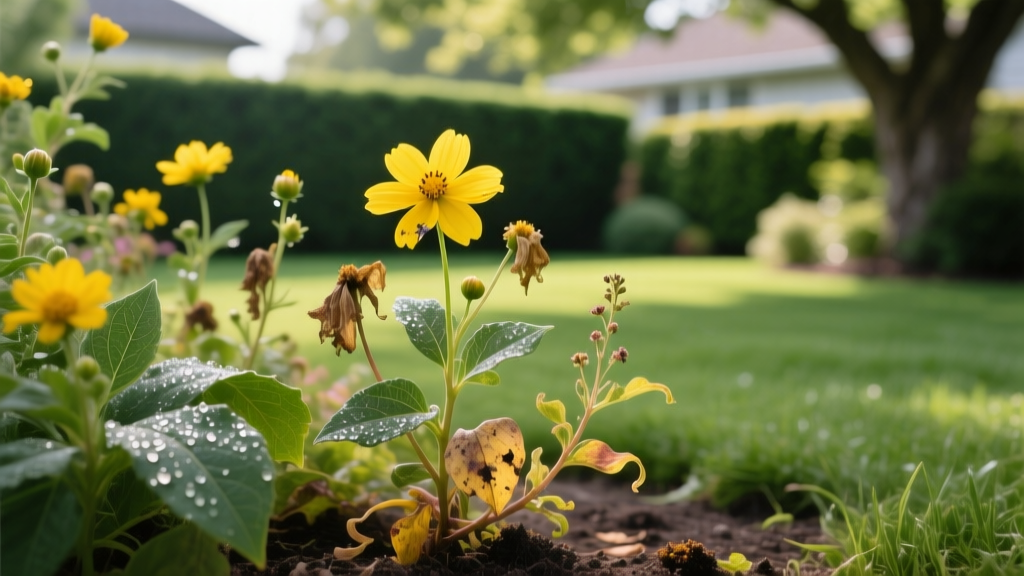
Why Plants With Yellow Flowers Lose Color: Diagnosis and Rescue Fixes
The Physiology of Yellow Pigment Failure
The vivid yellow hues in garden staples like Black-eyed Susans (Rudbeckia), Coreopsis, Marigolds, and Sunflowers are produced by carotenoid pigments—specifically lutein and zeaxanthin. Unlike anthocyanins (which produce reds and purples and are highly sensitive to soil pH), carotenoids are synthesized within the plant’s chloroplasts and chromoplasts. When plants with yellow flowers lose their color, fade prematurely, or develop brown margins, the issue is rarely a simple lack of sunlight. It is almost always a disruption in cellular turgor pressure, a micronutrient lockout caused by alkaline soil, or a vector-borne phytoplasma infection.
Accurate diagnosis requires observing the exact failure mode of the petal tissue. Below is a diagnostic matrix to identify the specific stressor attacking your yellow blooms, followed by targeted, actionable rescue protocols.
Symptom Diagnostic Matrix
| Visual Symptom | Primary Cause | Secondary Factor | Immediate Rescue Action |
|---|---|---|---|
| Petals fading to pale yellow or white | Iron/Manganese lockout (High pH) | UV Sunscald on stressed tissue | Apply elemental sulfur to lower soil pH; provide temporary shade cloth. |
| Crispy, brown petal margins | Potassium (K) deficiency | Thrip scraping damage | Drench with high-K liquid fertilizer; apply Spinosad spray at dusk. |
| Petals turning green and deformed | Aster Yellows (Phytoplasma) | Aster leafhopper vectors | Rogue (destroy) the plant immediately; control leafhoppers. |
| Small, dull blooms with yellowing leaves | Nitrogen toxicity / Phosphorus deficit | Root zone waterlogging | Switch to a bloom-booster (low N, high P); reduce irrigation frequency. |
Diagnosis 1: Premature Bleaching and pH Lockout
The Mechanism of Color Loss
When yellow flowers turn pale or almost white, gardeners often assume the plant needs more sun or water. However, if the soil pH exceeds 7.2, essential micronutrients like iron and manganese become chemically bound in the soil and unavailable to the roots. Without adequate iron, the plant cannot maintain the enzymatic pathways required to sustain dense chromoplast development in the petals. The result is a bleached, washed-out appearance, often exacerbated by UV sunscald on the weakened petal tissue.
The Rescue Fix
To rescue fading yellow blooms, you must rapidly lower the rhizosphere pH. While liquid chelated iron provides a temporary foliar band-aid, the permanent fix requires elemental sulfur.
- Product: Espoma Organic Soil Acidifier (contains 30% elemental sulfur).
- Dosage: Apply 1.25 cups per 10 square feet of garden bed to drop the soil pH by approximately 0.5 units.
- Application: Scratch the granules into the top 2 inches of soil around the root zone, avoiding direct contact with the plant’s crown to prevent stem burn. Water deeply immediately after application to activate the sulfur-oxidizing bacteria (Thiobacillus) that convert the sulfur into sulfuric acid.
- Cost & Timing: As of 2026, a 4lb bag retails for roughly $16. Expect the pH shift to take 3 to 4 weeks; existing damaged blooms will not recover, but the next flush of buds will exhibit full carotenoid saturation.
For authoritative guidance on testing and adjusting your garden's alkalinity, consult the University of Minnesota Extension's soil pH guidelines before applying amendments.
Diagnosis 2: Crispy Brown Edges and Thrip Damage
The Turgor Pressure Failure
If the edges of your yellow marigolds or sunflower petals are turning brown and papery, you are witnessing a failure of cellular turgor pressure. Potassium (K) is the primary macronutrient responsible for opening and closing stomata and regulating water pressure within delicate petal cells. A deficit in potassium causes the outermost cells of the petal to desiccate and die.
Compounding this issue is the Western Flower Thrip (Frankliniella occidentalis). Thrips possess piercing-sucking mouthparts that scrape the surface of flower petals to feed on the cellular fluids. When a potassium-deficient plant is attacked by thrips, the petal margins rapidly necrotize, turning crispy and brown.
The Rescue Fix
You must address both the nutritional deficit and the pest pressure simultaneously.
- Nutritional Drench: Switch from a balanced fertilizer to a high-potassium liquid feed. FoxFarm Tiger Bloom (NPK 2-8-4) is highly effective. Mix 1 teaspoon per gallon of water and apply as a soil drench every 14 days during the active blooming phase.
- Pest Eradication: Apply Monterey Garden Insect Spray, which contains Spinosad (a naturally occurring soil bacterium that causes fatal nervous system overstimulation in thrips). Spray the flower heads thoroughly at dusk to avoid harming daytime pollinators like bees. Once the Spinosad dries (usually within 3 hours), it is safe for beneficial insects.
For more on identifying and managing these microscopic pests, review the thrip management protocols from UMN Extension.
Diagnostic Warning: Do Not Confuse Thrip Damage with Fungal Blight
Botrytis cinerea (gray mold) also causes brown petal spots, but it presents with a distinct fuzzy, grayish-white sporulation on the dead tissue. Thrip damage is dry, papery, and lacks fungal fuzz. If you see gray fuzz, abandon the Spinosad and apply a copper-based fungicide like Bonide Liquid Copper immediately.
Diagnosis 3: The Green Petal Anomaly (Aster Yellows)
The most alarming symptom a gardener can encounter is a yellow coneflower, daisy, or marigold producing petals that are entirely green, thickened, and deformed. This is not a nutrient deficiency, a mutation, or a fertilizer burn. It is Aster Yellows, a devastating disease caused by a phytoplasma (a bacteria-like organism without a cell wall).
The Pathology and Vector
Aster Yellows is transmitted exclusively by the Aster Leafhopper (Macrosteles quadrilineatus). When the leafhopper feeds on an infected weed, it ingests the phytoplasma, which then multiplies in the insect's gut and is injected into your garden plants during subsequent feedings. The phytoplasma hijacks the plant's floral development genes, converting what would be yellow petals into leaf-like green structures (a condition known as phyllody).
CRITICAL ACTION REQUIRED
There is no cure for Aster Yellows. No fertilizer, fungicide, or pesticide will reverse the infection. The phytoplasma resides in the plant's phloem and will systematically weaken the root system until the plant dies, acting as a reservoir to infect neighboring plants.
The Rescue Protocol (Containment)
- Rogue the Plant: Dig up the entire infected plant, including the root ball, place it in a sealed black plastic bag, and send it to the landfill. Do not compost it.
- Vector Control: To protect your remaining yellow-flowering plants, apply a systemic insecticide containing Imidacloprid (like BioAdvanced 12 Month Tree and Shrub Protect & Feed) to non-flowering ornamentals nearby, or use insecticidal soap sprays on susceptible flowers every 7 days to deter leafhoppers.
- Weed Management: Eradicate broadleaf weeds like dandelions, plantain, and chickweed in your garden, as these serve as primary overwintering hosts for the phytoplasma.
For detailed visual identification of this disease, reference the Aster Yellows diagnostic guide provided by the University of Minnesota.
The 48-Hour Triage Protocol for Failing Yellow Blooms
When you notice color loss or tissue degradation in your yellow-flowering beds, execute this step-by-step triage to halt the decline:
- Hour 1 (Visual Inspection): Use a 10x jeweler's loupe to inspect the undersides of the petals and the base of the flower head. Look for the tiny, dark, fast-moving specks indicative of thrips, or the fuzzy gray mold of Botrytis.
- Hour 2 (Soil Testing): Extract a soil sample from 4 inches deep near the root zone. Test the pH using a calibrated digital meter or a reliable chemical drop-kit (like the Luster Leaf Rapitest). If pH is above 7.0, initiate the elemental sulfur protocol.
- Hour 12 (Targeted Application): Apply the appropriate rescue treatment based on your findings (Spinosad for thrips, Soil Acidifier for high pH, or physical removal for Aster Yellows).
- Hour 48 (Hydration Check): After applying granular amendments or liquid drenches, ensure the soil is moist to a depth of 6 inches to facilitate nutrient uptake and microbial activation, but avoid waterlogging the crown.
By treating the specific physiological or pathological failure mode rather than applying generic all-purpose fertilizers, you can restore the vibrant carotenoid expression that makes yellow-flowering plants a cornerstone of the summer garden.

