
Grass Types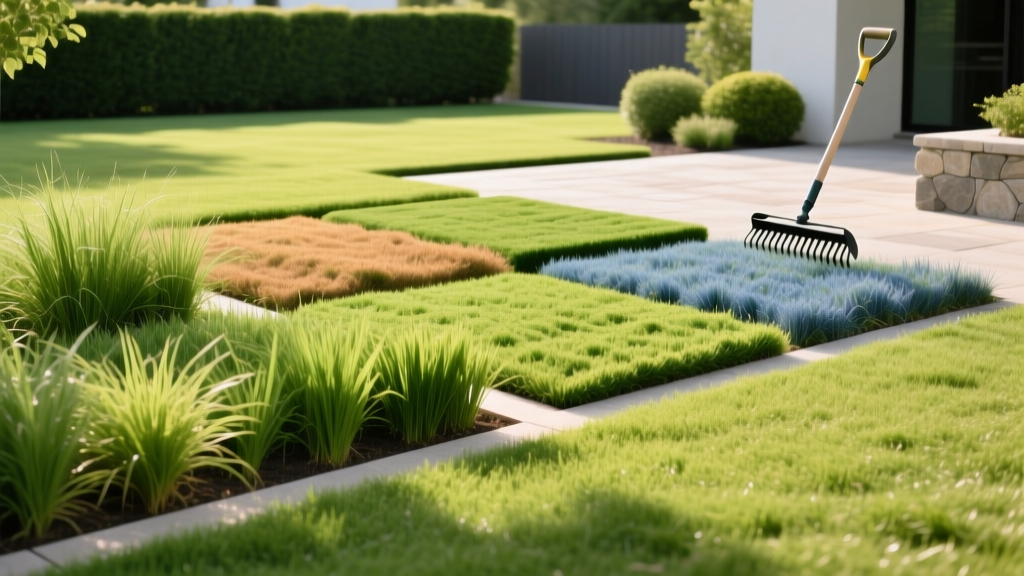
2026 Turf Installation Cost Guide: Sod, Seed & Hydroseed Pricing
Establishing a new lawn is one of the highest-impact investments a homeowner can make, but the financial variables are rarely straightforward. The total turf installation cost in 2026 is driven by three distinct phases: site preparation, material acquisition, and labor. While supply chain bottlenecks for agricultural products have largely stabilized, regional labor shortages have pushed professional installation rates up by 8% to 12% compared to 2024 baselines. Understanding the exact dosage, coverage requirements, and hidden terrain costs is critical to preventing budget overruns.
The 2026 Turf Installation Cost Matrix
The choice between sod, seed, and hydroseed dictates your upfront capital and your timeline to a usable lawn. Below is the current national average pricing for a standard 5,000-square-foot residential yard, assuming moderate site preparation is required.
| Installation Method | Material Cost (per sq ft) | Professional Labor (per sq ft) | Total Cost (5,000 sq ft) | Time to Usable Lawn |
|---|---|---|---|---|
| Traditional Seed | $0.08 - $0.20 | $0.15 - $0.30 | $1,150 - $2,500 | 8 - 12 weeks |
| Hydroseed | $0.12 - $0.25 | $0.10 - $0.20 | $1,100 - $2,250 | 5 - 8 weeks |
| Sod (Insta-Grass) | $0.35 - $0.85 | $0.50 - $1.50 | $4,250 - $11,750 | 2 - 3 weeks |
According to data tracked by HomeGuide's landscaping cost index, the premium for sod is almost entirely tied to the immediate aesthetic payoff and erosion control, rather than long-term turf health. In fact, seed-grown lawns often develop deeper, more resilient root systems because they adapt to the native soil profile from day one, whereas sod must undergo a stressful transplantation shock phase.
Site Preparation: The Hidden Cost Multiplier
The most common failure mode in turf establishment is poor subgrade preparation. If you lay sod over compacted clay or broadcast seed onto unamended dirt, your material investment is wasted. Site preparation typically adds $1.00 to $2.50 per square foot to your total turf installation cost.
- Rototilling & Grading: Breaking up soil to a depth of 4 to 6 inches. Professional grading with a skid steer costs $150 to $250 per hour. DIY rototiller rentals run $80 to $120 per day.
- Topsoil Amendment: Adding 1 to 2 inches of screened topsoil or compost. Bulk delivery costs $30 to $55 per cubic yard. A 5,000 sq ft lawn requires roughly 15 cubic yards for a 1-inch layer, totaling $450 to $825 in materials plus delivery fees.
- Starter Fertilizer: Applying a high-phosphorus starter fertilizer (e.g., a 10-18-10 N-P-K ratio) at a rate of 4 lbs per 1,000 sq ft to stimulate root growth. Expect to pay $40 to $60 for a 50lb commercial bag.
Critical Warning: Never skip a soil percolation test before installation. If your soil drains slower than 1 inch per hour, you must integrate 20% to 30% coarse sand or organic compost into the top 4 inches. Failing to address drainage will result in root rot (Pythium blight) within the first 60 days, entirely negating your installation investment.
Seed, Sod, and Hydroseed: Exact Coverage & Dosage
Calculating the exact material volume prevents both waste and patchy establishment. The University of Minnesota Extension emphasizes that over-seeding is just as detrimental as under-seeding, as excessive seed density causes seedlings to compete for limited moisture, leading to mass die-offs during the first summer heatwave.
Seed Dosage by Species
Coverage rates vary drastically by grass type and seed size. Always calculate based on Pure Live Seed (PLS) percentage on the tag, not just gross weight.
- Kentucky Bluegrass (Cool-Season): 2 to 3 lbs per 1,000 sq ft. (Small seed, requires shallow planting at 1/8 inch).
- Tall Fescue (Cool-Season): 5 to 8 lbs per 1,000 sq ft. (Larger seed, highly competitive).
- Bermudagrass (Warm-Season): 1 to 2 lbs per 1,000 sq ft (hulled seed).
- Centipedegrass (Warm-Season): 1/4 to 1/2 lb per 1,000 sq ft. (Extremely small seed; often mixed with sand for even broadcast).
Sod Dimensions and the Waste Factor
Standard sod rolls are typically 16.5 square feet (1.5 ft x 11 ft) or 10 square feet (2 ft x 5 ft). When ordering pallets, a standard pallet covers 450 to 500 square feet and weighs between 2,500 and 3,000 lbs. You must account for cutting waste around landscape beds, curves, and property lines.
Pro Tip: Calculating Sod Waste
For perfectly rectangular yards, add a 5% waste factor to your total square footage. For yards with curved flower beds, diagonal property lines, or multiple obstacles (trees, AC units), add a 10% to 12% waste factor. Order all sod for a project in a single delivery to ensure color and cultivar consistency from the same farm harvest.
For perfectly rectangular yards, add a 5% waste factor to your total square footage. For yards with curved flower beds, diagonal property lines, or multiple obstacles (trees, AC units), add a 10% to 12% waste factor. Order all sod for a project in a single delivery to ensure color and cultivar consistency from the same farm harvest.
Hydroseed Slurry Ratios
Hydroseeding suspends seed in a mixture of water, wood/paper mulch, and tackifier (a natural glue). The standard application rate is 1,500 to 2,000 lbs of mulch per acre. For a 5,000 sq ft lawn, the contractor will use roughly 175 to 230 lbs of cellulose mulch. The tackifier is crucial for sloped yards, as it binds the seed to the soil, preventing washouts during heavy spring rains.
DIY vs. Professional Labor: Where the Budget Breaks
The decision to self-install or hire a landscape contractor hinges on physical capability, timeline, and terrain complexity. Sod installation is highly time-sensitive; once harvested, sod must be laid within 24 to 48 hours. If it sits on a pallet in 85°F weather, the center of the stack will undergo anaerobic respiration, generating heat and killing the grass (known as 'pallet burn').
If you are DIY-ing a 5,000 sq ft sod project, you will need to lay approximately 500 rolls. Each roll weighs 30 to 50 lbs. This requires moving 15 to 25 tons of material by hand in a single weekend. Professional crews use motorized wheelbarrows and coordinated teams to lay 5,000 sq ft in 4 to 6 hours, ensuring the root zone remains moist and viable.
Decision Framework: Matching Terrain to Turf Method
Use this framework to finalize your installation strategy based on your specific site conditions and budget constraints.
- Choose Sod If: You have a steep slope (greater than a 15% grade) where seed will wash away before germination, you need immediate erosion control, or you are installing a lawn late in the fall season when seed dormancy is a high risk. Budget must accommodate $1.50+ per sq ft.
- Choose Hydroseed If: Your yard features complex contours, heavy shade mixes, or difficult-to-access areas where laying sod rolls is physically impractical. It provides the erosion control of a mulch blanket at a fraction of the cost of sod.
- Choose Traditional Seed If: You have a flat to gently sloping yard, a flexible timeline (planting in early spring or early fall), and a strict budget. This method yields the highest long-term ROI and deepest root architecture, provided you commit to the rigorous 6-week daily watering schedule required for germination.
Ultimately, the true turf installation cost is not just the day-one invoice. It is the sum of site preparation, precise material dosage, and the labor required to ensure the root zone makes uninterrupted contact with the soil profile. By accurately calculating your waste factors, amending your subgrade, and selecting the right delivery method for your terrain, you secure a lawn that appreciates in value rather than requiring costly renovations in year two.

