Grass Types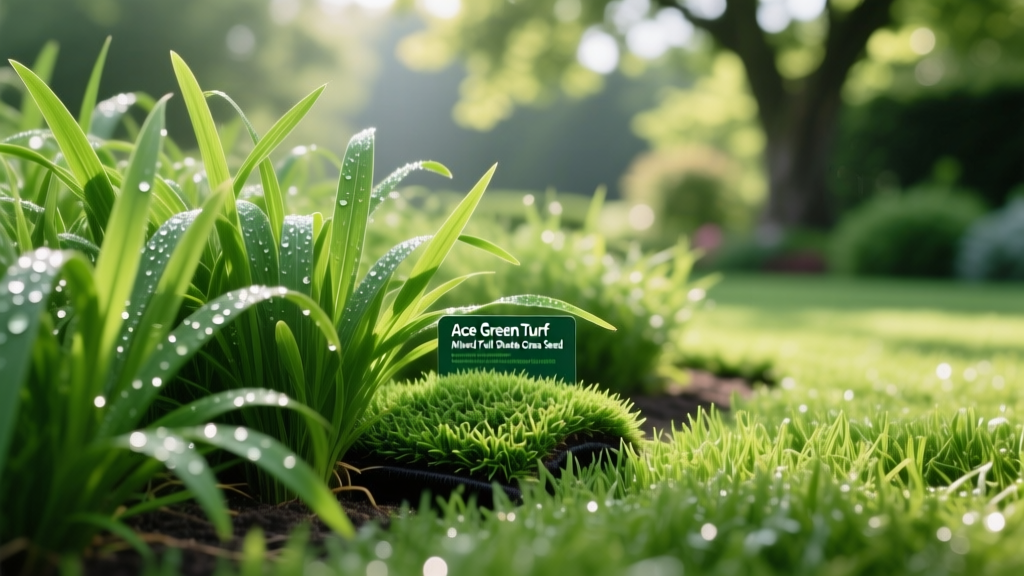
Review & Planting Guide: Ace Green Turf Mixed Full Shade Grass Seed
The Challenge of Full Shade Turf Establishment
Establishing a dense, resilient lawn in full shade—defined agronomically as areas receiving less than four hours of direct, unfiltered sunlight daily—is one of the most persistent challenges in residential landscaping. Standard Kentucky Bluegrass and perennial ryegrass blends simply lack the photosynthetic efficiency to survive under dense tree canopies. The Ace Green Turf Mixed Full Shade Grass Seed is engineered specifically to bridge this gap, utilizing a matrix of fine fescues and shade-adapted tall fescues that possess lower light compensation points. This guide provides a precise, data-driven protocol for site preparation, seeding, and long-term maintenance to ensure a 90% or higher germination and survival rate in low-light environments.
Decoding the Blend: Agronomic Profile
Understanding what is inside the bag is critical for setting realistic expectations and tailoring your maintenance routine. As of 2026, premium shade mixes like the Ace Green Turf formulation typically avoid cheap filler grasses, relying instead on specialized cultivars. According to turfgrass researchers at NC State University's TurfFiles, fine fescues are the undisputed champions of low-light tolerance due to their narrow leaf blades and reduced metabolic demands.
| Species / Cultivar Type | Estimated Blend % | Primary Function in Shade | Drought & Shade Tolerance |
|---|---|---|---|
| Creeping Red Fescue | 35% | Lateral spread via rhizomes to fill bare patches | Excellent / Excellent |
| Chewings Fescue | 25% | Bunch-type growth for dense, upright turf cover | Very Good / Excellent |
| Shade-Adapted Tall Fescue | 25% | Deep rooting for wear tolerance and soil anchoring | Excellent / Good |
| Hard Fescue | 10% | Low-maintenance filler with high disease resistance | Excellent / Very Good |
| Perennial Ryegrass (Nurse) | 5% | Rapid germination to protect soil from erosion | Poor / Poor |
⚠️ Critical Insight: The Nurse Grass Trap
The 5% Perennial Ryegrass included in this mix germinates in 5–7 days, providing immediate green cover and protecting the slower-germinating fescues (which take 14–21 days) from washing away. However, ryegrass is highly allelopathic and can outcompete fine fescues if over-seeded. Stick strictly to the recommended seeding rates to prevent the nurse crop from choking out your permanent shade turf.
The 5% Perennial Ryegrass included in this mix germinates in 5–7 days, providing immediate green cover and protecting the slower-germinating fescues (which take 14–21 days) from washing away. However, ryegrass is highly allelopathic and can outcompete fine fescues if over-seeded. Stick strictly to the recommended seeding rates to prevent the nurse crop from choking out your permanent shade turf.
Site Assessment and Canopy Management
Before opening the seed bag, you must verify the light levels and address root competition. Tree roots, particularly from shallow-rooted species like Norway Maples and Spruces, will aggressively steal moisture and nutrients from your new grass seedlings.
The 10-Foot Pruning Rule
To maximize Photosynthetically Active Radiation (PAR) reaching the soil surface, prune all lower tree branches up to a height of 8 to 10 feet. This allows early morning and late afternoon horizontal sun rays to penetrate the canopy. Additionally, thin the inner canopy by removing crossing or dead branches to increase dappled light. The University of Minnesota Extension emphasizes that even a 15% increase in filtered light can dramatically improve fine fescue survival rates during the critical first year of establishment.
Step-by-Step Establishment Protocol
Follow this exact sequence to prepare the seedbed and sow the Ace Green Turf blend. Timing is critical: the optimal planting window is late summer to early fall (mid-August to late September), when soil temperatures are between 60°F and 75°F, and deciduous trees have not yet dropped their leaves to smother the seedlings.
- Soil Testing and Amendment: Test your soil pH. Fine fescues thrive in a pH range of 6.0 to 6.5. If your soil is below 6.0, apply pelletized limestone at a rate of 50 lbs per 1,000 sq ft to raise the pH. Do not skip this step; acidic soil locks up essential phosphorus needed for root development.
- Debris Removal and Raking: Remove all surface tree roots larger than 1 inch in diameter. Use a steel thatch rake to aggressively scarify the top 1/2 inch of existing soil, creating micro-trenches for seed-to-soil contact.
- Calibration and Seeding: Calibrate your broadcast spreader. For new lawns, apply the Ace Green Turf seed at a rate of 5 to 6 lbs per 1,000 sq ft. For overseeding existing thin shade grass, reduce the rate to 3 to 4 lbs per 1,000 sq ft. Apply half the seed walking north-south, and the other half walking east-west to ensure uniform distribution.
- Topdressing and Mulching: Lightly rake the seed so it is covered by exactly 1/8 inch of soil. In heavily shaded areas, avoid using straw mulch, which often harbors weed seeds and blocks what little light is available. Instead, apply a 1/4 inch layer of screened compost or peat moss to retain moisture without blocking light.
- Initial Fertilization: Apply a starter fertilizer with a high phosphorus content (e.g., 10-18-10) at the time of seeding to accelerate root initiation. Ensure the fertilizer contains slow-release nitrogen to prevent burning the delicate new shoots.
Germination and Watering Timelines
Shade lawns retain moisture longer than sun-exposed lawns, but tree roots act as massive moisture sinks. Overwatering in the shade leads directly to Pythium blight and damping-off diseases. Use the following matrix to guide your irrigation strategy.
| Days Post-Seeding | Target Soil Moisture Depth | Watering Frequency | Disease Risk Factor |
|---|---|---|---|
| Days 1–10 (Ryegrass emergence) | Top 1 inch | 3x daily for 5-8 mins | Moderate (Damping off) |
| Days 11–21 (Fescue emergence) | Top 2 inches | 2x daily for 10 mins | High (Pythium Blight) |
| Days 22–45 (Root establishment) | Top 4 inches | 1x daily for 15 mins | Low |
| Days 46+ (Mature maintenance) | Top 6 inches | 2x per week (deep soak) | Moderate (Powdery Mildew) |
Troubleshooting Common Shade Lawn Failures
Even with perfect seed, environmental factors can derail establishment. Here is how to diagnose and correct the three most common failure modes specific to the Ace Green Turf blend.
1. Seedling Yellowing and Thinning (Nitrogen Immobilization)
Cause: If you used raw wood chips or uncomposted bark as a topdressing, soil microbes will consume all available nitrogen to break down the carbon, starving your grass.
Fix: Apply a quick-release liquid nitrogen fertilizer (such as urea or ammonium sulfate) at a rate of 0.25 lbs N per 1,000 sq ft to bypass the microbial tie-up and green up the turf within 48 hours.
2. White Powdery Coating on Leaf Blades
Cause: Powdery mildew (Erysiphe graminis) thrives in shade with poor air circulation and high humidity, particularly on Kentucky Bluegrass, but can affect fescues under stress.
Fix: Improve airflow by pruning lower shrubbery. If the infection is severe, apply a systemic fungicide containing myclobutanil or propiconazole, strictly following label rates for shade turf.
3. Bare Patches Directly Under Tree Drip Lines
Cause: Allelopathy and extreme root competition. Some trees, like Black Walnuts and certain Eucalyptus, exude chemicals that inhibit grass seed germination.
Fix: Do not fight the tree. Transition the area directly under the drip line to a shade-tolerant groundcover like Pachysandra or Vinca minor, and restrict the Ace Green Turf seed to the outer edges of the canopy where root density is lower.
Long-Term Maintenance for Dense Shade
Once established, the maintenance rules for shade lawns are the exact opposite of those for full-sun lawns. Mow the Ace Green Turf blend at a height of 3.5 to 4.0 inches. This increased leaf surface area is mandatory to capture enough filtered light for photosynthesis. Never remove more than 1/3 of the leaf blade in a single mowing.
Reduce nitrogen fertilization by 30% to 50% compared to sun lawns. Excessive nitrogen in the shade forces rapid, weak vertical growth that is highly susceptible to disease and foot traffic damage. Aim for a maximum of 1.5 to 2.0 lbs of actual nitrogen per 1,000 sq ft annually, applied primarily in the fall when tree canopy competition for light is reduced and soil moisture is more stable.