
Grass Types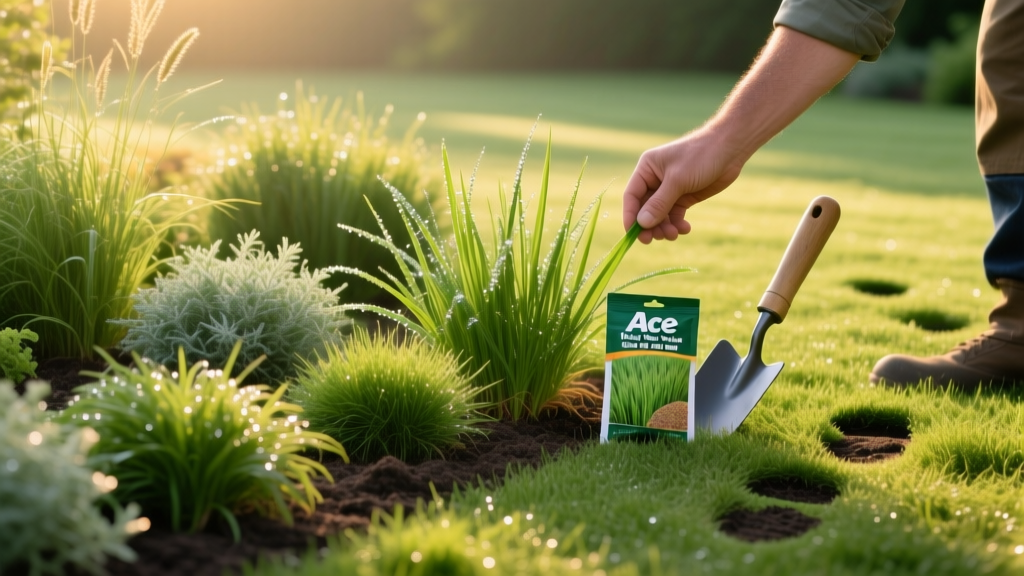
Ace Mixed Sun or Shade Grass Seed: 2026 Planting & Care Guide
Establishing a uniform lawn across a yard with shifting light patterns is one of the most common landscaping challenges. The Ace Mixed Sun or Shade grass seed blend is specifically formulated to bridge the gap between full-sun exposure and deep-tree shade. However, simply broadcasting seed over existing dirt will not yield a dense, weed-resistant turf. Success requires precise soil preparation, calibrated seeding rates, and a strict 21-day germination watering matrix.
As of 2026, a 10-pound bag of this Ace blend typically retails between $65 and $85, making it a mid-tier investment. To ensure you get a 100% return on that investment, this guide breaks down the exact botanical composition of the mix and provides a step-by-step establishment protocol based on current turfgrass science.
What Is Actually Inside the Bag?
The Ace Mixed Sun or Shade grass seed is not a single cultivar; it is a calculated blend of cool-season grasses designed to exploit different microclimates within the same yard. Understanding this composition is critical for setting your mowing and fertilization schedules later in the season.
| Grass Species | Typical Blend % | Germination Time | Primary Function |
|---|---|---|---|
| Perennial Ryegrass | 20% - 30% | 5 - 7 Days | Acts as a rapid 'nurse crop' to hold soil and provide quick green cover while slower grasses establish. |
| Kentucky Bluegrass (KBG) | 30% - 40% | 14 - 21 Days | Thrives in full-sun zones. Spreads via rhizomes to create a dense, self-repairing turf matrix. |
| Fine Fescues (Creeping Red/Chewings) | 30% - 40% | 10 - 14 Days | Highly shade-tolerant. Bunchgrass growth habit excels under tree canopies where KBG would thin out. |
Because Perennial Ryegrass germinates in under a week, you will see green shoots quickly. Do not assume the lawn is fully established at this stage. The Kentucky Bluegrass and Fine Fescues require up to three weeks to emerge and several months to develop deep root systems. According to University of Minnesota Extension, premature reduction in watering during this staggered germination window is the number one cause of cool-season seedling death.
Site Preparation: The Make-or-Break Step
Seed-to-soil contact dictates your germination rate. If the seed rests on thatch or compacted clay, it will dry out and die before the radicle (first root) can penetrate the soil.
Target Soil Parameters:
• pH Level: 6.2 to 6.8 (Fine Fescues will tolerate down to 5.5, but KBG requires 6.0+)
• Phosphorus (P): High levels required for root development. Apply a starter fertilizer with an N-P-K ratio of 18-24-12.
• Seed Depth: 1/8 to 1/4 inch maximum. Never bury cool-season seed deeper than 1/2 inch.
• pH Level: 6.2 to 6.8 (Fine Fescues will tolerate down to 5.5, but KBG requires 6.0+)
• Phosphorus (P): High levels required for root development. Apply a starter fertilizer with an N-P-K ratio of 18-24-12.
• Seed Depth: 1/8 to 1/4 inch maximum. Never bury cool-season seed deeper than 1/2 inch.
Step-by-Step Soil Prep
- Clear and Grade: Remove all debris, rocks, and existing weeds. If using a non-selective herbicide, wait a minimum of 14 days before seeding to avoid chemical burn on new seedlings.
- Till or Aerate: For new lawns, rototill the top 4 to 6 inches of soil. For overseeding, perform a double-pass core aeration, leaving the soil plugs on the lawn to break down naturally.
- Amend the Soil: Incorporate 1 inch of organic compost into the topsoil to improve moisture retention in sandy soils and drainage in heavy clays.
- Rake and Roll: Rake the area smooth, then use a water-filled lawn roller to firm the seedbed. This prevents water from pooling in low spots and washing the seed away.
Seeding Rates & Spreader Calibration
Applying too much seed leads to overcrowding, which triggers fungal diseases like damping-off and Pythium blight. Applying too little leaves bare spots for weeds to invade.
- New Lawn Establishment: 4.0 to 5.0 lbs per 1,000 square feet.
- Overseeding Existing Turf: 2.5 to 3.0 lbs per 1,000 square feet.
- Shaded Bare Spots: 3.5 lbs per 1,000 square feet (slightly lower to reduce moisture competition).
When using a rotary broadcast spreader (such as the Scotts Turf Builder EdgeGuard Mini), set the dial to approximately 4.5 for new lawns and 3.0 for overseeding. Always split your total seed volume in half. Broadcast the first half walking North-to-South, and the second half walking East-to-West. This cross-hatch pattern eliminates striping and ensures uniform coverage.
The 21-Day Germination & Watering Matrix
Watering is not a 'set it and forget it' task during establishment. The goal is to keep the top 1 inch of soil consistently moist without creating standing water, which deprives seeds of oxygen and invites rot.
| Timeframe | Watering Frequency | Duration per Zone | Visual Milestone |
|---|---|---|---|
| Days 1 - 7 | 3 to 4 times daily | 5 - 8 minutes | Perennial Ryegrass emerges; soil surface must never dry out or crust over. |
| Days 8 - 14 | 2 times daily | 10 - 12 minutes | Fine Fescues emerge in shaded zones; KBG begins to sprout in sunnier areas. |
| Days 15 - 21 | 1 time daily | 15 - 20 minutes | KBG fully emerges; transition to deeper, less frequent watering to force root growth. |
| Days 22 - 45 | Every 2nd or 3rd day | 30 - 45 minutes | Turf reaches 2.5 inches; roots establish firmly into the subsoil. |
Expert Insight: If you are planting in late summer or early fall, morning watering is mandatory. Watering in the late afternoon or evening leaves the seedlings wet overnight, creating the perfect environment for dollar spot and brown patch fungi.
First Mow and Early Season Maintenance
Do not mow the lawn until the majority of the grass blades reach 3.5 inches in height. When you do mow, adhere strictly to the 'one-third rule'—never remove more than one-third of the grass blade in a single pass. Set your mower deck to 2.5 or 3 inches for the first cut. Ensure your mower blades are freshly sharpened; dull blades will tear the tender young grass, leaving frayed, white tips that are highly susceptible to disease.
For weed control during the first 60 days, avoid standard pre-emergents like prodiamine, which will inhibit the germination of your new grass. If broadleaf weeds appear, hand-pull them. If crabgrass is a severe threat, you can apply a starter fertilizer containing mesotrione (the active ingredient in Tenacity) at the time of seeding, as it is safe for young cool-season seedlings while bleaching out emerging weeds.
Troubleshooting Common Establishment Failures
Even with meticulous planning, environmental variables can disrupt establishment. Here is how to diagnose and fix the most common issues specific to mixed sun/shade blends:
1. Uneven Germination (Sun vs. Shade)
The Cause: Shaded areas retain moisture longer, while sunny areas dry out rapidly. If you water the whole lawn on the same timer, the sun areas will dry out, or the shade areas will rot.
The Fix: Manually hand-water the sunny microclimates in the mid-afternoon to supplement your automated sprinkler schedule. Conversely, reduce run-times for zones under dense tree canopies.
2. Yellowing Seedlings (Chlorosis)
The Cause: Nutrient lockout due to high soil pH, or a lack of nitrogen in the starter fertilizer.
The Fix: Apply a quick-release liquid nitrogen fertilizer (such as a 24-0-0 urea-based solution) at half the recommended rate once the grass is 2 inches tall. This provides an immediate green-up without burning the tender roots.
3. Seed Washout After Heavy Rain
The Cause: Seeding on slopes or compacted soil without adequate seed-to-soil contact or erosion control.
The Fix: For future plantings on slopes, use a hydroseeding mulch or apply a biodegradable erosion control blanket immediately after seeding. If washout has already occurred, wait for the soil to dry, lightly rake the bare channels, and re-seed at a 50% rate, covering lightly with peat moss.
For more detailed regional planting dates and climate-specific cultivar recommendations, consult the North Carolina State University Turfgrass Program, which maintains extensive databases on cool-season grass performance across transition zones. Proper execution of these steps will ensure your Ace Mixed Sun or Shade grass seed develops into a resilient, deeply rooted lawn capable of handling the diverse light conditions of your property.

