Grass Types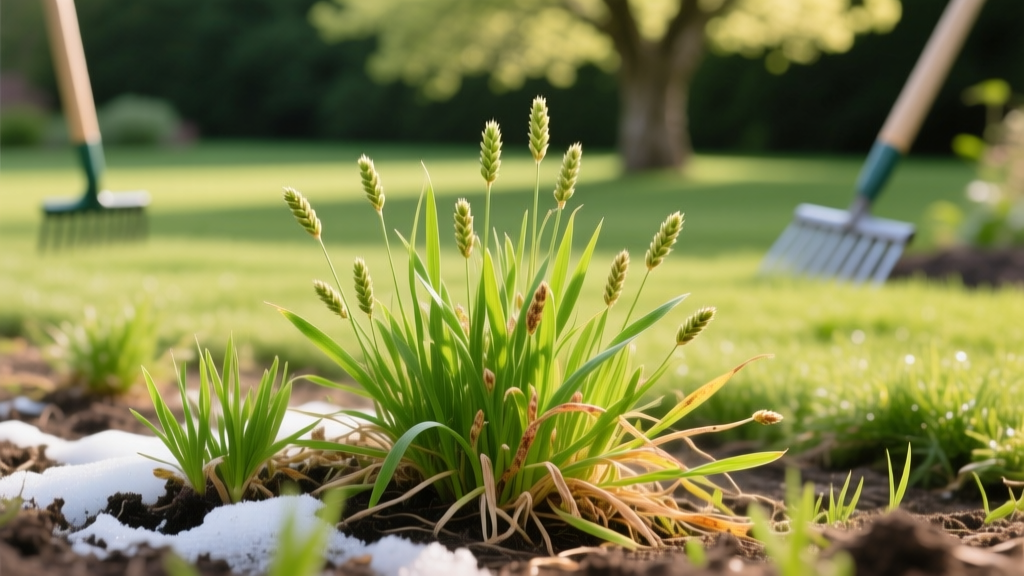
Annual Ryegrass Growth Stages: Diagnosing Spring Transition Problems
The Biological Clock: Why Timing is Everything
Annual ryegrass (Lolium multiflorum) is a champion of winter color, soil erosion control, and forage production. However, it becomes a severe liability when homeowners and turf managers misunderstand its biological clock. The most common complaint we diagnose at Lawns Guide is spring transition failure—where the ryegrass refuses to die off, aggressively choking out emerging warm-season grasses like Bermuda, Zoysia, or Centipede. To solve this, you must stop treating annual ryegrass as a static weed and start managing it based on its specific annual ryegrass growth stages. Misjudging these stages leads to wasted herbicide, herbicide resistance, and severe damage to your underlying permanent turf.
The 6 Critical Growth Stages of Annual Ryegrass
Termination failures almost always occur because herbicides are applied during the wrong physiological stage. Systemic herbicides rely on the plant's internal translocation system to move the active ingredient down to the roots. When the plant shifts its energy from root-building to seed-production, that translocation pathway reverses, trapping the herbicide in the upper stems.
| Growth Stage | Visual Indicator | Approx. GDD (Base 32°F) | Herbicide Susceptibility |
|---|---|---|---|
| 1. Germination | Seed swelling, single coleoptile emerging from soil. | 0 - 150 | N/A (Pre-emergents only) |
| 2. Seedling | 1 to 2 true leaves, shallow root system establishing. | 150 - 300 | High (Contact herbicides effective) |
| 3. Tillering | Multiple shoots from crown, dense mat forming, deep roots. | 300 - 600 | Maximum Susceptibility (Ideal termination window) |
| 4. Stem Extension (Jointing) | Nodes visible on lower stem, rapid upward vertical growth. | 600 - 900 | Declining (Systemic movement slows) |
| 5. Heading & Flowering | Seed head emerges from boot, pollen shedding. | 900 - 1200 | Low (Herbicides stall, plant survives) |
| 6. Seed Set & Senescence | Seeds harden, plant naturally yellows and dies. | 1200+ | None (Plant is already dying naturally) |
According to Penn State Extension, the absolute best window for chemical termination is during the late seedling to early tillering stage. Once the plant reaches the jointing stage (Stage 4), the vascular system prioritizes upward nutrient flow to support the developing seed head, rendering systemic chemicals like glyphosate highly ineffective.
Problem Diagnosis: Spring Transition Failures
Symptom 1: Warm-Season Grass is Choking and Thinning
The Problem: Your Bermuda or Zoysia grass is struggling to green up in May, and the ryegrass is still thick, dark green, and growing rapidly.
The Diagnosis: You missed the termination window. The ryegrass reached the stem extension stage, creating a dense canopy that shaded the soil. Warm-season grasses require soil temperatures of 65°F to 70°F to break dormancy. The ryegrass canopy kept the soil artificially cool, delaying your permanent turf's emergence while simultaneously stealing soil moisture and nitrogen.
Symptom 2: Herbicide Application Resulted in 'Stunted but Alive' Ryegrass
The Problem: You sprayed a standard glyphosate solution in mid-April. The ryegrass turned yellow for a week, then recovered and continued growing, albeit with twisted leaves.
The Diagnosis: You applied the herbicide during Stage 4 (Stem Extension) or Stage 5 (Heading). The 'yellow flash' was localized tissue damage, but because the plant was pushing energy upward to the seed head, the lethal dose never translocated to the crown and root system. Furthermore, applying glyphosate to mature ryegrass often induces a stress response that accelerates seed production, leading to a massive weed problem the following winter.
Precision Termination Strategies & Solutions
Chemical Termination Protocol (The Tillering Stage)
When the ryegrass is actively tillering (typically early to mid-March in transition zones, or late February in deep southern zones), execute this precise chemical protocol:
- Active Ingredient: Glyphosate (41% concentration, e.g., Ranger Pro, Roundup Pro Max). Current 2026 pricing for professional-grade 41% glyphosate averages $55 to $75 per gallon.
- Application Rate: 0.75 to 1.5 fluid ounces per 1,000 square feet (equivalent to 22 to 44 fl oz per acre). Use the lower rate for young seedlings, and the higher rate for dense, mature tillers.
- Water Conditioning (CRITICAL): Hard water contains calcium and magnesium ions that bind to glyphosate molecules, rendering them useless. You must add Ammonium Sulfate (AMS) at a rate of 8.5 to 17 lbs per 100 gallons of spray solution (or roughly 1/4 cup per gallon for backpack sprayers) before adding the glyphosate.
- Surfactant: If your glyphosate product does not contain a built-in surfactant, add a non-ionic surfactant (NIS) at 0.25% v/v to ensure the chemical penetrates the waxy ryegrass cuticle.
Non-Chemical Transition Management
If you are managing an organic lawn or want to reduce chemical inputs, you must manipulate the environment to favor the warm-season grass over the ryegrass during the transition.
- Gradual Mowing Height Reduction: Starting in early spring, lower your mowing height by 0.25 inches every 5 days. Scalping the ryegrass opens the canopy, allowing solar radiation to hit the soil and warm it up for the Bermuda/Zoysia below.
- Nitrogen Starvation: Do not apply nitrogen fertilizer in late spring. Withholding nitrogen forces the ryegrass into premature senescence (Stage 6) while allowing the deep-rooted warm-season grass to tap into residual soil nutrients.
- Heavy Irrigation Pulses: Warm-season grasses thrive on deep, infrequent watering. By switching from light daily watering (which favors shallow-rooted ryegrass) to deep, 45-minute watering sessions twice a week, you stress the ryegrass root system while encouraging your permanent turf.
The Ryegrass Troubleshooting Decision Matrix
Use this matrix to diagnose your current lawn status and determine the exact next step. This framework is adapted from turf management protocols published by Ohio State University Extension.
| Current Observation | Likely Growth Stage | Immediate Action Required |
|---|---|---|
| Ryegrass is 2-4 inches tall, dense, no visible stems. | Late Tillering (Stage 3) | SPRAY NOW. Apply glyphosate + AMS. This is your final optimal window. |
| Ryegrass is growing vertically, joints/nodes visible near soil. | Stem Extension (Stage 4) | MOW LOW & SPRAY. Mow to 1.5 inches to remove vertical growth, wait 3 days for regrowth, then apply maximum labeled rate of glyphosate. |
| Seed heads are visible, pollen is shedding. | Heading/Flowering (Stage 5) | MECHANICAL CONTROL. Herbicides will fail and trigger seed drop. Mow daily with a bagger to capture seeds. Accept a delayed warm-season green-up. |
| Ryegrass is yellowing at the base, roots pulling easily. | Senescence (Stage 6) | DO NOTHING. The plant is dying naturally. Begin your warm-season nitrogen fertilization program to push your permanent grass. |
Expert Turfgrass Insight: Never attempt to 'burn down' mature annual ryegrass with contact herbicides like Diquat or Glufosinate in late spring. While they will rapidly desiccate the top growth, the extensive crown and root system established during the tillering stage will simply push out new shoots within 10 days, forcing you to restart the termination process while your warm-season grass suffers in the shade.
Preventing Future Invasions
If your annual ryegrass went to seed this spring due to a mismanaged transition, you have created a seed bank in your soil. According to NC State Turfgrass Extension, annual ryegrass seed can remain viable in the soil profile for up to three years. To prevent a massive volunteer outbreak next winter, you must apply a high-quality pre-emergent herbicide (such as Prodiamine or Dithiopyr) in late summer when soil temperatures drop to 70°F, specifically targeting the fall germination window before your intentional winter overseeding or natural weed flush occurs.