
Grass Types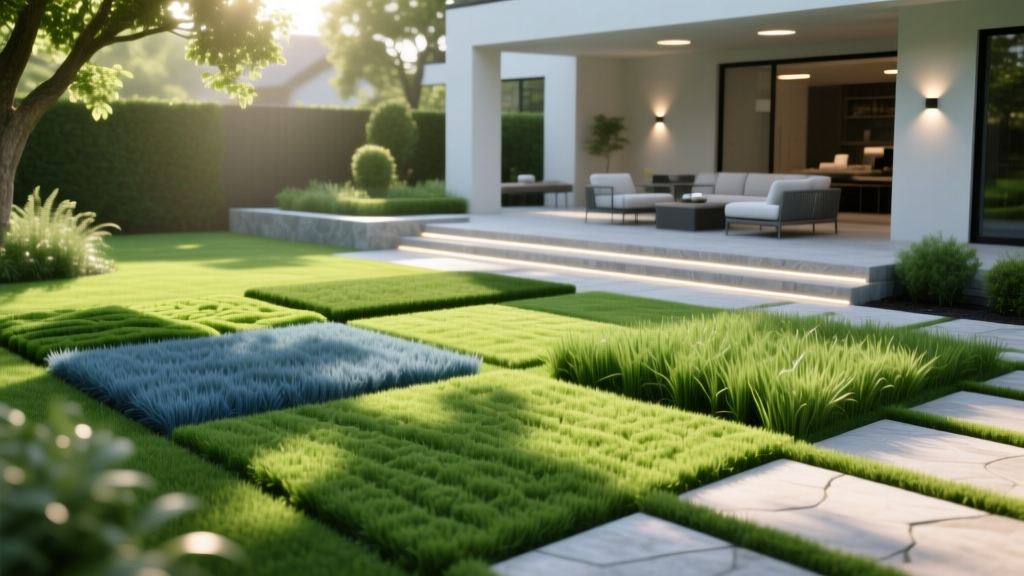
Artificial Turf Installation Cost Calculator & 2026 Pricing Guide
The Flaw in Online Artificial Turf Installation Cost Calculators
Most digital artificial turf installation cost calculators operate on a dangerously simplistic formula: total square footage multiplied by a flat regional rate (typically $8 to $14 per square foot). While this provides a rough ballpark, it completely ignores the site-specific variables that dictate actual project costs. A 500-square-foot flat lawn with easy wheelbarrow access will cost radically less per square foot than a 500-square-foot sloped backyard requiring concrete demolition, tree root excavation, and retaining wall integration.
To budget accurately in 2026, homeowners must abandon flat-rate web calculators and adopt a component-based estimation model. This requires calculating the exact tonnage of base materials, the precise poundage of infill, and the linear footage of seaming and border materials. Below is a comprehensive framework to manually calculate your true installation costs.
The 2026 True Cost Matrix: Material, Base, and Infill
Pricing for synthetic grass components has stabilized following the supply chain disruptions of the early 2020s, but premium materials command a distinct premium. Use this matrix to identify the specific materials required for your use case.
| Component | Material Specification | 2026 Average Cost | Coverage / Dosage |
|---|---|---|---|
| Landscape Turf | Polyethylene, 1.5" pile, 60 oz face weight | $2.80 - $4.20 / sq.ft. | 1.05x total area (for cuts) |
| Pet Turf | Perforated backing, 1.1" pile, 70 oz face weight | $3.50 - $5.50 / sq.ft. | 1.05x total area |
| Base Material | Class II Road Base or 3/8" Decomposed Granite | $45 - $75 / ton | See tonnage formula below |
| Standard Infill | Kiln-dried silica sand (20-30 mesh) | $18 - $25 / 50lb bag | 1.5 - 2.0 lbs / sq.ft. |
| Pet Infill | Zeolite or antimicrobial Envirofill | $35 - $55 / 50lb bag | 2.0 - 3.0 lbs / sq.ft. |
| Weed Barrier | 3 oz woven geotextile fabric | $0.25 - $0.40 / sq.ft. | 1.0x total area |
Step-by-Step Manual Coverage & Dosage Calculator
To generate an accurate materials list, you must calculate volume and weight, not just surface area. Follow these formulas to determine your exact material requirements.
1. Calculating Base Material Tonnage
A proper synthetic lawn requires a 3-inch to 4-inch compacted aggregate base to prevent settling and ensure drainage. The industry standard is Class II road base or 3/8-inch minus decomposed granite (DG), compacted to 95% Proctor density using a vibrating plate compactor.
Base Tonnage Formula:
Example: For a 600 sq.ft. lawn requiring a 3-inch base: 600 × 3 × 0.0052 = 9.36 tons of DG.
Total Square Footage × Desired Depth (in inches) × 0.0052 = Tons of Aggregate RequiredExample: For a 600 sq.ft. lawn requiring a 3-inch base: 600 × 3 × 0.0052 = 9.36 tons of DG.
Cost Application: If your local landscape supply yard charges $60 per ton for delivered DG, your base material cost is 9.36 × $60 = $561.60. Note that delivery fees for heavy aggregates often add $100 to $250 per truckload depending on proximity.
2. Infill Dosage and Weight Calculation
Infill is not optional; it weighs down the turf, protects the primary backing from UV degradation, and keeps the grass blades standing upright. Under-infilling is the leading cause of premature turf matting and warranty voidance.
Infill Dosage Formula:
Example: For 600 sq.ft. of pet turf requiring 2.5 lbs/sq.ft. of Zeolite: 600 × 2.5 = 1,500 lbs. At 50 lbs per bag, you need exactly 30 bags.
Total Square Footage × Target lbs/sq.ft. = Total Pounds RequiredExample: For 600 sq.ft. of pet turf requiring 2.5 lbs/sq.ft. of Zeolite: 600 × 2.5 = 1,500 lbs. At 50 lbs per bag, you need exactly 30 bags.
For pet applications, Zeolite is highly recommended due to its porous molecular structure, which traps ammonia gases from urine. Standard silica sand will not mitigate pet odors and can harbor bacteria over time.
Hidden Cost Variables That Break the Budget
When inputting data into an artificial turf installation cost calculator, homeowners frequently overlook the peripheral materials and labor intensifiers that inflate the final invoice. Factor in these specific edge cases:
- Concrete Demolition and Haul-Away: Removing an existing concrete patio or degraded asphalt driveway costs between $4.00 and $7.00 per square foot. Dump fees for masonry debris at local landfills average $65 to $110 per ton in 2026.
- Seaming Materials: Synthetic turf rolls are typically 15 feet wide. If your lawn is wider than 15 feet, you must seam multiple rolls. This requires 15-foot rolls of seaming tape ($22 each) and specialized urethane adhesive like Superseam Pro ($45 per gallon). A single gallon covers approximately 40 linear feet of seam.
- Perimeter Securing: Turf must be secured every 4 to 6 inches along the perimeter. If you are butting the turf against soil or flower beds, you must install bender board or composite edging ($3.50 per linear foot) and use 6-inch galvanized landscape spikes ($0.15 each).
- Slope and Drainage Modifications: If your yard slopes toward the foundation, a French drain or channel drain system must be installed beneath the turf base. Adding a 4-inch perforated PVC pipe wrapped in filter fabric adds roughly $18 to $25 per linear foot to the project.
ROI and Water Savings Payback Period
While the upfront capital expenditure for synthetic grass is significant, the long-term return on investment is driven by water conservation and maintenance elimination. According to the Environmental Protection Agency (EPA), outdoor water use accounts for nearly 30% of total household water consumption, with landscape irrigation representing the vast majority of that figure.
"Replacing natural turfgrass with synthetic alternatives or drought-tolerant landscaping can reduce outdoor water use by up to 70%, drastically altering the payback period for installation costs in regions with tiered water pricing." - UC Davis Center for Turfgrass Science
In high-cost water markets like Southern California or Nevada, where tiered water rates can exceed $15 per HCF (hundred cubic feet), a 1,000-square-foot natural lawn requiring 55 gallons per square foot annually costs roughly $300 to $450 per year just in water. When combined with the cost of mowing, fertilizing, and aerating (averaging $1,200 annually), a synthetic lawn typically achieves a break-even point in 5 to 7 years, after which it generates net positive savings for the remainder of its 15-to-20-year lifespan.
Frequently Asked Questions
Do I need to add a shock pad under the artificial turf?
A shock pad is generally only required if the turf is being installed over a hard surface like concrete, or if the area is designated for a playground where fall-height safety (HIC ratings) is a concern. For standard residential lawns installed over a properly compacted DG base, a shock pad is an unnecessary expense that can actually impede drainage if not specified correctly.
How much extra turf should I order for waste and cuts?
Always order a minimum of 5% to 10% over your exact measured square footage. If your lawn features complex curves, tight corners, or obstacles like trees and AC units, increase your waste factor to 15%. Turf has a directional grain (nap); all cuts must be laid with the grain facing the primary viewpoint, which can restrict how you utilize off-cuts.
Can I install the base material myself to save on labor?
Yes, base preparation is the most labor-intensive phase and accounts for up to 40% of professional labor costs. However, achieving the required 95% Proctor compaction density requires renting a heavy vibratory plate compactor (typically $85 to $120 per day). If the base is under-compacted, the turf will sink and pool water within the first year, requiring a total tear-out to fix.

