
Grass Types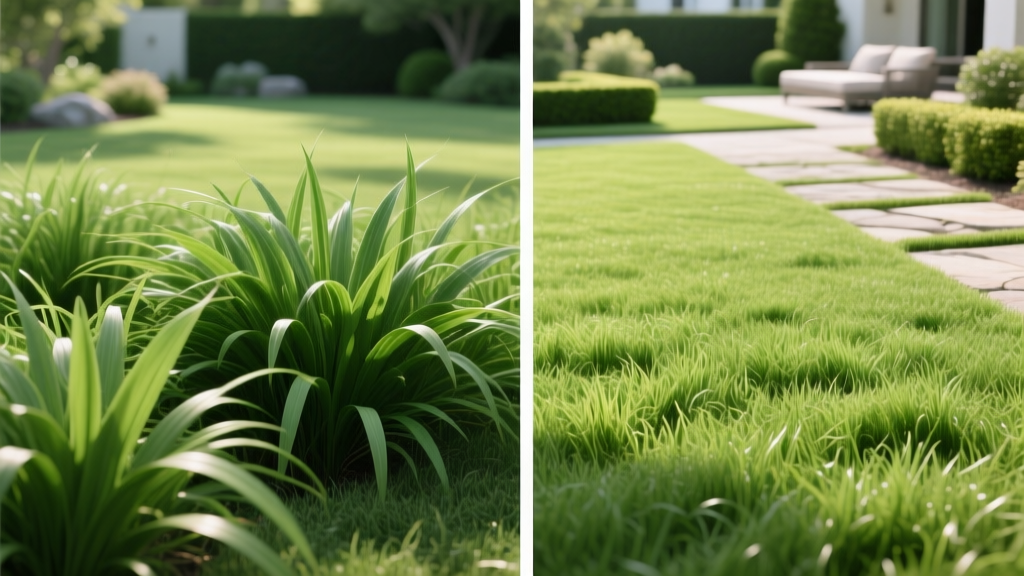
Bahia Grass vs Bermuda Grass: Ultimate Warm-Season Lawn Guide
The Core Divide: Soil and Climate Compatibility
Selecting between Paspalum notatum (Bahia) and Cynodon dactylon (Bermuda) requires looking past basic aesthetics to evaluate your property's underlying soil profile and microclimate. While both thrive in USDA Hardiness Zones 8 through 10, their root architectures dictate entirely different survival strategies during peak summer stress.
Bahia grass is the undisputed champion of poor, sandy, and acidic soils. It develops a massive, deep taproot system that can plunge up to 8 feet into the soil profile to access subterranean moisture. This makes it exceptionally resilient in coastal plains and scrub environments where topsoil is shallow and nutrient-poor. According to the University of Florida IFAS, Bahia's low fertility requirement is a direct result of this taproot efficiency, allowing it to survive where other turfgrasses would rapidly desiccate.
Bermuda grass, conversely, relies on an aggressive, shallow, fibrous root system paired with lateral rhizomes and stolons. It demands well-draining soil but requires higher baseline fertility and more frequent, shallow irrigation during droughts. Bermuda thrives in full sun and struggles significantly in shaded environments, whereas Bahia can tolerate very light, dappled shade, though neither is suitable for heavily canopied yards.
Expert Warning: Never plant Bahia grass in alkaline soils (pH above 7.0). Bahia is highly susceptible to iron chlorosis in high-pH environments, resulting in severe yellowing that nitrogen fertilizer cannot fix. Bermuda grass is far more adaptable to neutral and slightly alkaline soil profiles.
Head-to-Head Turf Comparison Matrix
The following data matrix breaks down the agronomic differences between standard common varieties and improved hybrid cultivars of both species.
| Feature | Bahia Grass | Bermuda Grass |
|---|---|---|
| Optimal Mowing Height | 3.0 - 4.0 inches | 0.5 - 1.5 inches (Hybrids) |
| Nitrogen Requirement | 1 - 2 lbs N / 1,000 sq ft / yr | 3 - 6 lbs N / 1,000 sq ft / yr |
| Drought Strategy | Deep taproot water foraging | Dormancy and rapid recovery |
| Wear / Traffic Tolerance | Moderate (Slow recovery) | Exceptional (Rapid lateral spread) |
| Thatch Production | Very Low | High (Requires annual verticutting) |
| Establishment Cost (Seed) | $5 - $9 per lb (High germination) | $15 - $25 per lb (Coated/Hulled) |
Deep Dive: Maintenance, Mowing, and Hidden Costs
The long-term financial and labor footprint of these two grasses diverges sharply after establishment. Homeowners often choose based on initial seed or sod costs, only to be surprised by the ongoing maintenance requirements.
Mowing and Thatch Management
Bahia grass features a coarse, open canopy and tough, fibrous stems that require a sharp rotary mower blade. Dull blades will shred the leaf tissue, leading to white, ragged tips that invite fungal pathogens. Because it grows vertically rather than laterally, Bahia produces almost zero thatch, eliminating the need for mechanical dethatching.
Bermuda grass demands precise mowing. Common Bermuda can be maintained at 1.5 inches with a rotary mower, but improved hybrids like TifTuf or Celebration require a reel mower to achieve the optimal 0.5 to 1.0-inch cutting height without scalping. Furthermore, Bermuda's aggressive stolon production creates a dense thatch layer. The Clemson University Home & Garden Information Center recommends annual core aeration and vertical mowing (verticutting) in late spring to prevent the thatch layer from exceeding 0.5 inches, which otherwise blocks water infiltration and harbors turf diseases.
Fertilization and Iron Chlorosis
Bermuda is a heavy feeder. To maintain a dense, dark green carpet, expect to apply 3 to 6 pounds of nitrogen per 1,000 square feet annually, split into monthly applications from May through September. Bahia requires only 1 to 2 pounds of nitrogen annually. Over-fertilizing Bahia leads to excessive top growth, weakening the taproot and increasing mowing frequency without improving turf density.
Pro Tip for Bahia Lawns: If your Bahia grass turns yellow between the veins while the veins remain green, it is suffering from iron chlorosis, not a nitrogen deficiency. Apply a liquid chelated iron or ferrous sulfate spray at a rate of 2 to 3 ounces per 1,000 square feet to restore color within 48 hours.
Traffic Tolerance and Recovery Rates
If your lawn will host active children, large dogs, or frequent outdoor entertaining, Bermuda grass is the mandatory choice. Its dual reproductive system—spreading via above-ground stolons and below-ground rhizomes—allows it to rapidly fill in divots and recover from tearing. A damaged patch of hybrid Bermuda can knit back together in 14 to 21 days during peak summer growth.
Bahia grass lacks rhizomes entirely. It spreads slowly via short stolons and relies on its deep root system for survival rather than lateral expansion. Heavy foot traffic will quickly compact the soil around Bahia's crown, leading to bare, muddy patches that may take an entire growing season to naturally reseed and fill. For high-traffic utility areas, University of Georgia Extension specialists consistently rate Bermuda as the superior warm-season athletic and utility turf.
Top Cultivar Recommendations for Current Plantings
Avoid generic 'common' seed mixes if you want a refined lawn. Modern breeding has produced cultivars that solve many of the historical complaints associated with these species.
Elite Bahia Cultivars
- Argentine: The standard for residential Bahia lawns. It features a darker green color, denser canopy, and fewer seedheads than Pensacola. Best established via sod or high-quality seed.
- TifQuik: A breakthrough variety released by the USDA-ARS. TifQuik germinates and establishes up to 75% faster than standard varieties, significantly reducing the window of vulnerability to weed invasion during the seeding phase.
- Pensacola: Features a narrower leaf blade and slightly better cold tolerance, making it viable for the northernmost edges of the Bahia transition zone, though it produces prolific, unsightly Y-shaped seedheads.
Elite Bermuda Cultivars
- TifTuf: The current gold standard for drought resistance. TifTuf uses 25% less water than other Bermuda varieties while maintaining high traffic tolerance. Available primarily as sod or sprigs.
- Celebration: One of the few Bermuda grasses that exhibits moderate shade tolerance. It features a deep blue-green color and aggressive stolon growth, making it ideal for yards with partial tree cover.
- Latitude 36: Bred specifically for cold hardiness, Latitude 36 pushes the Bermuda boundary further north into the transition zone, surviving winter temperatures that would kill standard coastal Bermuda varieties.
Decision Framework: Choosing Your Warm-Season Champion
Use this diagnostic flow to finalize your turf selection based on your specific property constraints:
Choose Bahia Grass If:
- Your soil is predominantly deep sand with low organic matter.
- Your soil pH is acidic (below 6.5).
- You want to minimize annual fertilizer costs and mowing frequency.
- You are establishing a low-maintenance roadside, acreage, or utility lawn.
Choose Bermuda Grass If:
- You require a dense, carpet-like aesthetic with fine leaf texture.
- The lawn will experience heavy foot traffic from pets or sports.
- You have full, unfiltered sun exposure (minimum 8 hours daily).
- You are willing to invest in a reel mower, annual aeration, and higher nitrogen inputs.
Ultimately, matching the turf to your soil's natural limitations is the most critical factor in warm-season lawn care. Forcing Bermuda into nutrient-starved sand or planting Bahia in alkaline clay will result in a perpetual cycle of chemical corrections and turf decline. Select the grass that naturally thrives in your existing dirt, and your long-term maintenance costs will drop significantly.

