
Grass Types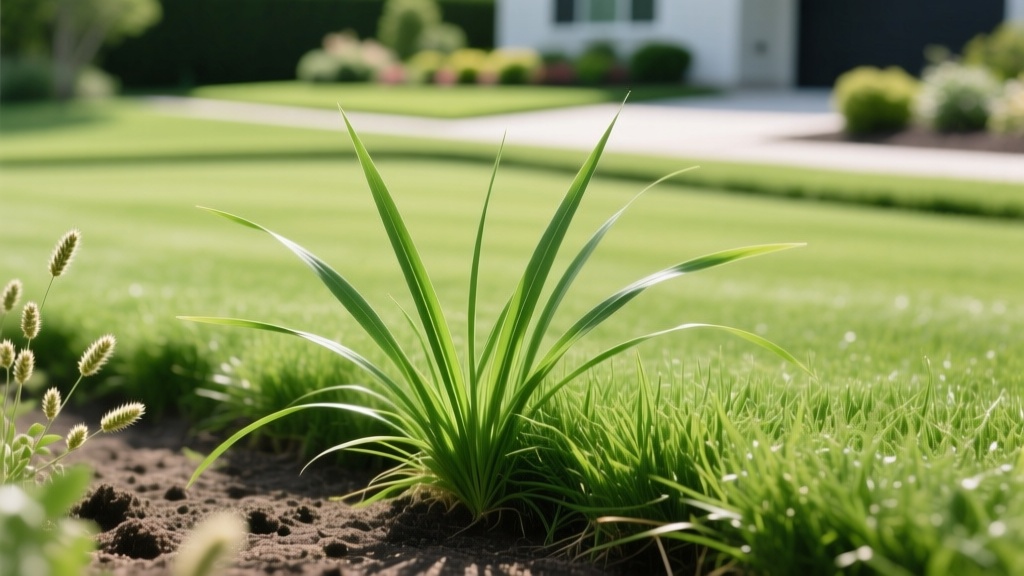
Bentgrass in Lawns: How to Identify, Grow, or Eradicate It
The Dual-Nature Grass: Weed or Specialty Turf?
Creeping bentgrass (Agrostis stolonifera) occupies a unique space in turf management. On golf courses and bowling greens, it is a highly prized, meticulously maintained cool-season grass known for its dense, carpet-like surface. In a standard residential lawn composed of Kentucky bluegrass, tall fescue, or perennial ryegrass, it is an aggressive, shallow-rooted weed that disrupts uniformity and dies back in summer heat.
For homeowners, encountering bentgrass usually triggers a critical decision: eradicate it to restore the primary lawn, or lean into its characteristics to build a specialty feature like a backyard putting green. This guide provides exact identification markers, chemical eradication protocols with precise mixing rates, and the agronomic requirements for cultivating bentgrass intentionally.
How to Identify Bentgrass in Your Lawn
Before applying any herbicide or altering your mowing regimen, you must confirm the grass species. Bentgrass is frequently misidentified as bermudagrass or quackgrass. According to the UC Statewide IPM Program, accurate identification relies on examining the stolons, ligules, and root depth.
Key Diagnostic Features
- Stolons: Creeping bentgrass spreads via above-ground lateral stems (stolons) that root at the nodes. Unlike bermudagrass, these stolons are delicate, thin, and lack the hairy sheaths found on warm-season grasses.
- Ligule: The ligule (the membrane where the leaf blade meets the sheath) is prominent, membranous, and pointed, often extending up to 0.25 inches. This is a primary differentiator from bluegrasses, which have shorter, boat-shaped leaf tips.
- Leaf Texture: The blades are exceptionally fine, narrow (1-3 mm wide), and have a distinct bluish-green or grayish-green hue when stressed.
- Root System: Roots are notoriously shallow, often confined to the top 1-2 inches of soil, making the grass highly susceptible to drought and summer heat stress.
Bentgrass vs. Common Lookalikes
| Feature | Creeping Bentgrass | Quackgrass | Bermudagrass |
|---|---|---|---|
| Spread Mechanism | Above-ground stolons | Underground rhizomes | Stolons and rhizomes |
| Ligule Shape | Membranous, pointed, long | Membranous, short, collar-like | Hairy fringe |
| Leaf Tip | Sharp, pointed | Blunt, boat-shaped | Sharp, pointed |
| Seasonal Growth | Cool-season (Spring/Fall) | Cool-season (Spring/Fall) | Warm-season (Summer) |
Eradication Protocol: Removing Bentgrass from Cool-Season Lawns
If bentgrass is invading your fescue or bluegrass lawn, physical removal is rarely effective because any stolon fragment left in the soil will regenerate. Chemical control requires selective herbicides that target bentgrass without harming your desirable turf.
⚠️ Herbicide Safety Warning: Always wear chemical-resistant gloves, long sleeves, and eye protection when mixing and applying herbicides. Keep pets and children off treated areas until the application is completely dry.
Step 1: Selective Control with Mesotrione (Tenacity)
Mesotrione (commonly sold under the brand name Tenacity) is the industry standard for selectively controlling bentgrass in cool-season lawns. It works by inhibiting photosynthesis, causing the bentgrass to turn bright white before dying, while leaving Kentucky bluegrass and tall fescue largely unaffected.
- Mixing Rate: Mix 0.5 teaspoons (approx. 0.125 fl oz) of Tenacity 40% SC with 1 gallon of water to treat 1,000 square feet.
- Surfactant: Add 0.5 teaspoons of a non-ionic surfactant (NIS) to the mixture to ensure the chemical adheres to the fine bentgrass blades.
- Application Schedule: Apply every 14 to 21 days for a maximum of three applications. Expect the bentgrass to bleach white within 7 days of the first application.
- Cost Expectation: A 4 oz bottle of generic mesotrione costs between $40 and $60 in 2026, which is sufficient to treat up to 2 acres, making it highly cost-effective for spot treatments.
Step 2: Non-Selective Spot Treatment for Heavy Infestations
If the bentgrass has formed large, contiguous patches exceeding 3 feet in diameter, selective herbicides may take too long. Use a 2% glyphosate solution (e.g., Roundup Pro) applied via a pump sprayer or a wick applicator. Paint the glyphosate directly onto the bentgrass blades to avoid collateral damage to surrounding desirable grass. Wait 14 days for complete necrosis, rake out the dead thatch, and overseed the bare spots with your primary turf species at a rate of 4-6 lbs per 1,000 sq ft.
Cultivating Bentgrass: The Backyard Putting Green Guide
For homeowners who want to harness bentgrass for a high-end backyard putting green or bowling green, standard lawn care practices will fail. Bentgrass requires intensive, specialized agronomy. Penn State Extension notes that creeping bentgrass demands precise mowing equipment, specialized soil profiles, and rigorous disease management.
Essential Equipment and Soil Requirements
- Reel Mower Requirement: Rotary mowers cannot achieve the 0.125 to 0.250-inch cutting height required for bentgrass without severe scalping. You must invest in a walk-behind reel mower. A new Toro Greensmaster 1000 costs roughly $2,800, while a McLane 20-inch front-throw reel mower is available for approximately $1,200. Used commercial units can be found for $600-$900.
- USGA Soil Spec: Bentgrass suffocates in heavy clay. A putting green must be constructed using a USGA-spec root zone mix: 90% coarse, angular sand and 10% sphagnum peat moss by volume. This ensures rapid drainage and prevents soil compaction.
- Topdressing: Apply 0.05 inches of topdressing sand (particle size 0.25-0.50 mm) every 2 to 3 weeks during the growing season to dilute thatch and maintain surface firmness.
Disease Management: The Dollar Spot Threat
Bentgrass is highly susceptible to Dollar Spot (Clarireate jacksonii), a fungal pathogen that creates silver-dollar-sized bleached lesions. During the high-humidity months of June through August, preventative fungicide applications are non-negotiable.
Expert Protocol: Apply Azoxystrobin (Heritage SC) at a rate of 0.4 to 0.8 fl oz per 1,000 sq ft every 14 to 21 days. Rotate with a contact fungicide like Chlorothalonil (Daconil) every third application to prevent pathogen resistance.
Cost and Effort Comparison Matrix
Deciding whether to eradicate or cultivate bentgrass requires a realistic assessment of your budget and time commitment. The matrix below outlines the annual resource requirements for both paths.
| Metric | Eradication (Restoring Bluegrass/Fescue) | Cultivation (Maintaining a Putting Green) |
|---|---|---|
| Initial Capital Cost | $50 - $150 (Herbicides, seed, surfactant) | $2,500 - $8,000+ (Reel mower, sand, sod/seed) |
| Annual Chemical Cost | $20 - $40 (Spot treatment, standard pre-emergents) | $300 - $600 (Preventative fungicides, PGRs) |
| Mowing Frequency | 1-2 times per week (Standard rotary mower) | 5-7 times per week (Specialized reel mower) |
| Irrigation Needs | 1 to 1.5 inches per week (Deep, infrequent) | Syringing daily; deep watering 2-3 times weekly |
| Skill Level Required | Beginner / Intermediate | Advanced / Professional Turf Manager |
The Homeowner Decision Tree
Do you have the time to mow 6 days a week and a budget exceeding $1,000 for specialized equipment?
- Yes: Embrace the bentgrass. Aerate heavily, transition to a reel mower, and implement a strict preventative fungicide rotation to build a professional-grade putting surface.
- No: Eradicate immediately. Use mesotrione for selective removal or glyphosate for spot treatments, followed by core aeration and overseeding with a modern, drought-tolerant tall fescue blend to outcompete future bentgrass invasions.

