Grass Types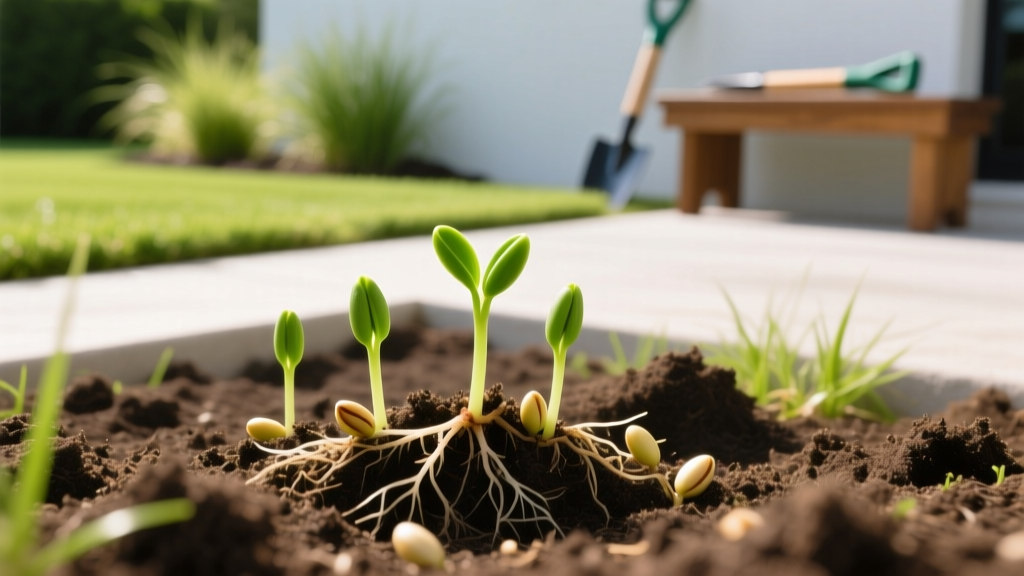
Bermuda Grass Germination: Soil Temps, Timelines, and Seeding Secrets
Establishing a lawn from seed costs roughly $0.15 per square foot compared to $0.60 for sod, but bermuda grass germination demands strict environmental control. Unlike cool-season grasses that forgive minor timing errors, bermuda (Cynodon dactylon) requires precise soil thermodynamics, exact sowing depths, and a rigorous hydration matrix to transition from seed to established turf. This guide details the exact parameters required for successful establishment.
The Non-Negotiable Soil Temperature Thresholds
Air temperature is a deceptive metric for warm-season grasses. Bermudagrass seed will remain dormant or rot in cool soil, even if the ambient air feels warm. Germination enzymatic activity requires sustained heat at the root zone level.
Core Temperature Requirements:
- Minimum Threshold: 65°F at a 2-inch soil depth.
- Optimal Range: 70°F to 75°F at a 2-inch soil depth.
- Ceiling: Soil temperatures exceeding 95°F can induce seed dormancy or desiccate emerging radicles.
Measure soil temperature using a digital soil probe thermometer at 8:00 AM and 4:00 PM for three consecutive days before sowing. In most transitional and southern zones, this window aligns with late May through early July. According to the Clemson University Extension, planting before the soil consistently reaches 65°F at a 2-inch depth is the primary cause of early-season seeding failure.
Hulled vs. Unhulled Seed and Cultivar Selection
Bermuda seed is sold in two physical forms: hulled and unhulled. The hull is the outer protective husk. Removing it (hulling) exposes the seed to moisture faster, accelerating germination but increasing the price and vulnerability to rot if overwatered.
Top Seeded Cultivar Comparison Matrix
| Cultivar | Seed Type | Germination Timeline | Cost per lb (2026) | Best Use Case |
|---|---|---|---|---|
| Yukon | Hulled | 10-14 Days | $14 - $18 | Transition zone; high cold tolerance |
| Princess 77 | Hulled | 7-10 Days | $16 - $22 | High-density lawns; dark green color |
| Arden 15 | Hulled | 10-14 Days | $15 - $20 | Fine texture; golf course aesthetics |
| Common Bermuda | Unhulled | 14-21 Days | $6 - $9 | Budget pastures; erosion control |
For residential lawns, hulled improved cultivars like Princess 77 or Yukon are mandatory. Unhulled common bermuda produces a coarse, open canopy that is highly susceptible to weed invasion.
Precision Seedbed Preparation and Sowing
Bermuda seed is exceptionally small (approximately 1.5 million seeds per pound). It lacks the endosperm energy reserves to push through compacted soil or deep burial. Seed-to-soil contact is the most critical mechanical factor in establishment.
Step-by-Step Sowing Protocol
- Till and Grade: Rototill the top 4 to 6 inches of soil. Rake smooth and remove all debris larger than a pebble.
- Pre-Compact: Use a water-filled lawn roller to firm the seedbed. This prevents the seed from washing into low spots during irrigation.
- Calculate Seed Rate: Apply hulled seed at a rate of 1.5 to 2.0 lbs per 1,000 square feet. Unhulled requires 2.5 to 3.0 lbs per 1,000 square feet.
- Broadcast and Incorporate: Split the seed in half. Broadcast one half horizontally and the other vertically. Drag a piece of chain-link fence or a stiff broom over the soil to incorporate the seed to a depth of exactly 1/8 to 1/4 inch.
- Topdress (Optional but Recommended):strong> Apply a 1/8-inch layer of screened compost or peat moss to retain moisture and prevent soil crusting.
Warning: The Burial Trap
Burying bermuda seed deeper than 1/4 inch will result in near-total germination failure. The seedling will exhaust its energy reserves before reaching the soil surface. If you cannot see the seed resting on the soil surface after sowing, you have buried it too deep.
Burying bermuda seed deeper than 1/4 inch will result in near-total germination failure. The seedling will exhaust its energy reserves before reaching the soil surface. If you cannot see the seed resting on the soil surface after sowing, you have buried it too deep.
The 21-Day Germination Watering Matrix
Overwatering causes Pythium blight (damping-off disease), while underwatering desiccates the shallow radicle. The UC Statewide IPM Program emphasizes keeping only the top half-inch of soil moist during the initial germination phase. Use the following matrix to calibrate your irrigation controller.
| Phase | Days | Watering Frequency | Duration per Zone | Objective |
|---|---|---|---|---|
| Imbibition | 1 - 7 | 3 to 4 times daily | 3 - 5 minutes | Keep top 1/2 inch continuously moist; prevent seed drying. |
| Radicle Emergence | 8 - 14 | 2 times daily | 5 - 8 minutes | Encourage shallow root anchoring; reduce surface algae growth. |
| Seedling Establishment | 15 - 21 | 1 time daily | 10 - 15 minutes | Train roots deeper; allow surface to dry slightly between cycles. |
Common Germination Failure Modes and Fixes
Even with perfect temperatures, environmental variables can disrupt establishment. Identify and correct these issues immediately upon noticing symptoms.
- Soil Crusting: Heavy clay soils form a hard cap after watering, trapping seedlings underground. Fix: Lightly drag a leaf rake over the crusted areas or apply a thin layer of fine compost to break surface tension.
- Damping-Off (Pythium): Seedlings sprout but collapse at the soil line, turning brown and mushy. This is caused by excessive moisture and poor drainage. Fix: Reduce watering frequency immediately. Apply a preventive fungicide containing Azoxystrobin or Propiconazole at the labeled curative rate.
- Bird Predation: Flocks consuming seed before it germinates. Fix: Avoid using straw as a mulch, as it often contains weed seeds and hides birds. Instead, use a biodegradable germination blanket or rely on the 1/8-inch compost topdressing to camouflage the seed.
Transitioning from Germination to Establishment
Once the turf reaches a uniform height of 2 inches (typically 21 to 28 days post-sowing), the germination phase ends and the establishment phase begins.
Apply a starter fertilizer with a high phosphorus content, such as a 10-18-10 or 24-25-4 NPK ratio, at a rate of 1.0 lb of actual Nitrogen per 1,000 square feet. Phosphorus is critical for accelerating lateral stolon development. Follow this with the first mowing. Set your mower deck to 1.5 inches and ensure the blades are freshly sharpened. Dull blades will tear the shallow-rooted seedlings out of the soil entirely. Gradually reduce watering to every third day, applying 0.5 inches of water per session to force the root zone deeper into the soil profile.