
Grass Types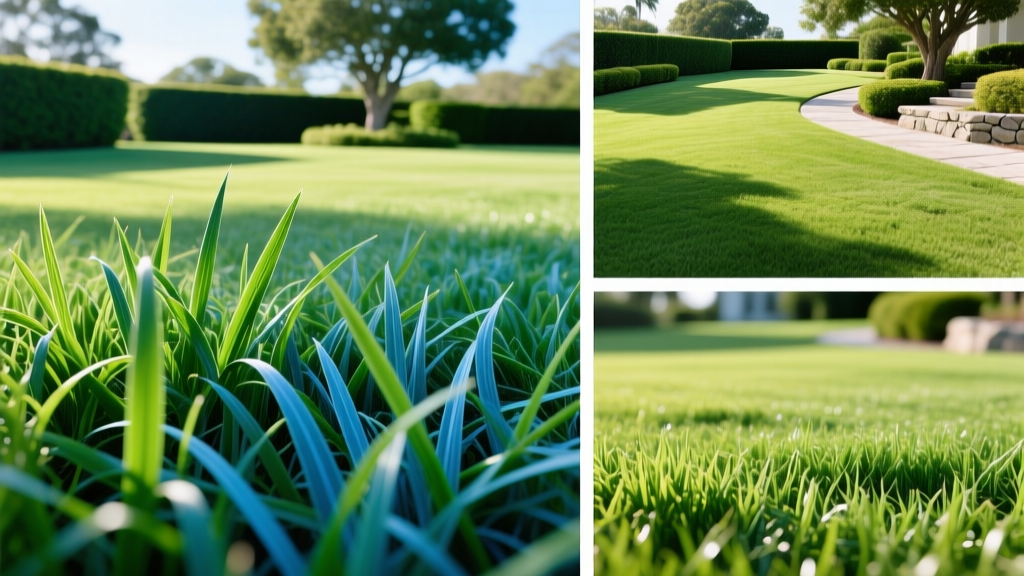
Bermuda Grass Images: Visual Guide to Identification and Care
Decoding Visual Cues: Why Bermuda Grass Identification Matters
When homeowners search for bermuda grass images, they are usually trying to solve a specific problem: confirming their grass species, diagnosing a mysterious brown patch, or determining if their lawn is dormant or dead. Cynodon dactylon and its hybrid variants are the workhorses of the warm-season transition zone and southern United States, but their aggressive growth habits and specific environmental needs require precise management. Misidentifying your turf or its ailments based on a quick visual glance often leads to the wrong chemical applications, wasted money, and severe lawn damage.
This guide moves beyond generic turf descriptions. We will break down the exact morphological features visible in high-quality bermuda grass images, provide a diagnostic framework for seasonal color shifts, and outline a data-driven care protocol for modern hybrid cultivars.
The Anatomy of Cynodon: What to Look For in Close-Up Images
To confidently identify bermuda grass from a photograph or in your yard, you must examine the collar region and growth habit. According to the NC State University TurfFiles database, bermuda grass possesses a unique combination of vegetative traits that separate it from Zoysia, Centipede, and St. Augustine.
- Vernation (Bud Leaf): Folded. If you unroll the newest leaf at the tip of the shoot, it will open from a folded state, unlike bahiagrass which is rolled.
- Ligule: Membranous with a distinct fringe of hairs (ciliate). This is the most reliable visual identifier in macro images. The hairy collar wraps around the stem where the leaf blade meets the sheath.
- Auricles: Absent. Bermuda grass lacks the claw-like appendages found on ryegrass or tall fescue.
- Growth Habit: Both stolons (above-ground runners) and rhizomes (below-ground runners) are present. This dual-spreading mechanism is why bermuda recovers from damage faster than almost any other warm-season species.
- Leaf Blade: Typically 1/8 to 1/4 inch wide, flat, and sharply pointed. Hybrid varieties exhibit significantly finer blades than common seeded types.
Field Test: The Pull-Apart Method
If images aren't enough, grab a single bermuda stolon and pull it apart at the node. You will feel a distinct "snap" and see a complex network of vascular bundles. The nodes are often slightly swollen and can root within 48 hours if pressed into moist soil.
Seasonal Color Shifts: Dormancy vs. Death Matrix
One of the most common reasons users analyze bermuda grass images in late fall or early spring is to determine turf viability. Bermuda enters winter dormancy when soil temperatures at a 2-inch depth drop below 55°F. However, drought stress or winterkill can mimic dormancy. Use this diagnostic matrix to evaluate your lawn's status.
| Visual / Physical Indicator | Winter Dormancy (Healthy) | Winterkill / Dead Turf |
|---|---|---|
| Canopy Color | Uniform straw-brown or tan | Patchy gray-brown, blackened, or bleached white |
| Crown Condition | Firm, white/pale yellow at the soil line | Mushy, dark brown, or brittle and dry |
| Stolon Flexibility | Pliable; bends without snapping | Snaps cleanly with a dry crunch |
| Root Attachment | Firmly anchored; requires effort to pull | Pulls up effortlessly with no resistance |
| Spring Recovery | Green shoots emerge from nodes as soil hits 65°F | No green tissue after 3 weeks of warm soil |
Diagnosing Pathogens: Visual Disease Identification
Bermuda grass is highly susceptible to specific fungal pathogens during the humid transition seasons (spring and fall). When comparing your lawn to disease reference images, look for these precise symptom profiles.
1. Spring Dead Spot (Ophiosphaerella korrae)
Visual Profile: Circular, sunken patches ranging from 6 inches to several feet in diameter. The margins are distinct, and the grass within the circle is completely bleached and dead upon spring green-up.
The Science: The fungus actually infects the roots, rhizomes, and stolons in the fall when soil temperatures drop to 70°F. The damage only becomes visible when the grass attempts to break dormancy in spring.
Actionable Fix: Spring fungicide applications are largely ineffective. You must apply a preventive DMIs (Demethylation Inhibitors) like Propiconazole (e.g., Banner MAXX at 2 fl oz/1,000 sq ft) or Tebuconazole in September and October when soil temperatures hit 70°F.
2. Dollar Spot (Clarireedia jacksonii)
Visual Profile: Small, silver-dollar-sized (2 to 6 inches) bleached spots that may coalesce into large irregular patches. In the early morning dew, you may see white, cobweb-like mycelium.
Key Identifier: Look closely at individual leaf blades. Dollar spot creates distinct hourglass-shaped lesions with purplish-brown borders.
Actionable Fix: This pathogen thrives in low-nitrogen environments. Apply a quick-release nitrogen fertilizer (0.5 lbs N/1,000 sq ft) to stimulate growth, combined with a contact fungicide like Fluazinam or a systemic like Azoxystrobin (Heritage DF at 0.4 oz/1,000 sq ft).
Cultivar Selection: Common vs. Hybrid Visual Differences
Not all bermuda grass looks the same. The visual density, color, and blade width vary drastically between seeded common varieties and vegetative hybrids. According to Clemson University Extension, selecting the right cultivar dictates your entire mowing and maintenance regimen.
"The shift toward ultra-dwarf and fine-textured hybrid bermudagrasses has fundamentally changed residential lawn care, requiring reel mowers and frequent, precise nitrogen spoon-feeding to maintain optimal visual density."
— Dr. Clint Waltz, Turfgrass Extension Specialist
- Common Bermuda (e.g., Sahara, Princess 77): Coarse texture, lighter green color, prominent seed heads if not mowed. Mowing Height: 1.5 to 2.5 inches (Rotary mower acceptable).
- Standard Hybrids (e.g., Tifway 419): Dense, dark green, fine texture. The industry standard for decades. Mowing Height: 0.75 to 1.5 inches (Reel mower preferred).
- Modern Elite Hybrids (e.g., TifTuf, Latitude 36): Exceptional drought tolerance (TifTuf) and cold tolerance (Latitude 36). Extremely fine blade, high shoot density, deep emerald color. Mowing Height: 0.5 to 1.0 inches (Reel mower mandatory for best appearance).
The 2026 Warm-Season Maintenance Protocol
To achieve the pristine, carpet-like visual density seen in professional turf images, you must follow a strict, data-driven agronomic calendar. The following protocol assumes a mature, established hybrid bermuda lawn in the transition zone.
- Soil Testing (February): Pull 10-15 core samples at a 4-inch depth. Bermuda requires a soil pH between 6.0 and 6.5. If pH is below 5.8, apply pelletized limestone at the rate prescribed by your local extension lab.
- Spring Green-Up (April/May): Once the lawn is 50% green, apply a 32-0-4 or similar high-nitrogen, low-phosphorus fertilizer at a rate of 1.0 lb of actual Nitrogen per 1,000 sq ft. Apply Prodiamine pre-emergent if not done in late winter.
- Peak Summer (June - August): Bermuda is a heavy feeder. Apply 0.5 to 1.0 lbs of Nitrogen per 1,000 sq ft every 30 days. Use a fertilizer with micronutrients (specifically Iron and Manganese) to prevent chlorosis (yellowing) in high-pH soils.
- Mowing Frequency: During peak growth, hybrid bermuda requires mowing every 3 to 4 days. Never remove more than 1/3 of the leaf blade in a single cut. If you fall behind, lower the mower gradually over three cuts rather than scalping the lawn.
- Fall Winterization (September): Switch to a 0-0-7 or 5-10-15 fertilizer. The goal is to build potassium levels in the root zone to enhance cold hardiness and protect against Spring Dead Spot. Stop nitrogen applications 6 weeks before the first historical frost date.
Mastering the visual identification of your turf is the first step toward a resilient lawn. By understanding the specific morphological traits, seasonal color shifts, and disease signatures of Cynodon dactylon, you can transition from reactive guessing to proactive, precision turf management.

