
Grass Types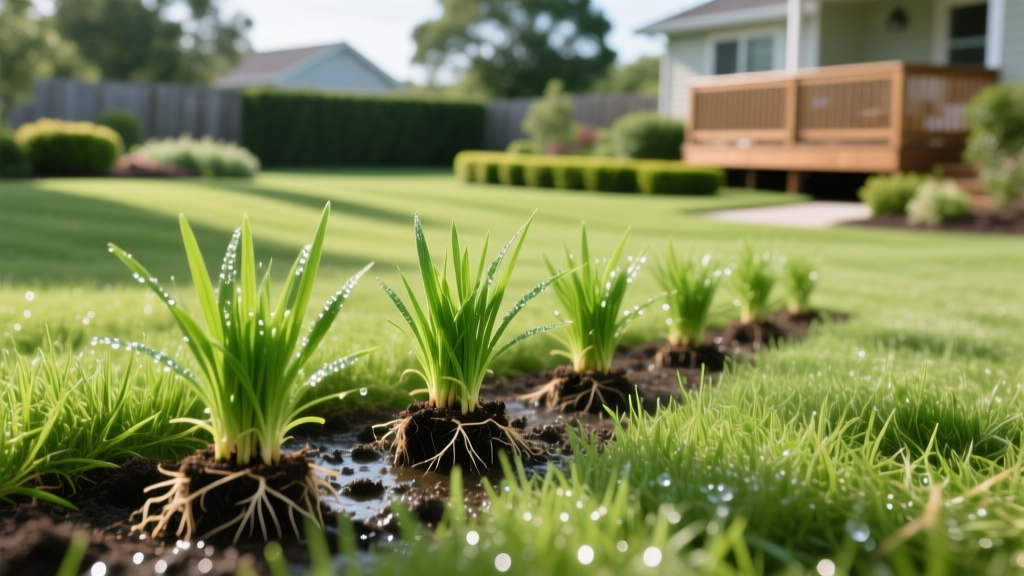
Bermuda Grass Plugs: Spacing, Planting, and Establishment Guide
Hybrid bermudagrasses (Cynodon dactylon × C. transvaalensis) offer superior drought tolerance, wear recovery, and density compared to common seeded varieties. However, because these elite hybrids are sterile, they cannot be grown from seed. While solid sodding provides an instant lawn, it costs between $0.45 and $0.75 per square foot. Planting bermuda grass plugs reduces material costs by up to 75%, leveraging the aggressive lateral stolon growth of warm-season cultivars to fill in bare soil over a single growing season.
Why Choose Plugs Over Sod or Seed?
Common bermudagrass can be seeded, but it lacks the rhizomatous density and shade tolerance of sterile hybrids. Plugs bridge the gap between the low cost of seed and the immediate coverage of sod. A standard 3-inch by 3-inch plug contains an established micro-sod network of roots and stolons, bypassing the fragile 21-day germination window required by seeds.
Cost-Benefit Breakdown (per 500 sq. ft.):
- Hybrid Sod: $225 – $375 (plus heavy delivery fees and manual labor)
- Bermuda Seed (Common): $15 – $25 (high weed competition, inferior traffic tolerance)
- Hybrid Plugs (12" spacing): $100 – $180 (requires 500 plugs, moderate labor, 60-90 day fill-in)
Selecting the Right Hybrid Cultivar
Not all bermuda grass plugs perform equally. Your USDA Hardiness Zone, soil type, and shade profile dictate which cultivar will survive. According to NC State Extension TurfFiles, selecting a regionally adapted hybrid is the primary determinant of long-term turf density.
| Cultivar | Drought Tolerance | Shade Tolerance | Best Use Case |
|---|---|---|---|
| TifTuf | Exceptional | Moderate | Water-restricted zones, high-traffic athletic fields |
| Tifway 419 | High | Low | Full-sun residential lawns, golf course fairways |
| Celebration | High | High (for Bermuda) | Yards with partial tree canopy, deep blue-green color |
Spacing Matrices and Plug Quantities
The distance between plugs dictates your material cost and the time required for the lawn to achieve 100% canopy closure. Bermuda stolons can grow 1 to 2 feet per month under optimal summer temperatures (85°F–95°F soil temps).
Calculate Your Required Plug Count
Use this matrix to determine how many trays to order based on your target establishment timeline. Formulas assume standard 3"x3" plugs.
| Spacing Grid | Plugs per Sq. Ft. | Plugs for 500 Sq. Ft. | Estimated Fill Time |
|---|---|---|---|
| 6" x 6" (High Density) | 4.0 | 2,000 | 4 – 6 Weeks |
| 12" x 12" (Standard) | 1.0 | 500 | 8 – 12 Weeks |
| 18" x 18" (Budget) | 0.44 | 220 | 12 – 16 Weeks |
Critical Pre-Planting Protocol: Herbicide Carryover
The most common cause of total plug failure is herbicide residual in the soil. If you treated your bare ground with pre-emergents or broadleaf weed killers prior to planting, you must observe the replant interval.
⚠️ Herbicide Warning: Bermuda grass is highly sensitive to mesotrione (Tenacity) and atrazine. Planting plugs in soil treated with these active ingredients within the last 60 to 90 days will cause severe stunting, chlorosis (yellowing), and root necrosis. Always check the product label for the "turfgrass replant interval" before committing to plug installation.
Step-by-Step Planting Procedure
For optimal stolon expansion, plant plugs between late May and early August when soil temperatures consistently exceed 70°F at a 2-inch depth.
- Site Preparation: Till the soil to a depth of 4 to 6 inches. Remove all rocks, debris, and existing weed rhizomes.
- Amend and Fertilize: Conduct a soil test. Bermuda thrives at a pH of 6.0 to 6.5. Incorporate 5 to 10 lbs of a balanced starter fertilizer (e.g., 10-10-10 or 16-4-8) per 1,000 square feet into the top 2 inches of soil.
- Grade and Level: Rake the area smooth. Use a water-filled lawn roller to firm the seedbed, preventing the plugs from sinking into air pockets after watering.
- Excavate Plug Holes: Use a specialized plug dibber or a 3-inch bulb auger attached to a cordless drill. This saves hours of manual labor compared to using a hand trowel.
- Set the Plugs: Drop each plug into the hole. The crown of the plug (where the stolons meet the roots) must be perfectly level with the surrounding soil grade. Burying the crown too deep causes rot; leaving it exposed dries out the root zone.
- Firm the Contact: Press the soil firmly around the edges of each plug to eliminate air gaps. Root hairs require direct soil-to-soil contact to initiate moisture uptake.
The 30-Day Establishment Watering Schedule
New plugs lack the root mass to access deep soil moisture. The goal of the first 30 days is to keep the top 2 inches of soil consistently moist without causing anaerobic waterlogging.
- Days 1–10 (Root Initiation): Water 3 times daily (morning, noon, late afternoon) for 5 to 10 minutes per zone. The soil surface must never dry out completely.
- Days 11–20 (Stolon Crawling): Reduce frequency to once daily for 15 minutes. You should see white stolons (runners) beginning to cross the bare soil gaps.
- Days 21–30 (Deep Rooting): Transition to watering every other day, applying 0.5 inches of water per session. This forces the roots to grow downward to seek moisture, anchoring the plug against summer heat.
Troubleshooting Common Plug Failures
Monitor your lawn weekly during the establishment phase. Use this diagnostic guide to correct issues before they compromise the entire grid.
Symptom: Plugs turn pale yellow and stop spreading.
Cause: Nitrogen deficiency or high soil pH locking out iron.
Fix: Apply a liquid chelated iron spray combined with a fast-acting urea-based nitrogen fertilizer (46-0-0) at a rate of 0.5 lbs N per 1,000 sq. ft.
Symptom: Plugs pull up easily with no white roots visible.
Cause: Air pockets beneath the plug or fungal root rot (Pythium) from overwatering.
Fix: If soil is soggy, halt watering for 48 hours and apply a preventative fungicide containing azoxystrobin. If soil is dry beneath the plug, re-press the soil and increase watering frequency.
Symptom: Weeds are outcompeting the bermuda stolons.
Cause: Bare soil between plugs is an invitation for crabgrass and spurge.
Fix: Hand-pull weeds immediately. Avoid post-emergent herbicides like quinclorac or 2,4-D until the new plugs have been mowed at least three times, as chemical stress will halt stolon expansion.
For comprehensive regional maintenance calendars and mowing height specifications, consult the Clemson HGIC Bermudagrass Guide or the Texas A&M AgriLife Extension turf resources.

