
Grass Types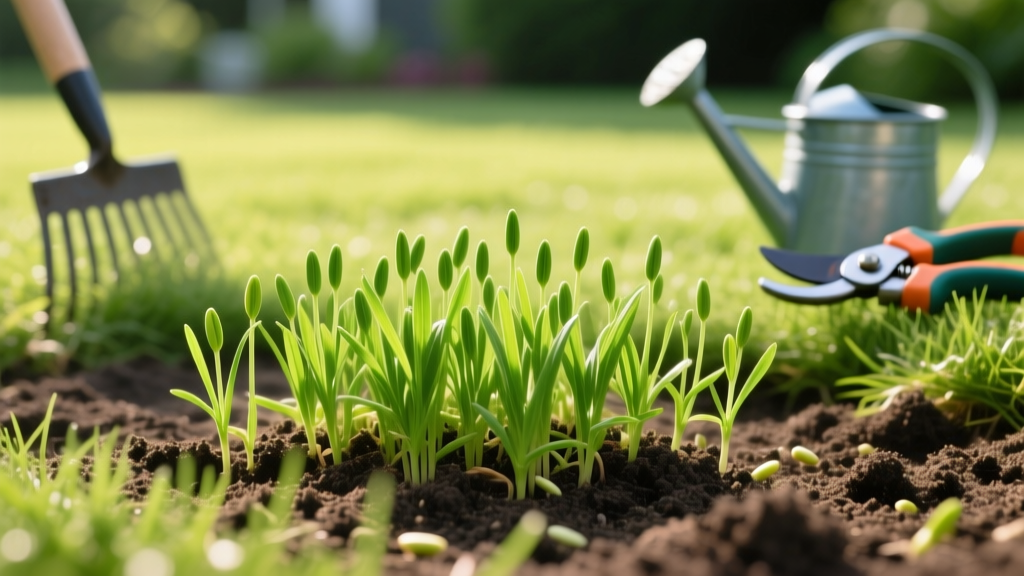
Growing Bermuda Grass From Seed: Step-by-Step Establishment Guide
The Economics and Reality of Seeding Bermuda
Growing Bermuda grass from seed is the most cost-effective method for establishing a durable, high-traffic warm-season lawn, but it requires precise environmental timing and rigorous moisture management. While laying Bermuda sod costs between $0.45 and $0.85 per square foot (totaling $450 to $850 per 1,000 square feet), seeding the same area requires only 2 to 3 pounds of raw seed, costing roughly $20 to $45 total. However, the trade-off is time and labor. Seed takes 14 to 21 days to germinate and a full 90 to 120 days to establish a mature, traffic-ready turf canopy. If you attempt to seed too early in the spring when soil temperatures lag, or fail to maintain constant surface moisture, your germination rates will plummet, and weed competition will overtake the seedbed.
Critical Timing Metric: Bermuda grass seed will not germinate in cold soil. You must wait until the soil temperature at a 2-inch depth consistently reads between 65°F and 70°F. In most of the Deep South, this occurs in mid-to-late May. In the Transition Zone, wait until early June. Air temperatures should be consistently above 80°F during the day.
Selecting the Right Seeded Cultivar
Not all Bermuda grass is created equal. "Common" Bermuda seed is inexpensive but produces a coarse, open canopy that is highly susceptible to weed invasion and winter kill. For a premium lawn, you must invest in improved, turf-type seeded cultivars. According to the NC State University TurfFiles, improved seeded varieties offer finer leaf textures, darker green coloration, and significantly higher turf density than common varieties.
| Cultivar | Leaf Texture | Cold Tolerance | Avg. Price / lb | Best Application |
|---|---|---|---|---|
| Yukon | Fine | Excellent | $24 - $28 | Transition Zone lawns, high cold-snap areas |
| Cheyenne II | Medium | Good | $18 - $22 | Deep South, high-traffic family lawns |
| Princess 77 | Very Fine | Moderate | $26 - $32 | Premium aesthetic lawns, golf course roughs |
| Common | Coarse | Poor | $8 - $12 | Erosion control, pastures, utility areas |
Soil Preparation: The Make-or-Break Phase
Bermuda grass seed is incredibly small. If you broadcast it over compacted soil or existing thatch, it will dry out and die before the radicle (first root) can penetrate the earth. The Texas A&M Aggie Turf program emphasizes that seed-to-soil contact is the single most critical factor in warm-season establishment.
Step-by-Step Seedbed Preparation
- Clear and Kill: Apply a non-selective herbicide like glyphosate to the existing vegetation 14 days prior to tilling. Wait for complete browning.
- Till and Grade: Rototill the top 4 to 6 inches of soil. Use a heavy landscaping rake to grade the area, ensuring a 1% to 2% slope away from your home's foundation to prevent water pooling.
- Amend Based on Tests: Bermuda thrives in a soil pH of 6.0 to 6.5. If your soil test indicates a pH below 5.5, incorporate pelletized lime at a rate of 50 lbs per 1,000 square feet during tilling.
- Starter Fertilizer: Apply a high-phosphorus starter fertilizer (such as a 10-18-10 NPK ratio) at a rate of 1 lb of actual nitrogen per 1,000 square feet just before seeding to fuel rapid root development.
- Final Roll: Use a lightweight lawn roller (filled only halfway with water) to firm the seedbed. This prevents the seed from washing into low spots during irrigation.
Seeding Rates and Application Techniques
When purchasing seed, you will encounter two terms: hulled and unhulled (raw). Unhulled seed retains its outer protective casing. It is cheaper but takes slightly longer to germinate. Hulled seed has the casing mechanically removed, resulting in faster, more uniform germination, but it costs roughly 30% more and requires careful handling to avoid damaging the bare embryo.
Warning: Do Not Over-seed
Applying more than the recommended rate will not yield a thicker lawn. Over-seeding causes intense seedling competition for water and nutrients, leading to a weak, spindly turf that is highly susceptible to "damping off"—a fatal fungal disease that rots young seedlings at the soil line.
Applying more than the recommended rate will not yield a thicker lawn. Over-seeding causes intense seedling competition for water and nutrients, leading to a weak, spindly turf that is highly susceptible to "damping off"—a fatal fungal disease that rots young seedlings at the soil line.
Exact Application Rates
- Unhulled (Raw) Seed: Apply 2.0 to 3.0 lbs per 1,000 sq. ft.
- Hulled Seed: Apply 1.0 to 1.5 lbs per 1,000 sq. ft.
Use a rotary broadcast spreader for even coverage. If using a Scotts EdgeGuard Mini spreader, set the dial to 3.5 for unhulled seed and 2.5 for hulled seed. Split your total seed amount in half. Broadcast the first half walking in a North-South pattern, and the second half walking in an East-West pattern. This cross-hatching eliminates striping and bare spots. After spreading, lightly drag a piece of chain-link fence or a leaf rake upside down over the soil to cover the seed with no more than 1/8 inch of soil. Bermuda seed needs light to germinate; burying it deeper than 1/4 inch will result in total failure.
The 21-Day Germination and Watering Protocol
The most common failure point when growing Bermuda grass from seed is improper watering. The seedbed must remain constantly moist, but never soggy. Heavy watering from a standard hose nozzle will wash the tiny seeds away or cause the topsoil to form a hard, impenetrable crust as it dries. Use an oscillating sprinkler or a fine-mist soaker hose.
Phase 1: Days 1 to 9 (Germination)
Water 3 to 4 times per day for 5 to 8 minutes per session. The goal is to keep the top 1/2 inch of soil visibly dark and damp. If you live in an area with high winds or extreme heat (above 95°F), you may need to water 5 times a day to prevent the surface from drying out.
Phase 2: Days 10 to 14 (Seedling Establishment)
Once you see a green haze of seedlings emerging, reduce the frequency but increase the duration. Water 2 times per day for 10 to 12 minutes. This encourages the new roots to stretch deeper into the soil profile to chase the receding moisture.
Phase 3: Days 15 to 21 (Root Hardening)
Transition to watering once per day in the early morning (between 5:00 AM and 7:00 AM) for 15 to 20 minutes. Evening watering at this stage invites Pythium blight and dollar spot fungi, which can wipe out a young Bermuda stand in 48 hours.
First Mow and Post-Emergent Weed Control
Patience is required before the first mow. Do not mow until the grass reaches a height of 2.5 to 3 inches. Set your mower deck to 1.5 inches and ensure the blades are freshly sharpened. Dull blades will rip the shallow-rooted seedlings completely out of the ground. Leave the clippings on the lawn to return nitrogen to the soil.
Managing the Weed Invasion
Because you cannot use pre-emergent herbicides (like prodiamine or dithiopyr) before seeding—they will stop the Bermuda seed from germinating—you will inevitably face a flush of summer annual weeds like crabgrass and spurge. Do not panic and do not apply harsh herbicides immediately. Wait until you have mowed the new Bermuda grass at least three times. After the third mow, the turf roots are established enough to tolerate selective post-emergent herbicides. Use a product containing Quinclorac to target grassy weeds, or a 2,4-D and Dicamba blend for broadleaf weeds, strictly following the label rates for newly established turf.
Frequently Asked Questions
Can I mix Bermuda seed with Tall Fescue for a year-round green lawn?
No. Bermuda grass is highly aggressive and allelopathic, meaning it releases biochemicals that inhibit the growth of competing plants. If planted together, the Bermuda will eventually choke out the Fescue during the heat of summer, leaving you with a patchy, uneven transition zone lawn. Maintain them as separate turf zones or overseed dormant Bermuda with Perennial Ryegrass in the fall for temporary winter color.
Why did my Bermuda seed turn white and fuzzy before sprouting?
This is a fungal infection known as "damping off," caused by overwatering and poor soil drainage. The constant saturation deprives the seed of oxygen and invites Pythium fungi. If this occurs, stop watering immediately, allow the topsoil to dry out for 24 hours, and apply a preventative fungicide containing azoxystrobin before resuming a lighter watering schedule.

