
Grass Types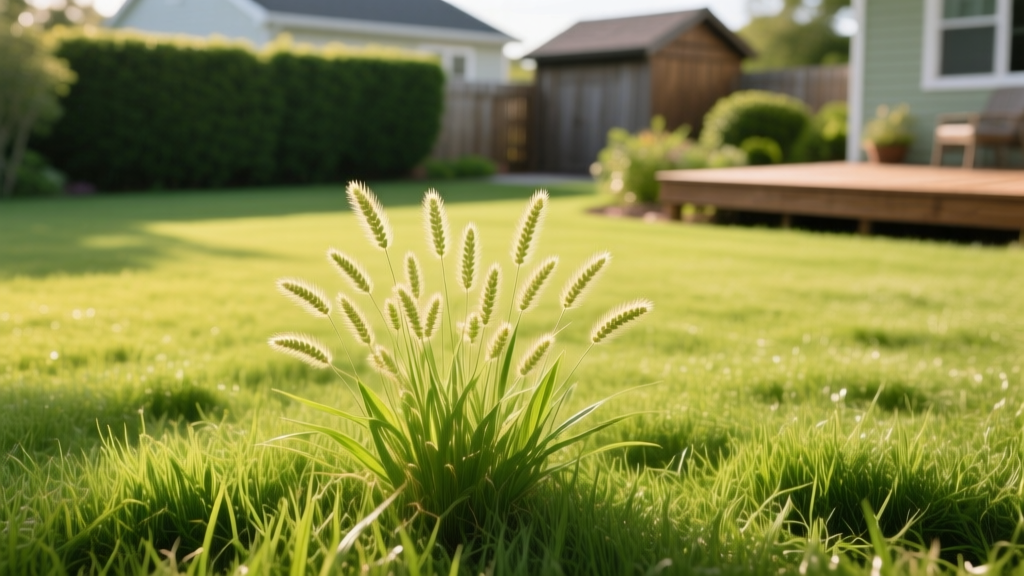
How to Stop Seed Heads on Bermuda Grass From Taking Over
The Biology Behind Bermuda Grass Seed Heads
Seeing seed heads on Bermuda grass is one of the most common aesthetic complaints among homeowners managing warm-season lawns. These wiry, pale-green stalks shoot up rapidly, creating a messy, unkempt appearance and a prickly surface that is uncomfortable to walk on barefoot. To effectively control them, you must understand the physiological triggers driving their production.
Bermuda grass (Cynodon dactylon) is a prolific reproducer. While it spreads vegetatively through stolons (above ground) and rhizomes (below ground), it also produces seed heads (inflorescences) consisting of three to seven slender spikes. Seed head initiation is primarily driven by photoperiodism—specifically, the long days and warm nights of late spring and early summer (typically May through June). However, environmental stress is a massive secondary trigger. When the plant senses drought, severe soil compaction, or nutrient deficiency, it accelerates its reproductive cycle to ensure genetic survival before the plant dies.
Agronomic Insight: Not all seeding is created equal. A light, uniform flush of seed heads in late May is a natural seasonal rhythm. A heavy, continuous, and localized outbreak in July or August is almost always a symptom of severe turfgrass stress.
Identifying Stress-Induced vs. Seasonal Seeding
Before altering your maintenance regimen, diagnose whether your lawn is experiencing a normal seasonal flush or a stress-induced survival response. Misdiagnosing the cause will lead to wasted time and ineffective chemical applications.
| Characteristic | Seasonal (Normal) Seeding | Stress-Induced (Problematic) Seeding |
|---|---|---|
| Timing | Late May to mid-June | Mid-summer (July/August) or erratic year-round |
| Distribution | Uniform across the entire lawn canopy | Patchy, concentrated in dry, compacted, or high-traffic areas |
| Turf Color | Deep, healthy green beneath the seed stalks | Yellowing, thinning, or drought-stressed blue-gray tint |
| Stalk Height | Consistent height, easily managed by mowing | Variable heights, stalks grow aggressively fast between mowings |
According to turfgrass specialists at NC State University's TurfFiles, maintaining optimal soil moisture and alleviating compaction through core aeration are the primary defenses against stress-induced reproductive triggers. If your soil is hydrophobic or compacted, the roots cannot access water, signaling the plant to immediately produce seed heads.
Step-by-Step Cultural Control Strategy
Eliminating seed heads requires a multi-pronged cultural approach focused on keeping the grass in a vegetative (growth) state rather than a reproductive (survival) state.
1. Precision Mowing Tactics
The most immediate way to remove existing seed heads is through mowing, but standard practices often fail. Seed stalks are highly fibrous and lignified. If you use a rotary mower with a dull blade, the stalks will tear rather than slice, leaving frayed, white, necrotic tips that make the lawn look diseased.
- Frequency: During peak seeding months (May and June), increase mowing frequency to every 3 to 4 days. This physically removes the seed stalk before it has time to elongate above the canopy.
- Height of Cut (HOC): Maintain Common Bermuda at 1.5 to 2.5 inches, and Hybrid varieties (like Tifway 419 or Celebration) at 0.5 to 1.5 inches. Dropping the HOC slightly (by 0.25 inches) during a heavy flush can help scalp off emerging stalks, but never remove more than one-third of the total leaf blade in a single pass.
- Equipment: For hybrid Bermudas, a reel mower is vastly superior. The scissor-action of a reel mower cleanly severs the tough seed stalks without tearing.
2. Nitrogen-Heavy Fertility Scheduling
Nitrogen promotes vegetative leaf and stolon growth, which biologically suppresses the reproductive phase. Conversely, high phosphorus levels can actually accelerate flowering and seed production in many plant species.
Apply 0.5 to 1.0 lbs of Nitrogen per 1,000 square feet per month during the peak growing season. Utilize a fertilizer with a high N-P-K ratio where the phosphorus (the middle number) is zero or very low, such as a 24-0-11 or 29-0-5 formulation, unless a soil test specifically dictates a phosphorus deficiency. The Clemson University Home & Garden Information Center emphasizes that soil testing is mandatory before adding phosphorus or potassium to avoid disrupting the turf's natural growth cycles.
3. Deep, Infrequent Irrigation
Shallow, daily watering encourages shallow root systems, making the grass highly susceptible to mid-day moisture stress—the exact trigger for seed head production. Water deeply and infrequently, aiming for 1 to 1.25 inches of water per week, applied in one or two sessions to force roots to grow deep into the soil profile.
Warning: Do not scalp your lawn to the dirt in an attempt to eradicate seed heads. Scalping exposes the soil to direct sunlight, inviting weed invasion (like crabgrass and spurge) and severely weakening the Bermuda grass crown, which will ultimately lead to turf death.
Chemical Interventions: Plant Growth Regulators (PGRs)
When cultural practices are not enough, or if you are managing a high-end hybrid Bermuda lawn where pristine aesthetics are required, Plant Growth Regulators (PGRs) are the industry standard for seed head suppression.
The most effective active ingredient for this specific issue is Trinexapac-ethyl (commonly sold under the brand name Primo Maxx). Trinexapac-ethyl is a Class A, Type I PGR. It works by inhibiting the 3-beta-hydroxylase enzyme, which halts the biosynthesis of gibberellic acid late in the pathway. Gibberellic acid is responsible for cell elongation. By stopping cell elongation (but not cell division), the grass remains dense, dark green, and healthy, but the vertical growth of the seed stalk is physically prevented from pushing out of the leaf sheath.
Application Protocol for Trinexapac-ethyl
- Timing: Apply in early spring, just before the historical onset of seed head emergence in your specific region (usually early to mid-April for the Deep South, early May for the Transition Zone).
- Rate: Apply at a rate of 0.25 to 0.5 fluid ounces per 1,000 square feet. Mix with a non-ionic surfactant to ensure the chemical penetrates the waxy cuticle of the Bermuda leaf.
- Absorption Window: The chemical is absorbed through the foliage, not the roots. It requires 4 to 6 hours of dry time to absorb fully. Do not apply if rain is in the forecast, and do not irrigate for at least 24 hours post-application.
- Reapplication: The effect lasts roughly 3 to 4 weeks. You must reapply at the half-rate (0.25 oz/1,000 sq ft) every 21 to 28 days throughout the peak seeding window to maintain suppression.
Frequently Asked Questions
Can I harvest these seed heads to overseed my lawn?
No. The vast majority of high-quality lawns utilize hybrid Bermuda grasses (such as Tifway 419, TifSport, or Celebration). These hybrids are triploid, meaning they are completely sterile. The seed heads they produce contain no viable seeds. If you want to establish or repair a Bermuda lawn, you must use sod, sprigs, or plugs. Only "Common" Bermuda grass produces viable seed, but it lacks the density, disease resistance, and aesthetic quality of modern hybrids.
Will a pre-emergent herbicide stop seed heads from forming?
No. Pre-emergent herbicides (like Prodiamine or Dithiopyr) create a chemical barrier in the top inch of soil that prevents weed seeds from germinating. They have absolutely no effect on the internal biological processes of an already established Bermuda grass plant, nor will they stop the plant from pushing seed stalks up through its own canopy.
Why do my seed heads look purple or red at the tips?
Purple or reddish discoloration on the tips of Bermuda seed heads and leaves is a classic indicator of phosphorus deficiency, cold temperature stress, or a sudden drop in soil pH. Conduct a comprehensive soil test immediately to verify your phosphorus levels and adjust your fertility program accordingly.

