Grass Types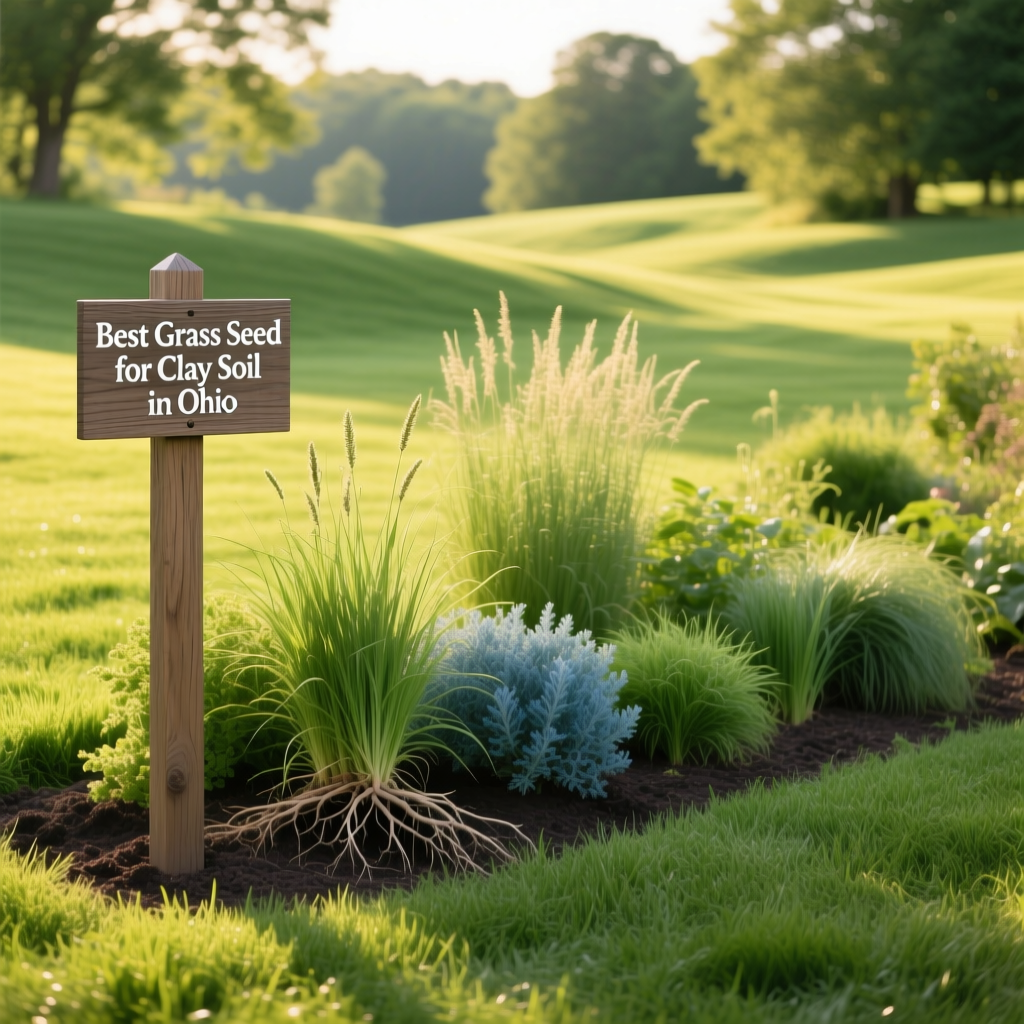
Best Grass Seed for Clay Soil in Ohio: Complete Growing Guide
Anna KowalskiPublished
Ohio’s landscapes are beautiful, but the state’s notorious clay soil can make growing a lush, green lawn feel like an uphill battle. Heavy, compacted, and slow to drain, clay soil presents unique challenges that not every grass variety can handle. Whether you live in Columbus, Cleveland, Cincinnati, or anywhere in between, choosing the right grass seed is the single most important decision you’ll make for your lawn’s long-term health.
The good news? Several cool-season grasses are remarkably well-suited to Ohio’s clay conditions. These grasses have deep root systems that penetrate dense soil, tolerate the state’s humid summers, and survive freezing winters. In this comprehensive guide, we’ll walk you through the best grass seed options for clay soil in Ohio, explain what makes each variety unique, and share practical tips for establishing and maintaining a thriving lawn on even the heaviest clay.
If you’re just getting started with lawn care, our lawn care guides cover everything from soil preparation to seasonal maintenance schedules.
Understanding Ohio’s Clay Soil and Its Challenges
Before selecting a grass seed, it’s essential to understand what you’re working with. Ohio sits in a transition zone between cool-season and warm-season growing regions, but the majority of the state falls firmly in the cool-season grass zone. Most Ohio soils are classified as silty clay loam or heavy clay, particularly in the central and western portions of the state where glacial deposits left behind dense, mineral-rich earth.
Why Clay Soil Is Difficult for Lawns
Clay particles are extremely fine and pack tightly together, creating several problems for grass roots:
- Poor drainage: Water pools on the surface or drains very slowly, leading to root rot and fungal diseases.
- Compaction: Foot traffic and mowing compress clay further, restricting root growth and oxygen flow.
- Nutrient lockup: Clay binds tightly to nutrients like phosphorus and potassium, making them less available to grass roots.
- Slow warming in spring: Clay retains cold temperatures longer than sandy soils, delaying green-up.
- Cracking in drought: During dry spells, clay shrinks and cracks, tearing grass roots and creating bare patches.
Despite these challenges, clay soil is naturally fertile. It holds minerals well and, once amended properly, can support an incredibly healthy lawn. The key is choosing grass species with the root structure and adaptability to thrive in these conditions.
For a deeper dive into soil health, check out our guide on soil testing and amendments to learn how to evaluate your yard before planting.
Top Grass Seed Varieties for Clay Soil in Ohio
After extensive evaluation of performance in Ohio’s climate and soil conditions, these are the best grass seed varieties for clay soil. Each brings distinct advantages depending on your specific yard conditions, sunlight levels, and maintenance preferences.
1. Tall Fescue (Festuca arundinacea)
Tall fescue is widely regarded as the single best grass for clay soil in Ohio. Modern turf-type and dwarf turf-type tall fescue varieties have been bred specifically for improved density, finer blades, and deeper rooting. The root system of tall fescue can extend three to six feet into the soil, allowing it to penetrate heavy clay layers that would stop other grasses.
Characteristics:
- Deep, extensive root system that breaks through compacted clay
- Excellent drought tolerance once established
- Moderate shade tolerance
- Good disease resistance, particularly against brown patch
- Coarser blade texture compared to Kentucky bluegrass
Growing Zones in Ohio: Performs exceptionally well across all Ohio USDA hardiness zones (5b through 6b). It handles the hot, humid summers of southern Ohio and the colder winters of the northeast corner with equal resilience.
Maintenance Requirements:
- Mowing height: 2.5 to 4 inches (taller mowing promotes deeper roots)
- Watering: Deep, infrequent watering encourages roots to push deeper into clay
- Fertilization: 2 to 4 pounds of nitrogen per 1,000 square feet annually
- Overseeding: Recommended every fall to maintain density
Pros:
- Best overall adaptability to heavy clay
- Superior drought and heat tolerance among cool-season grasses
- Requires less water than Kentucky bluegrass
- Establishes relatively quickly from seed
Cons:
- Coarser texture may not appeal to those who prefer a manicured look
- Does not spread laterally like bluegrass, so bare spots require overseeding
- Can develop thatch if over-fertilized
Explore our complete Tall Fescue grass guide for detailed planting instructions and seasonal care tips.
2. Kentucky Bluegrass (Poa pratensis)
Kentucky bluegrass is the classic American lawn grass, prized for its rich, dark green color and soft, fine texture. While it doesn’t have the deep taproot of tall fescue, Kentucky bluegrass spreads aggressively via underground rhizomes, creating a dense, self-repairing turf that holds clay soil together and reduces erosion.
Characteristics:
- Rhizomatous growth fills in bare spots naturally
- Fine to medium blade texture with excellent color
- Moderate to high cold tolerance
- Prefers full sun but can tolerate light shade
- Goes dormant during extreme heat and drought
Growing Zones in Ohio: Thrives throughout Ohio but performs best in the northern third of the state where summers are slightly cooler. In southern Ohio, it may require supplemental irrigation during July and August.
Maintenance Requirements:
- Mowing height: 2 to 3.5 inches
- Watering: 1 to 1.5 inches per week; more frequent than tall fescue due to shallower roots
- Fertilization: 3 to 5 pounds of nitrogen per 1,000 square feet annually
- Aeration: Annual core aeration is critical on clay soil to relieve compaction
Pros:
- Beautiful, dense, carpet-like appearance
- Self-repairing via rhizomes
- Excellent cold hardiness for Ohio winters
- Widely available in seed mixes
Cons:
- Shallow root system struggles in unamended heavy clay
- High water requirements during summer
- Prone to fungal diseases in humid conditions
- Slow germination (14 to 30 days)
Learn more in our detailed Kentucky Bluegrass guide, including recommended cultivars for clay conditions.
3. Perennial Ryegrass (Lolium perenne)
Perennial ryegrass is rarely used as a standalone lawn in Ohio, but it plays a valuable role in seed mixes designed for clay soil. Its primary strength is rapid germination—often in as few as five to seven days—which provides quick erosion control and a living ground cover while slower-germinating grasses like Kentucky bluegrass establish.
Characteristics:
- Fastest germination of any cool-season grass
- Fine to medium blade with attractive bright green color
- Bunch-type growth habit (does not spread via rhizomes or stolons)
- Moderate wear tolerance
- Good disease resistance in improved cultivars
Growing Zones in Ohio: Best suited to northern and central Ohio. It can struggle with the heat and humidity of southern Ohio summers, where it may thin out and require overseeding.
Maintenance Requirements:
- Mowing height: 1.5 to 2.5 inches
- Watering: Regular irrigation needed; shallow roots require consistent moisture
- Fertilization: 2 to 4 pounds of nitrogen per 1,000 square feet annually
- Overseeding: May be needed annually in thin areas
Pros:
- Extremely fast establishment prevents erosion on clay slopes
- Excellent companion grass in mixes with bluegrass and fescue
- Tolerates heavy foot traffic
- Competitive against weeds during establishment
Cons:
- Shorter lifespan than tall fescue or Kentucky bluegrass
- Does not self-repair; bare spots require reseeding
- Less heat and drought tolerant than tall fescue
- Can be susceptible to gray leaf spot in humid Ohio summers
For more details, visit our Perennial Ryegrass guide.
4. Fine Fescue (Festuca spp.)
Fine fescue is a group that includes creeping red fescue, chewings fescue, hard fescue, and sheep fescue. These grasses are valued for their exceptional shade tolerance and low maintenance requirements. On clay soil, fine fescues perform best in shady areas where tall fescue and Kentucky bluegrass might struggle.
Characteristics:
- Very fine, needle-like blades create a soft texture
- Outstanding shade tolerance—the best among cool-season grasses
- Low fertility requirements
- Slow growth means less frequent mowing
- Some varieties spread via rhizomes (creeping red fescue)
Growing Zones in Ohio: Well-adapted to all Ohio zones, particularly in shaded or partially shaded sites. Performs better in northern Ohio where summer heat stress is less intense.
Maintenance Requirements:
- Mowing height: 2 to 3 inches (avoid cutting too short)
- Watering: Moderate; more drought-tolerant than bluegrass but less than tall fescue
- Fertilization: 1 to 2 pounds of nitrogen per 1,000 square feet annually (less is more)
- Traffic: Avoid heavy foot traffic; fine fescue wears poorly
Pros:
- Best grass option for shady clay soil areas
- Very low fertilizer and water requirements
- Less mowing due to slow growth
- Good cold tolerance
Cons:
- Poor wear tolerance; not ideal for high-traffic lawns
- Can thin out in full sun during hot summers
- Prone to thatch buildup in some varieties
- May not achieve the dense, uniform look of bluegrass
Comparison Table: Best Grass Types for Clay Soil in Ohio
The following table summarizes how each grass variety performs across the key factors that matter most for Ohio clay soil lawns:
| Factor | Tall Fescue | Kentucky Bluegrass | Perennial Ryegrass | Fine Fescue |
|---|---|---|---|---|
| Clay Soil Tolerance | Excellent | Good | Moderate | Good |
| Root Depth | Very Deep | Shallow to Moderate | Shallow | Moderate |
| Drought Tolerance | Excellent | Moderate | Low to Moderate | Moderate |
| Shade Tolerance | Moderate | Moderate | Low to Moderate | Excellent |
| Cold Hardiness | Very Good | Excellent | Good | Very Good |
| Wear Tolerance | Good | Good | Good | Poor |
| Germination Speed | 7-14 days | 14-30 days | 5-7 days | 7-14 days |
| Maintenance Level | Moderate | High | Moderate | Low |
| Self-Repairing | No | Yes | No | Some varieties |
| Ideal Use | Full-sun lawns, high traffic | Showcase lawns, full sun | Erosion control, mixes | Shaded areas, low traffic |
For many Ohio homeowners, a blend of two or more grass species provides the best results. A mix of turf-type tall fescue with 10 to 20 percent Kentucky bluegrass gives you the deep-rooted resilience of fescue combined with the self-repairing spread of bluegrass. Adding a small percentage of perennial ryegrass to the mix accelerates establishment and provides early erosion protection.
Need help choosing a seed blend? Our grass seed selection guide breaks down how to read seed labels and pick quality products.
How to Prepare Clay Soil for Grass Seed in Ohio
Even the best grass seed will struggle if planted directly into unprepared clay. Proper soil preparation is the foundation of a successful lawn, and investing time upfront will pay dividends for years to come.
Step 1: Test Your Soil
Start with a soil test from your local Ohio State University Extension office or a reputable lab. The test will reveal your soil’s pH, nutrient levels, and organic matter content. Ohio clay soils typically have a pH between 6.0 and 7.5. Most cool-season grasses prefer a pH of 6.0 to 7.0, so you may need to apply sulfur to lower pH or lime to raise it.
Step 2: Improve Soil Structure
The most effective way to improve clay soil is by adding organic matter. Spread two to three inches of compost over the planting area and work it into the top six to eight inches of soil using a rototiller or garden fork. Compost improves drainage, increases microbial activity, and creates pore spaces that allow roots to penetrate. Other beneficial amendments include:
- Composted leaf litter: Abundant and free in many Ohio neighborhoods
- Aged manure: Adds nutrients along with organic matter
- Gypsum: Can help flocculate clay particles and improve structure without altering pH
- Fine pine bark: Improves aeration in heavy soils
Step 3: Grade and Level
Clay soil holds water, so proper grading is essential to prevent pooling. Aim for a gentle slope of one to two percent away from your home’s foundation. Fill low spots and break up high areas to create a smooth, even surface.
Step 4: Core Aerate Existing Lawns
If you’re overseeding an existing lawn rather than starting from scratch, core aeration is mandatory on clay soil. Aeration removes small plugs of soil, creating channels for water, air, and nutrients to reach the root zone. For best results in Ohio, aerate in early fall (late August through October) when cool-season grasses are actively growing. Learn more in our lawn aeration guide.
Step 5: Seed at the Right Time
The optimal seeding window for cool-season grasses in Ohio is late August through mid-October. Fall planting gives grass two cool growing seasons (fall and spring) to establish deep roots before facing the stress of an Ohio summer. Spring seeding (March to early April) is possible but riskier, as young grass may not develop sufficient root depth before summer heat arrives.
Maintenance Tips for Lawns on Clay Soil in Ohio
Once your grass is established, proper maintenance keeps it healthy and resilient in clay conditions. Follow these Ohio-specific care practices throughout the year.
Mowing Best Practices
Never remove more than one-third of the grass blade in a single mowing. For tall fescue on clay soil, maintain a height of 3 to 4 inches during the growing season. Taller grass shades the soil, reducing moisture loss and keeping clay from cracking. Keep mower blades sharp—dull blades tear grass, creating entry points for disease in Ohio’s humid climate. Visit our mowing tips guide for seasonal height recommendations.
Watering Strategies for Clay
Clay soil retains water longer than sand or loam, which means overwatering is a more common problem than underwatering. Water deeply but infrequently—aim for one to 1.5 inches per week, applied in one or two sessions. This encourages roots to grow deep into the clay profile. Use a rain gauge or tuna can to measure output. Allow the top inch of soil to dry between waterings to prevent fungal diseases like brown patch and dollar spot, which are common in Ohio’s humid summers.
Fertilization Schedule
Ohio lawns benefit most from a fertilization program focused on fall applications. Apply the majority of your annual nitrogen between September and November, when cool-season grasses are actively building root reserves. A lighter application in late spring (May) supports recovery from winter. Avoid heavy summer fertilization, which promotes lush, disease-prone growth during peak humidity. Our fertilization guide provides detailed product recommendations and timing charts.
Annual Aeration and Topdressing
Clay soil compacts over time, even with minimal foot traffic. Plan to core aerate your Ohio lawn at least once per year, ideally in early fall. After aerating, topdress with a thin layer (about one-quarter inch) of compost. The compost works into the aeration holes, gradually improving soil structure from the inside out. Over three to five years, this practice dramatically transforms heavy clay into a more loam-like growing medium.
Weed and Pest Management
Healthy, dense grass is the best defense against weeds. On clay soil, common Ohio weeds like crabgrass, dandelion, and broadleaf plantain can invade thin areas. Apply a pre-emergent herbicide in early spring (when soil temperatures reach 55°F) to prevent crabgrass. For broadleaf weeds, spot-treat with a selective herbicide in fall when grass is actively growing and weeds are storing nutrients for winter. Read our weed control guide for product recommendations and application tips.
Frequently Asked Questions
Can I grow grass on pure clay soil without amendments?
While tall fescue can survive in unamended clay, you will get significantly better results by incorporating at least two inches of compost into the top six inches of soil before seeding. Unamended clay limits root penetration, restricts oxygen, and creates drainage problems that stress grass during both wet and dry periods. Even a modest amendment effort makes a dramatic difference in establishment speed and long-term lawn health.
Is it better to use seed or sod on clay soil in Ohio?
Both seed and sod can work on clay soil, but each has trade-offs. Sod provides instant coverage and erosion protection, which is valuable on clay slopes. However, sod is more expensive and the root system must still adapt to the clay beneath it. Seeding is far more affordable and allows you to select specific cultivars bred for clay tolerance. For most Ohio homeowners, seeding in fall with a high-quality turf-type tall fescue blend offers the best balance of cost, performance, and long-term adaptability.
How long does it take for grass seed to establish in Ohio clay?
Germination typically occurs within 5 to 30 days depending on the species—perennial ryegrass sprouts fastest, while Kentucky bluegrass takes the longest. However, full establishment on clay soil takes longer than on loam because roots must work harder to penetrate dense soil. Expect a seeded lawn to fill in completely within 8 to 12 weeks under ideal fall conditions. Avoid heavy foot traffic during this period, and keep the soil consistently moist (not saturated) until grass is well-rooted.
Should I mix different grass seed types for clay soil?
Yes, mixing grass species is generally recommended for Ohio clay lawns. A blend of turf-type tall fescue (80 to 90 percent) with Kentucky bluegrass (10 to 20 percent) gives you the deep-rooted resilience of fescue plus the spreading, self-repairing habit of bluegrass. Some mixes also include a small percentage of perennial ryegrass for rapid germination and early erosion control. Avoid cheap seed mixes that contain annual ryegrass or excessive filler seed, as these provide only temporary coverage.
What is the best time to plant grass seed on clay soil in Ohio?
Early fall (late August through mid-October) is the ideal time to plant grass seed on clay soil anywhere in Ohio. Soil temperatures are still warm enough to encourage rapid germination, while cooler air temperatures and increased rainfall reduce heat stress and watering needs. Fall-planted grass develops roots through autumn and early winter, then surges with growth the following spring. Spring seeding (March to early April) is a secondary option but requires more careful watering and may struggle when summer heat arrives before roots are fully established.
For a complete month-by-month care calendar, visit our seasonal lawn care calendar tailored to Ohio’s climate.
