
Grass Types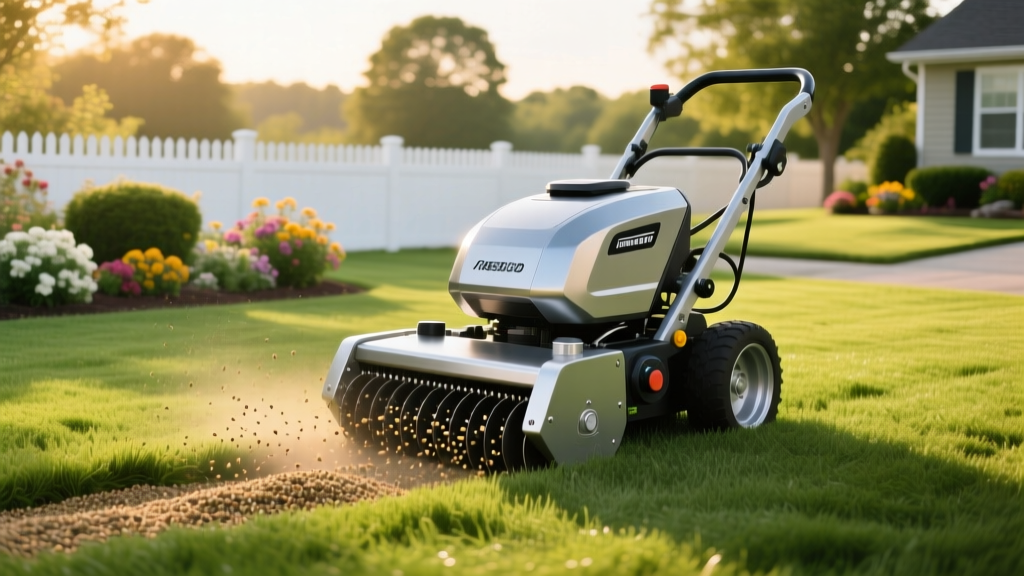
Best Lawn Overseeder Equipment for Seed Establishment 2026
Overseeding is the single most effective practice for rejuvenating thinning turf, yet up to 80% of DIY overseeding projects fail to achieve dense germination. The primary culprit is rarely the seed itself, but rather poor seed-to-soil contact. Selecting the correct lawn overseeder for your specific grass species and soil compaction level is the difference between a lush, thick canopy and a patchy waste of expensive seed. This guide breaks down the mechanical differences between slice seeders, broadcast spreaders, and aerator combinations, providing exact calibration metrics and 2026 equipment recommendations for optimal seed establishment.
The Mechanics of Seed-to-Soil Contact
Grass seed requires three things to germinate: moisture, warmth, and direct physical contact with soil particles. When seed is simply broadcast over an existing lawn, it often becomes trapped in the thatch layer—a spongy mat of dead and living organic matter. Thatch acts as a barrier, wicking moisture away from the seed and preventing the radicle (embryonic root) from penetrating the soil profile. According to the University of Minnesota Extension, seed trapped in thatch will germinate but quickly desiccate and die once its initial endosperm energy reserves are depleted.
The 1/4-Inch Rule: For most cool-season grasses, the ideal seed placement depth is 1/8 to 1/4 inch below the soil surface. This depth protects the seed from birds and UV degradation while keeping it close enough to the surface to receive adequate warmth and light for rapid emergence.
A dedicated lawn overseeder—specifically a slice seeder or slit seeder—uses a series of rotating steel blades to cut through the thatch and carve precise micro-furrows into the soil. The seed is then dropped directly into these grooves, guaranteeing the soil-to-seed contact necessary for high germination rates.
Slice Seeders vs. Broadcast Spreaders: A Technical Comparison
Choosing between a mechanical slice seeder and a traditional broadcast spreader depends on your lawn's current thatch thickness, soil compaction, and the grass species you are establishing. Below is a technical comparison of the three primary overseeding methods.
| Feature | Slice Seeder (Slit Seeder) | Broadcast Spreader | Core Aerator + Broadcast |
|---|---|---|---|
| Mechanism | Steel blades cut furrows; seed dropped inline. | Impeller throws seed across the surface. | Extracts soil plugs; seed falls into holes. |
| Thatch Penetration | Excellent (cuts through up to 1" of thatch). | Poor (seed rests on top of thatch). | Moderate (bypasses thatch via plugs). |
| Seed Efficiency | High (minimal seed loss to wind/birds). | Low to Moderate (high surface loss). | Moderate (seed concentrates in holes). |
| Best Grass Types | Tall Fescue, Perennial Ryegrass, Bermuda. | Kentucky Bluegrass, Fine Fescues. | Compacted soils, KBG, Zoysia. |
| Avg. Equipment Cost | $400 - $2,600 (or $85/day rental). | $90 - $150. | $120 (Aerator rental) + $120 (Spreader). |
Matching the Overseeder to Your Grass Species
Not all grasses respond identically to mechanical slicing. The growth habit of the turf—whether bunch-type, rhizomatous, or stoloniferous—dictates how aggressively you should set your lawn overseeder blades.
Cool-Season Grasses: Tall Fescue and Perennial Ryegrass
Turf-Type Tall Fescue (TTTF) and Perennial Ryegrass are bunch-type grasses. They do not spread laterally via rhizomes or stolons, meaning any bare spots must be physically filled by new seedlings. These grasses have larger seeds (approximately 250,000 seeds per pound for TTTF) and require firm seed-to-soil contact. A slice seeder is the undisputed best tool here. Set the blade depth to exactly 1/4 inch and apply seed at a rate of 5 to 8 lbs per 1,000 square feet. The slicing action also prunes existing fescue roots slightly, which stimulates lateral tillering in the established grass.
Cool-Season Grasses: Kentucky Bluegrass (KBG)
Kentucky Bluegrass spreads aggressively via underground rhizomes. KBG seed is exceptionally small (over 2.2 million seeds per pound). If you use a slice seeder on KBG, the furrows can be too deep, burying the tiny seed past its ability to emerge. For KBG, core aeration followed by a broadcast spreader is often superior. The Penn State Extension recommends dragging a piece of chain-link fence or a heavy mat over the lawn after broadcasting KBG seed to knock it into the aeration holes and ensure contact without burying it too deeply.
Warm-Season Grasses: Bermudagrass and Zoysia
Overseeding warm-season lawns requires precise timing and tool selection. Bermudagrass can be overseeded with hulled bermuda seed in late spring. According to the Clemson University Home & Garden Information Center, a slit seeder should be used at a shallow 1/8-inch depth to prevent burying the warm-season seed too deeply in heavy clay soils. Zoysia is rarely seeded due to extremely slow germination rates (up to 28 days); if you are attempting to establish Zoysia from seed, a slice seeder combined with a rolled mulch layer is mandatory to retain the high moisture levels required for its prolonged germination window.
2026 Equipment Roundup: Top Models by Budget
If you are purchasing equipment rather than renting, the market in 2026 offers distinct tiers based on property size and turf demands.
- Professional Grade: Billy Goat S13H (approx. $2,499)
The S13H features a 13-inch cutting path and a commercial-grade Honda GX160 engine. Its standout feature is the auto-drop clutch, which only dispenses seed when the blades are actively engaged in the soil, preventing seed waste on driveways and sidewalks. Ideal for properties over 10,000 sq ft or landscaping professionals. - Mid-Tier Tow-Behind: Agri-Fab 45-0530 Slit Seeder (approx. $399)
Designed to be towed behind a lawn tractor or ATV, this unit uses 12 galvanized steel blades. It requires a heavy tractor to achieve the necessary downward pressure for blade penetration. Best for large, flat rural properties where walking a heavy push-seeder is impractical. - Budget/Manual Combo: Scotts Elite Spreader + Manual Core Aerator (approx. $140 total)
For lawns under 3,000 sq ft with minimal thatch, buying a $110 Scotts Elite broadcast spreader and pairing it with a $30 manual step-aerator is the most cost-effective route. This is highly effective for KBG and fine fescue mixes where deep slicing is counterproductive.
Calibration and Execution Protocol
Even the best lawn overseeder will fail if improperly calibrated. Follow this exact sequence for maximum establishment rates:
- Scalp the Turf: Mow the existing lawn to 1.5 inches (or lower for warm-season grasses). Bag the clippings to expose the soil surface and remove physical barriers to the seed.
- Calibrate Blade Depth: Before adding seed, run the slice seeder over a bare patch of dirt or an inconspicuous corner of the lawn. Measure the furrow depth with a ruler. Adjust the depth lever until the groove is exactly 1/4 inch deep. If the soil is heavily compacted, you may need to make two passes; do not force the blades deeper than 1/2 inch, or you will sever the primary root zones of the established turf.
- Load and Set the Hopper: Calculate your total seed requirement based on the 1,000 sq ft rates mentioned above. Set the hopper gate to the manufacturer's recommended setting for your specific seed size. TTTF requires a wider gate than KBG.
- Execute a Cross-Hatch Pattern: Make your first pass North-to-South. Make your second pass East-to-West. This cross-hatching ensures uniform distribution and eliminates linear striping in the new growth. If using a slice seeder, this also creates a micro-grid of furrows that drastically improves water retention.
- Apply Starter Fertilizer: Immediately after seeding, apply a high-phosphorus starter fertilizer (e.g., 18-24-12) at a rate of 1 lb of nitrogen per 1,000 sq ft. Phosphorus is critical for early root development and cannot be effectively applied after the seed has already germinated.
By matching the precise mechanical action of your lawn overseeder to the biological requirements of your specific grass species, you transition from guessing to engineering a thick, resilient turf canopy.

