
Grass Types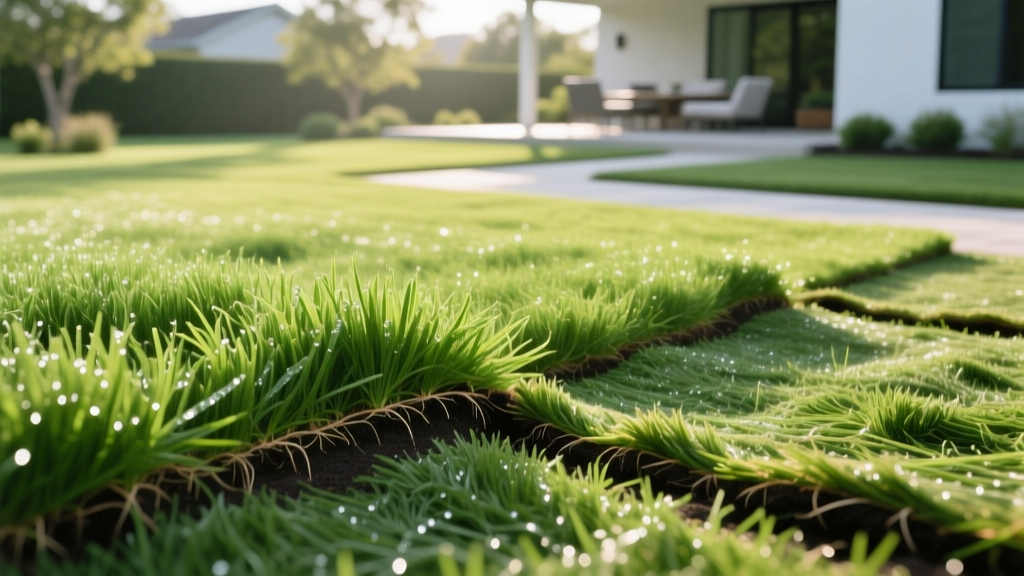
Buffalo Grass Sod: Complete Installation and Establishment Guide
Establishing a drought-tolerant lawn in the transition zone or High Plains requires patience, especially when working with Bouteloua dactyloides. While seeding is an option, laying buffalo grass sod provides an instant, weed-free lawn and significantly reduces the 12-to-18-month establishment window associated with seed. However, buffalo grass has a unique stoloniferous root system that demands specific soil preparation and watering protocols to prevent sod failure. This guide details the exact steps for sourcing, installing, and establishing buffalo grass sod.
The Dioecious Advantage: Selecting the Right Sod Cultivar
Unlike Kentucky bluegrass or fescue, buffalo grass is dioecious, meaning male and female flowers grow on separate plants. Male plants produce tall, unsightly pollen-bearing seed heads, while female plants remain low-growing and produce hidden seeds.
When purchasing buffalo grass sod, you are almost exclusively buying vegetatively propagated female clones. This is a massive advantage for homeowners seeking a low-maintenance aesthetic without the mess of pollen or excessive seed heads.
Top Female Sod Cultivars:
- Legacy: A dense, dark green cultivar developed by the University of Nebraska. It spreads rapidly via stolons and requires 50% less mowing than traditional bluegrass.
- Prestige: Bred for superior heat and drought tolerance, featuring a slightly finer leaf texture and excellent fall color retention.
- Turf Type Buffalograss: A general commercial blend, often less uniform than named cultivars but more cost-effective for large acreage.
Expect to pay a premium for buffalo grass sod compared to standard turf. In 2026, pricing typically ranges from $0.65 to $0.95 per square foot, translating to roughly $300 to $430 per 450-square-foot pallet. Order from local sod farms to minimize transit stress, as buffalo grass wilts rapidly if left rolled on a pallet for more than 12 hours in direct sun.
Pre-Installation Soil Preparation Protocol
Buffalo grass thrives in well-draining soils and will suffer from root rot in heavy, waterlogged clay. Proper soil prep is non-negotiable for long-term survival.
Step 1: Site Clearing and Herbicide Application
Fourteen days before delivery, apply a non-selective systemic herbicide like glyphosate to kill existing weeds and grass. Buffalo grass sod lacks the competitive vigor to push through established bermudagrass or bindweed during its first year. Allow the herbicide to fully translocate to the roots of the weeds before tilling.
Step 2: Tilling and Amendment
Rototill the soil to a depth of 4 to 6 inches. If you have heavy clay soil, incorporate 2 to 3 cubic yards of organic compost per 1,000 square feet. This improves soil porosity and provides a slow-release nutrient base. According to Texas A&M AgriLife Extension, buffalograss performs best in soils with a pH between 6.5 and 7.5; conduct a soil test and amend with elemental sulfur if your pH exceeds 8.0.
Step 3: Grading and Firming
Rake the area to establish a 1% to 2% slope away from your home’s foundation. Firm the soil using a water-filled lawn roller. The soil should be firm enough that a footprint leaves an impression no deeper than 1/4 inch. Loose soil will cause the heavy sod to sink unevenly after watering, creating pooling issues and uneven root contact.
The Installation Process: Timing and Technique
Install buffalo grass sod during its active growing season—ideally between late May and early August when soil temperatures consistently exceed 70°F. Laying sod in early spring when soils are cool will result in stagnant, yellowing turf that fails to root before summer heat stress.
- Stagger the Joints: Lay the sod in a brickwork pattern. Never align four corners together, as this creates weak points where water can pool and erode the soil beneath.
- Butt Seams Tightly: Push the edges together tightly without overlapping. Buffalo grass shrinks slightly as it dries; gaps left during installation will widen and invite weed infiltration.
- Roll the Surface: Immediately after laying, run a half-filled lawn roller over the entire area to ensure intimate contact between the sod roots and the topsoil.
The Critical 30-Day Rooting Watering Schedule
The most common cause of buffalo grass sod failure is improper watering during the first month. While mature buffalo grass survives on minimal irrigation, newly laid sod requires frequent, shallow watering to keep the root zone moist without suffocating the stolons.
| Timeframe | Frequency | Duration | Target Soil Moisture |
|---|---|---|---|
| Days 1–7 | 3 times daily | 5–8 minutes | Surface constantly damp, top 1 inch saturated |
| Days 8–14 | 2 times daily | 10–12 minutes | Top 2 inches moist, slight drying between cycles |
| Days 15–21 | 1 time daily | 15–20 minutes | Roots visibly penetrating topsoil |
| Days 22–30 | Every other day | 25–30 minutes | Deep watering to encourage 4-inch root depth |
Pro Tip: To test if the sod has rooted, gently tug on a corner of a sod piece. If you feel resistance from the soil, the stolons have anchored. If it lifts easily, continue the frequent watering schedule. The University of California IPM notes that buffalograss roots establish slower than cool-season grasses, often requiring up to 45 days in marginal soils.
Troubleshooting Common Establishment Failures
Even with meticulous preparation, environmental variables can disrupt establishment. Here is how to diagnose and fix the most frequent issues.
Shrinkage and Gap Formation
Cause: Inadequate initial watering or laying sod during high-wind, low-humidity days.
Fix: Do not stretch new sod to fill gaps. Top-dress the gaps with a 50/50 mix of sand and topsoil, and increase irrigation frequency to prevent further desiccation.
Yellowing and Iron Chlorosis
Cause: High soil pH (above 7.5) locking up iron, common in alkaline western soils.
Fix: Apply a liquid chelated iron spray (Fe-EDDHA formulation) directly to the foliage. Avoid granular iron sulfate, which quickly binds to alkaline soils and becomes unavailable to the grass.
Mushrooms and Spongy Turf (Pythium Root Rot)
Cause: Overwatering or poor subsoil drainage creating anaerobic conditions.
Fix: Immediately halt irrigation for 48 hours to allow the soil profile to dry. Core aerate the affected patches to introduce oxygen to the root zone.
Transitioning to Long-Term Maintenance
Once the 30-day establishment window closes and the sod is firmly anchored, drastically alter your maintenance approach. Buffalo grass requires significantly less nitrogen than traditional lawns. Apply a maximum of 1 to 2 pounds of actual nitrogen per 1,000 square feet annually, split between late spring and late summer. Over-fertilizing promotes aggressive broadleaf weeds and thatch buildup.
Set your mower to 2.5 or 3 inches. Mowing lower than 2 inches stresses the plant and invites invasive bermudagrass encroachment. Crucially, do not apply pre-emergent herbicides (like prodiamine or dithiopyr) during the first year of establishment. These chemicals inhibit cell division at the root tip and will prevent your buffalo grass stolons from anchoring deeply into the soil.
By adhering to this precise establishment protocol, your buffalo grass sod will develop the deep, resilient root system necessary to thrive on minimal water for decades. For more regional turfgrass data, consult the Kansas State University Turfgrass extension resources.

