
Grass Types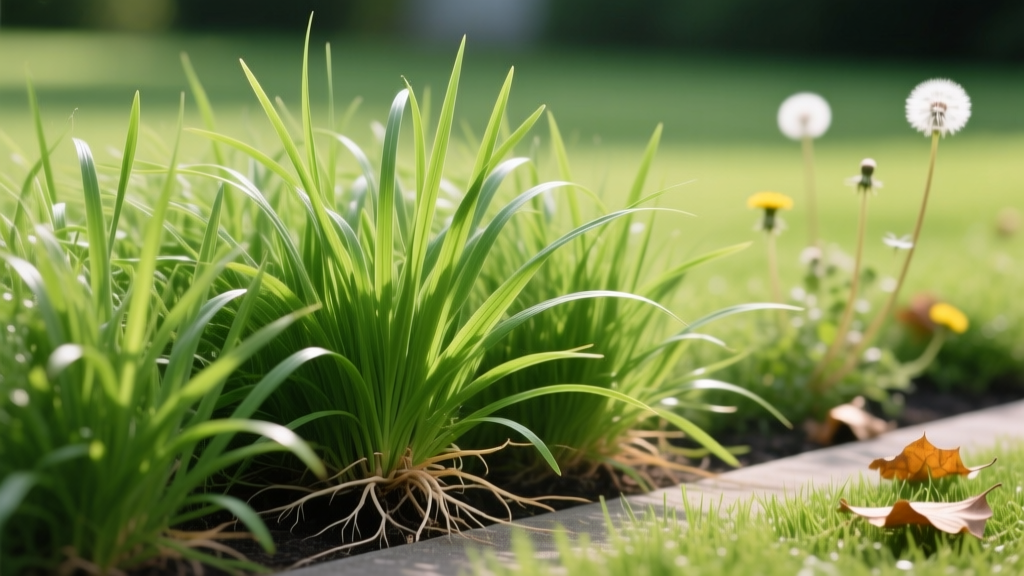
Centipede Grass Images and Identification Guide for Lawns
Often referred to as "lazy man's grass" due to its slow growth rate and low maintenance requirements, centipede grass (Eremochloa ophiuroides) is a staple warm-season turf across the Southeastern United States. However, achieving that ideal, carpet-like aesthetic requires precise care. When browsing high-quality centipede grass images online, you will notice a distinct apple-green hue and a dense, creeping growth habit. Yet, many homeowners struggle to differentiate it from St. Augustine or Zoysia, or they fail to recognize early visual signs of nutrient deficiencies.
This guide leverages visual identification techniques—mirroring what you see in professional centipede grass images—to help you accurately identify your turf, diagnose common health issues, and implement a highly targeted warm-season care regimen.
Visual Identification: What to Look for in Centipede Grass Images
To confirm you are dealing with centipede grass rather than a look-alike species, you need to examine the leaf blade morphology and growth structure. According to turfgrass specialists at Clemson University Extension, centipede grass possesses several unique anatomical traits that are easily visible upon close inspection.
Key Anatomical Markers
- Vernation: Centipede grass exhibits folded vernation. If you look at the youngest emerging leaf in the whorl, it will be folded in a distinct V-shape, unlike St. Augustine which is rolled (cylindrical).
- Leaf Arrangement: The leaves grow in an alternate arrangement along the stolon, whereas some other grasses may exhibit opposite or whorled patterns.
- Leaf Tip and Midrib: The leaf tip is blunt and slightly shield-shaped. Running directly down the center of the light green blade is a prominent, off-center midrib that creates a subtle crease.
- Growth Habit: Centipede spreads exclusively via above-ground creeping stems called stolons. It does not produce underground rhizomes. In centipede grass images showing the turf profile, you will see these thick, reddish-brown stolons rooting at the nodes.
Centipede vs. St. Augustine vs. Zoysia: A Visual Comparison
Homeowners frequently confuse centipede with St. Augustinegrass due to their similar coarse textures and overlapping hardiness zones. Use the comparison matrix below to differentiate them based on visual and structural traits.
| Trait | Centipede Grass | St. Augustinegrass | Zoysiagrass |
|---|---|---|---|
| Leaf Vernation | Folded (V-shaped) | Rolled (Cylindrical) | Roll-folded |
| Leaf Tip Shape | Blunt, shield-like | Blunt, boat-shaped | Sharp, needle-like |
| Leaf Color | Light apple-green | Dark blue-green | Medium to dark green |
| Ligule | Short fringe of hairs | Tall fringe of hairs | Fringe of hairs |
| Stolon Thickness | Moderate, reddish-brown | Thick, spongy, green/purple | Thin to moderate, wiry |
| Growth Rate | Slow | Fast | Very Slow |
Diagnosing Common Issues Through Visual Cues
Because centipede grass is highly sensitive to soil chemistry and environmental stress, visual symptoms manifest quickly. Recognizing these symptoms early prevents irreversible turf loss.
1. Iron Chlorosis (Yellowing Blades)
If your lawn shifts from its natural apple-green to a pale, washed-out yellow—particularly between the leaf veins while the veins remain green—you are looking at iron chlorosis. Centipede grass thrives in acidic soils with a pH between 5.0 and 6.0. When soil pH drifts above 7.0, iron becomes chemically locked up and unavailable to the roots. North Carolina State Extension notes that applying sulfur to lower pH or using a fast-acting chelated iron product (like Ironite or a liquid 6% Fe-EDDHA spray) will restore the green color within 7 to 14 days.
2. Centipede Grass Decline
This disease presents as circular, yellowing patches that expand and eventually die out completely, usually becoming visible during spring green-up. The primary culprit is not a pathogen, but rather over-fertilization. Applying high-nitrogen fertilizers late in the fall depletes the root system's carbohydrate reserves. The visual fix is preventive: cease all nitrogen applications by August 1st.
3. Large Patch (Rhizoctonia solani)
Look for large, irregular brown patches with a distinct dark brown or orange "smoke ring" border at the leading edge of the disease. This fungal issue peaks during the cool, wet transition periods of spring and fall. Treatment requires a preventive application of a systemic fungicide containing azoxystrobin or propiconazole (e.g., Heritage G or Honor Guard PPZ) when soil temperatures drop to 70°F in the autumn.
⚠️ CRITICAL WARNING: The Nitrogen Trap
Unlike Bermuda or Zoysia, centipede grass is exceptionally sensitive to high nitrogen levels. Applying standard "weed and feed" products formulated for other Southern grasses can trigger massive centipede decline. Never exceed 1 to 2 pounds of actual nitrogen per 1,000 square feet annually. Always select low-nitrogen, high-potassium formulations like a 15-0-15 or 18-0-18 NPK ratio.
Unlike Bermuda or Zoysia, centipede grass is exceptionally sensitive to high nitrogen levels. Applying standard "weed and feed" products formulated for other Southern grasses can trigger massive centipede decline. Never exceed 1 to 2 pounds of actual nitrogen per 1,000 square feet annually. Always select low-nitrogen, high-potassium formulations like a 15-0-15 or 18-0-18 NPK ratio.
Tailored Care Based on Visual Health Indicators
Once you have visually confirmed your turf type and assessed its current health, implement this targeted warm-season maintenance protocol.
Precision Mowing
Centipede grass performs best at a mowing height of 1.5 to 2.0 inches. Mowing below 1.0 inches scalps the turf, exposing the reddish stolons and inviting weed invasion. Because of its slow vertical growth, you will likely only need to mow every 10 to 14 days during peak summer. Always follow the one-third rule: never remove more than 33% of the leaf blade in a single pass.
Strategic Weed Control
Centipede grass is notoriously sensitive to certain herbicide active ingredients, particularly 2,4-D, which can cause severe stunting and visual leaf curling if applied during high heat.
- Pre-emergent: Apply Prodiamine 65 WDG in late February (when soil temps hit 55°F) to halt crabgrass and annual grassy weeds.
- Post-emergent Broadleaf: Use a specialized warm-season herbicide like Celsius WG (thiencarbazone, iodosulfuron, dicamba). It is exceptionally safe for centipede grass even in high summer temperatures and effectively controls stubborn weeds like doveweed and Virginia buttonweed.
Targeted Irrigation
While drought-tolerant once established, centipede grass will exhibit a bluish-gray cast and folded leaf blades when experiencing moisture stress. Provide 1 inch of water per week, ideally split into two 0.5-inch watering sessions to encourage deeper root penetration and prevent shallow-rooted fungal outbreaks.
Frequently Asked Questions About Centipede Grass Identification
Can centipede grass survive in heavy shade?
No. Visual inspection of centipede grass in shaded areas will reveal thinning, elongated (etiolated) blades, and bare soil patches. It requires a minimum of 6 to 8 hours of direct sunlight. If your yard is heavily shaded by mature oak or pine canopies, consider transitioning to shade-tolerant St. Augustine or planting groundcover like Asiatic jasmine.
Why does my centipede grass look red at the base?
The stolons and lower leaf sheaths of centipede grass naturally possess a reddish-brown pigmentation. However, if the leaf blades themselves are turning reddish-purple, this is a visual indicator of phosphorus deficiency or severe cold stress. A soil test will confirm if a phosphorus amendment (like a 15-5-10 starter fertilizer) is required.
How do I repair bare patches in a centipede lawn?
Because centipede spreads slowly via stolons, bare spots take months to fill in naturally. For rapid repair, use centipede grass plugs planted on 12-inch centers, or overseed with hulled centipede seed (such as Pennington Centipede Seed) at a rate of 0.25 to 0.5 lbs per 1,000 sq ft during the early summer months when soil temperatures exceed 70°F.

