Grass Types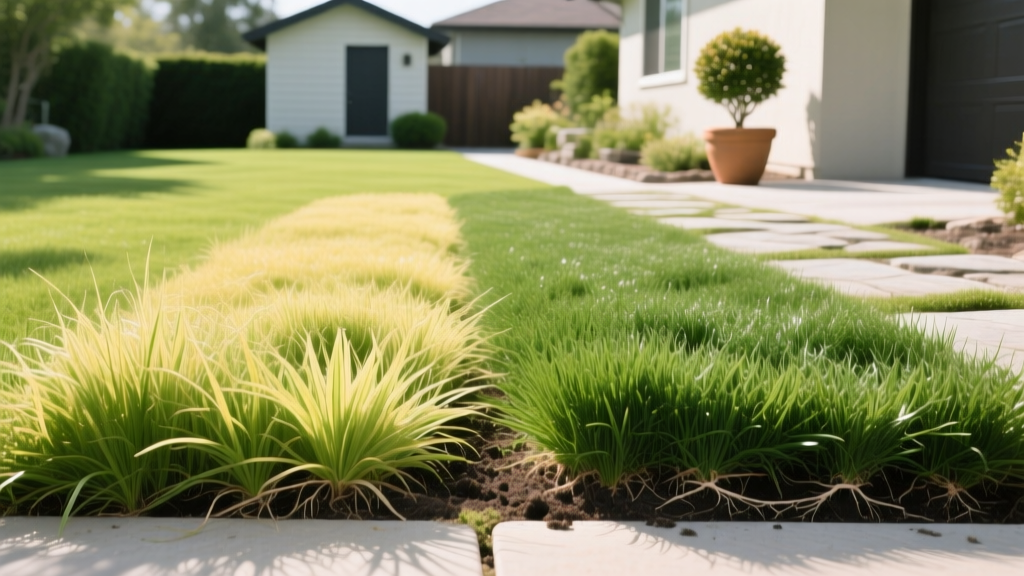
Centipede Grass vs Bermuda: Choosing the Right Warm-Season Turf
The Core Differences at a Glance
When homeowners in the Sunbelt and Southeastern United States evaluate warm-season turf, the debate almost always narrows down to centipede grass vs Bermuda. While both thrive in hot, humid summers and enter winter dormancy, their agronomic requirements, traffic tolerance, and maintenance budgets are vastly different. Centipedegrass (Eremochloa ophiuroides) is famously dubbed the 'lazy man's grass' due to its low nitrogen requirements, whereas Bermudagrass (Cynodon dactylon) is a high-input, high-reward workhorse built for heavy foot traffic.
| Feature | Centipede Grass | Bermuda Grass |
|---|---|---|
| Traffic Tolerance | Low to Moderate | Excellent (Recovers rapidly) |
| Shade Tolerance | Moderate (Prefers partial sun) | Poor (Requires 8+ hours direct sun) |
| Ideal Soil pH | 5.0 to 6.0 (Highly acidic) | 6.0 to 6.5 (Slightly acidic) |
| Annual Nitrogen Need | 1 to 2 lbs per 1,000 sq. ft. | 3 to 5 lbs per 1,000 sq. ft. |
| Mowing Height | 1.5 to 2.0 inches | 0.5 to 1.5 inches (Cultivar dependent) |
| Establishment Speed | Very Slow (Stolons only) | Aggressive (Stolons and Rhizomes) |
| Average Sod Cost (2026) | $0.45 to $0.65 per sq. ft. | $0.35 to $0.85 per sq. ft. (Hybrid) |
Centipede Grass: The Low-Input Specialist
Centipede grass is uniquely adapted to the poor, sandy, and highly acidic soils of the coastal plains from the Carolinas down to Texas. Its distinct apple-green color and slow lateral growth rate mean fewer mowing sessions and drastically reduced fertilizer bills. However, its low-input nature is frequently misunderstood as 'no-input,' leading to widespread turf failure.
The Danger of Over-Fertilization
The most common cause of 'centipede decline' is excessive nitrogen application. Applying more than 2 lbs of nitrogen per 1,000 square feet annually forces the grass to produce excessive thatch and depletes its carbohydrate reserves, making it highly susceptible to winter kill and large patch fungus (Rhizoctonia solani). According to NC State TurfFiles, centipede lawns should receive a single application of slow-release nitrogen in late May, and absolutely no fertilizer after August 1st.
⚠ Warning: Iron Chlorosis and High pH
Centipede grass is highly sensitive to alkaline soils. If your soil pH creeps above 6.5, the grass will lose its ability to uptake iron, resulting in severe yellowing (chlorosis). Do not apply lime to a centipede lawn unless a professional soil test explicitly dictates it. If chlorosis occurs, apply liquid chelated iron at a rate of 2 oz per 1,000 sq. ft. to restore the apple-green hue.
Top Cultivars for 2026
- TifBlair: Developed by the University of Georgia, this cultivar offers superior cold tolerance, allowing centipede to survive further north into the transition zone.
- Santee: A newer variety that exhibits a darker green color and improved resistance to nematodes, which frequently plague sandy coastal soils.
Bermuda Grass: The High-Traffic Workhorse
If your lawn serves as a playground for children, a running track for large dogs, or a weekend sports field, Bermuda grass is the undisputed champion. Its aggressive growth habit—spreading via both above-ground stolons and below-ground rhizomes—allows it to recover from physical damage in a matter of days. However, this vigor comes with a steep maintenance premium.
Mowing and Thatch Management
Common Bermuda grass can be maintained with a standard rotary mower at 1.5 inches. However, premium hybrid cultivars like TifTuf or Celebration perform best when reel-mowed at heights between 0.5 and 1.0 inches. Because Bermuda grows so aggressively, it produces massive amounts of thatch. According to Clemson University HGIC, hybrid Bermuda lawns require annual dethatching (verticutting) in early spring, followed by core aeration and a top-dressing of compost to maintain soil oxygen levels and prevent shallow rooting.
Watering and Drought Survival
While Bermuda is famously drought-tolerant, it will enter dormancy and turn brown during prolonged dry spells without irrigation. To maintain a lush, dark green carpet during the peak heat of July and August, Bermuda requires 1 to 1.25 inches of water per week. In regions facing strict 2026 municipal water restrictions, investing in certified drought-tolerant cultivars like TifTuf (which uses up to 38% less water than older varieties) can prevent HOA violations and keep the lawn green under watering bans.
Head-to-Head Lawn Care Scenarios
Choosing between centipede grass vs Bermuda ultimately depends on your specific property conditions and lifestyle. Use this decision framework to guide your purchase:
Scenario 1: The Shaded, Pine-Canopied Yard
Winner: Centipede Grass. Bermuda grass will aggressively thin out and die in areas receiving less than 8 hours of direct, unfiltered sunlight. Centipede grass can tolerate dappled shade and the acidic needle-drop from pine trees, provided the canopy is pruned to allow at least 4 to 5 hours of filtered light.
Scenario 2: The Active Family with Large Dogs
Winner: Bermuda Grass. Dog urine and heavy foot traffic will quickly create bare, muddy patches in a centipede lawn, which can take an entire growing season to fill in via stolons. Bermuda's rhizomatous root system anchors the soil, and its rapid lateral growth will heal divots and torn turf within 7 to 14 days during peak summer heat.
Scenario 3: The Coastal Sandy Soil Property
Winner: Centipede Grass. Sandy soils leach nutrients rapidly, making the high fertilizer requirements of Bermuda grass incredibly expensive to maintain. Centipede's low nitrogen requirement and natural adaptation to low-fertility, acidic coastal sands make it the most economically viable choice for beachfront and coastal plain properties.
Weed Control and Herbicide Sensitivities
A critical, often overlooked factor in the centipede grass vs Bermuda debate is chemical weed control. Centipede grass is notoriously sensitive to many common broadleaf herbicides.
📋 Herbicide Cheat Sheet
- 2,4-D: Safe for Bermuda. LETHAL to Centipede. Never use standard 'Weed and Feed' products containing 2,4-D on centipede lawns.
- Atrazine: Safe for Centipede (apply only during winter dormancy to kill poa annua and chickweed). Can stunt Bermuda if applied during spring green-up.
- Celsius WG (Thiencarbazone, Iodosulfuron, Dicamba): The premium, safe choice for both grasses. Highly effective against tough weeds like doveweed and Virginia buttonweed. Expect to pay around $160 for a 10oz bottle, but the application rate is incredibly low (0.057 oz per 1,000 sq. ft.).
Final Verdict: Which Should You Plant?
If your priority is minimizing weekend yard work, reducing fertilizer costs, and you have a lightly used lawn with partial shade, centipede grass is the superior choice. It rewards neglect and punishes over-management. Conversely, if you demand a pristine, golf-course-quality lawn, have full sun exposure, and need a durable surface for sports and pets, the higher upfront and ongoing costs of Bermuda grass will deliver the aesthetic and functional results you desire. Always begin with a $15-$20 professional soil test from your local university extension office before laying sod to ensure your pH baseline matches your chosen turf.