
Grass Types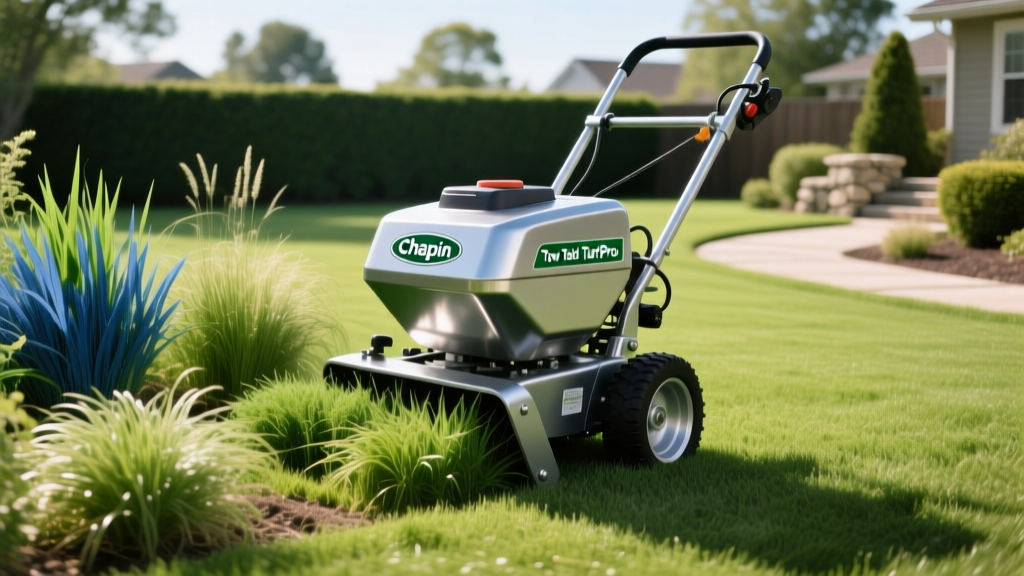
Chapin 150-Pound Tow Behind TurfPro Spreader: Coverage & Dosage
Calibrating the Chapin 150-Pound Tow Behind TurfPro Spreader
The Chapin 150-pound tow behind TurfPro spreader (commonly referencing the heavy-duty 8620B series) is engineered for large-scale residential and light commercial turf management. With a 150-pound hopper capacity, it holds roughly three standard 40-pound bags of granular fertilizer or seed, minimizing refill downtime on properties exceeding one acre. However, its 10-to-14-foot nominal swath width demands precise calibration; a miscalculated dial setting on a tractor-towed unit can result in severe fertilizer burn or wasted material across thousands of square feet in minutes.
According to University of Minnesota Turf Science, tow-behind spreaders are highly susceptible to output variations based on towing speed and granule prill size. Unlike push spreaders where human walking pace is relatively constant, tractor PTO or ground-speed variations drastically alter application rates.
The 100-Square-Foot Tarp Calibration Method
To establish an accurate baseline for your specific material, bypass the manufacturer's generic dial chart and perform a physical catch test:
- Prepare the Test Zone: Lay out a 10 ft x 10 ft tarp on a flat, wind-free concrete surface.
- Load the Hopper: Add exactly 20 pounds of your chosen fertilizer or seed to the hopper. Weigh the entire spreader on a digital scale and record the starting weight.
- Execute the Pass: Tow the spreader over the tarp at your standard operating speed (typically 3 to 4 MPH for most lawn tractors). Ensure the metal gear-driven agitator is fully engaged.
- Calculate the Delta: Weigh the spreader again. If the spreader lost 0.8 pounds over the 100 sq ft tarp, your application rate is 8 pounds per 1,000 sq ft.
- Adjust the Dial: Modify the flow control gate and repeat until the delta matches your target dosage.
Pro Tip: Tire Pressure Matters
The Chapin TurfPro 150-lb model utilizes 12-inch pneumatic tires. If tire pressure drops below the recommended 20 PSI, the hopper sits lower to the ground, subtly altering the geometry of the drop gate and restricting the flow of larger granules. Always check tire pressure before seasonal deployment.
The Chapin TurfPro 150-lb model utilizes 12-inch pneumatic tires. If tire pressure drops below the recommended 20 PSI, the hopper sits lower to the ground, subtly altering the geometry of the drop gate and restricting the flow of larger granules. Always check tire pressure before seasonal deployment.
Grass-Specific Dosage and Coverage Matrix
Different grass species require vastly different nutrient loads and seed densities. Furthermore, the physical size of the granule (prill) or seed dictates how the Chapin's flow gate must be set. Below is a 2026 dosage matrix tailored for the most common North American turfgrasses when using the Chapin 150-lb tow-behind unit.
| Grass Species | Material Type | Target Rate (per 1k sq ft) | Approx. Dial Setting | Coverage per 150lb Load |
|---|---|---|---|---|
| Bermudagrass (Warm) | High-N Fertilizer (e.g., 29-0-4) | 4.0 lbs | 5.5 - 6.0 | 37,500 sq ft |
| Tall Fescue (Cool) | Overseeding Seed | 6.0 - 8.0 lbs | 7.5 - 8.5 | 18,750 - 25,000 sq ft |
| Kentucky Bluegrass (Cool) | Overseeding Seed | 2.0 - 3.0 lbs | 2.5 - 3.5 | 50,000 - 75,000 sq ft |
| Zoysiagrass (Warm) | Pre-Emergent (e.g., Prodiamine) | 2.5 - 3.0 lbs | 4.0 - 4.5 | 50,000 - 60,000 sq ft |
Warning: Kentucky Bluegrass Seed Clumping
KBG seed is exceptionally fine and lightweight. In high-humidity conditions, it can bridge or clump inside the 150-lb hopper, causing the metal agitator to stall or shear the plastic drive gear. When spreading KBG, never load the hopper to full capacity; keep it at 50% and add a desiccant-safe hopper additive or mix the seed 50/50 with dry Milorganite to improve flowability.
KBG seed is exceptionally fine and lightweight. In high-humidity conditions, it can bridge or clump inside the 150-lb hopper, causing the metal agitator to stall or shear the plastic drive gear. When spreading KBG, never load the hopper to full capacity; keep it at 50% and add a desiccant-safe hopper additive or mix the seed 50/50 with dry Milorganite to improve flowability.
2026 Coverage Economics and Material Costs
Understanding the financial footprint of your turf program is critical for budgeting. As of 2026, the Chapin 150-lb tow-behind units retail between $289 and $349, depending on the retailer and specific tire upgrades. When calculating the total cost of ownership, you must factor in material coverage efficiency.
Cost Per Acre Breakdown
One acre equals 43,560 square feet. Using a standard 40-pound bag of professional-grade 19-0-7 turf fertilizer (priced at roughly $55 in 2026) that covers 12,500 sq ft at a rate of 3.2 lbs per 1,000 sq ft:
- Bags Required per Acre: 3.5 bags
- Material Cost per Acre: $192.50
- Tractor Fuel & Depreciation: ~$18.00
- Total Application Cost: ~$210.50 per acre
By utilizing the 150-pound capacity, you eliminate the need to stop and refill the hopper mid-acre, reducing tractor idle time and saving approximately 15% in fuel and labor compared to using a standard 50-pound push spreader on large properties.
Common Failure Modes and Edge Cases
Even heavy-duty equipment like the Chapin TurfPro series is subject to mechanical wear, particularly when exposed to corrosive turf chemicals. EPA Calibration Guidelines emphasize that equipment degradation directly leads to environmental runoff via over-application.
1. Hopper Corrosion and Gate Sticking
Many fertilizers contain high salt indices. If left in the polypropylene hopper overnight, moisture absorption will create a highly corrosive brine that attacks the metal flow gate and the spring tensioner. Fix: Always run the hopper empty with a leaf blower after use, and apply a dry silicone spray lubricant to the gate tracks monthly. Never use petroleum-based greases like WD-40, as they attract dust and seed chaff, creating a cement-like blockage.
2. Agitator Gear Stripping
The Chapin 8620B series uses a gear-driven agitator to break up clumps. If you attempt to tow the spreader with the flow gate closed while the hopper is full of heavy, damp sand-based topdressing or wet seed, the resistance can strip the agitator teeth. Fix: Never engage the PTO or drive forward with the gate closed if the material is known to compact. Open the gate slightly to relieve pressure before starting your pass.
3. Uneven Swath from Tractor Wheel Ruts
When towing behind a heavy garden tractor, the tractor's rear tires compress the soil, creating ruts. If the spreader's pneumatic tires track directly inside these ruts, the unit tilts, causing the granular material to pool to one side of the hopper and resulting in a skewed, uneven swath. Fix: Adjust the tow hitch length so the spreader's wheels track slightly outside the tractor's wheel path, ensuring the hopper remains perfectly level on undisturbed ground.
Frequently Asked Questions
Can I use the Chapin 150-lb spreader for pelletized lime?
Yes, but pelletized lime is exceptionally heavy and dusty. You will need to open the flow gate to a higher setting (typically 8 or 9) and reduce your towing speed to 2 MPH to maintain the target rate of 40-50 lbs per 1,000 sq ft. Wear a P100 respirator, as the dust generated by the agitator is hazardous.
Does the TurfPro model come with a deflector shield?
The standard 150-lb tow-behind models do not include an integrated edge-guard deflector like their push-spreader counterparts. To avoid spreading fertilizer into flower beds or waterways, you must manually close the flow gate via the tow-line cable when approaching property boundaries, or install an aftermarket physical baffle on the left side of the drop gate.
For further technical specifications, replacement parts, or warranty claims, refer directly to Chapin International Support. Proper calibration and maintenance of your tow-behind spreader will ensure your turf receives the exact dosage required for optimal health while protecting your local watershed from nutrient runoff.